n the crowded supermarkets of Bombay, bottled water is becoming more expensive every day. In the wealthy neighborhoods of India's economic capital, a few extra rupees are barely felt; in the overcrowded slums, where more than 12 million people live in extreme poverty, this increase can become a risk for one of their daily lifelines.
The war in Iran has driven up oil prices and, with it, the plastic used to make the bottles. The price hike could turn a basic product into a luxury item just as the hottest season begins: in April and May, temperatures in a large part of India can exceed 45°C.
We focus on the world's most populous country, home to over 1.4 billion people who, in many cases, do not have access to safe drinking water. India is gearing up for a scorching season as the global energy crisis directly impacts its daily life. The shortage of gas cylinders, on which the informal economy - the backbone of this giant South Asian nation - heavily relies, is now compounded by the rising prices of bottled water.
Recent data shows that buying bottles of leading brands like Bisleri costs up to 11% more than a month ago. In areas where rivers and wells are contaminated or public supply is inadequate, access to safe drinking water is a basic necessity to prevent waterborne diseases, from diarrhea to more severe infections.
The blockade of the Strait of Hormuz resulting from the conflict in the Middle East explains much of this chaos. Much of the crude oil that reached India from the Persian Gulf fueled the production of PET preforms, the raw material for bottles. The scarcity and increased cost have forced around 20% of bottling plants in Maharashtra, one of the country's beverage industrial hubs, to temporarily shut down. Some companies have absorbed part of the extra costs, but manufacturers warn that if the conflict persists, consumers will face even higher increases during peak demand season.
India is not alone in this storm. The conflict initiated by the United States and Israel has turned into a massive energy crisis, especially in Asia, which relies on almost all the oil and gas that transited through Hormuz: approximately 80% of the crude oil and 90% of the liquefied natural gas (LNG) destined for the continent passed through this route. In 2025 alone, India, Bangladesh, and Pakistan imported nearly two-thirds of their LNG through the strait.
In response to the crisis, many Asian countries are setting up coal-fired power plants and increasing production to strengthen energy supply. They have also started purchasing millions of barrels of Russian oil since the US granted temporary relief from sanctions. India's largest private refinery, Reliance, owned by billionaire Mukesh Ambani, Asia's richest man, began importing Russian crude after the restrictions were eased. The group had halted purchases of this oil in November under pressure from Washington, which doubled tariffs on Indian products when President Donald Trump accused India of funding Putin's regime war in Ukraine.
Last week, two oil tankers loaded with Russian crude arrived in the Philippines, the first since November 2021. Manila (where over 95% of consumed oil is imported) was the first country to declare an energy emergency, citing an "imminent danger" posed to its energy supply by the Iranian blockade of the key maritime route.
A few days ago, thousands of Filipino transport workers went on strike to protest the steep rise in diesel prices. In other countries like Myanmar, Sri Lanka, or Indonesia, fuel rationing has been announced, and public officials have been instructed to work from home several days a week.
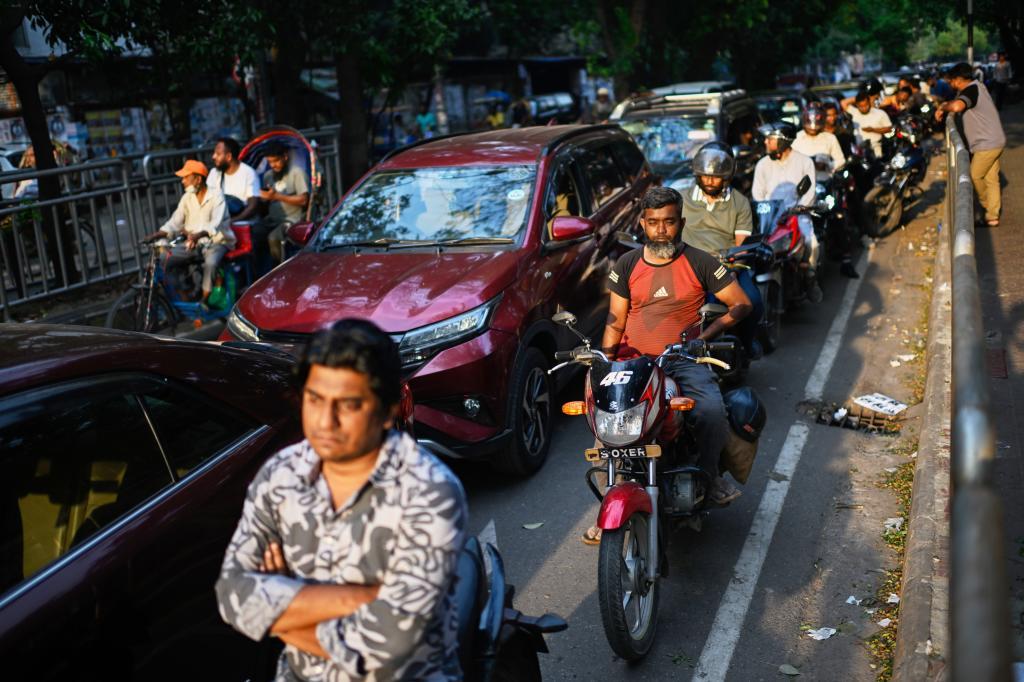
Energy shortages and inflation of essential goods such as bottled water and fuel are forcing Asia to implement measures reminiscent of the early months of the pandemic: mobility restrictions, rationing limitations, and reorganization of public and private work. "The energy crisis is forcing Asia to impose restrictions similar to those of the pandemic," recently wrote the Japanese newspaper Nikkei. The effect is widespread: from the price of a bottle of water in Bombay to the halt of transportation in Manila, through the insecurity on the roads of Dhaka and Karachi.
In Bangladesh and Pakistan, the crisis has taken on a more violent face. Multiple robberies of transporters and gas stations have been reported during the night; in some cases, the assaults have ended in the death of workers. The rise in fuel prices and insecurity have further strained the fragile local economy, and security forces are struggling to contain the violence as citizens desperately seek ways to keep their homes and businesses running.
As the war in Iran continues, Asian countries, especially developing economies, face a structural dilemma that goes beyond temporary price increases: the region must rethink its energy security and resilience to external shocks. The rising costs of transportation and basic goods like bottled water and gas could deepen social inequality, strain the informal economy, and fuel local conflicts. The energy crisis acts as a catalyst for underlying tensions.