It was a cold November afternoon in 2025 in London when Raúl Martín had his phone stolen. Around 7:30 p.m., this 27-year-old Spanish financier was returning home to Battersea, a renovated neighborhood in the southwest of the capital. As he walked along the sidewalk, his iPhone 14 started ringing. He took the phone out of his pocket and answered the call, but no one responded on the other end. At that moment, two men appeared riding an electric bike going against traffic, wearing balaclavas.
The robbery was instantaneous. The man standing on the back of the bike reached out and snatched the iPhone. Raúl was wearing AirPods, so he didn't hear the thieves approaching. The bike quickly merged into the traffic and disappeared.
The scene, which might seem random, fits into an increasingly common pattern in London: quick, clean, and coordinated thefts, specifically targeting high-end phones. According to the Metropolitan Police, mobile phone thefts have surged in recent years, driven by their resale value and ease of taking them out of the country.
Raúl's phone was unlocked because he had just answered a call, which increased his concern. He feared that the thieves would access his bank accounts and social networks. That same night, he blocked his cards, changed passwords, and activated the "Lost Mode" from his Apple account. However, the thieves acted quickly. They activated the "Airplane Mode," preventing immediate tracking. For days, the app only showed the last known location in London.
THE PARADISE OF RESALE AND SPARE PARTS
Raúl continued to check the app regularly. For weeks, it showed a single stationary point on the map. Until it stopped. In late December, the map suddenly updated. The iPhone was no longer in the UK. The signal reappeared over 9,000 kilometers away, in Shenzhen, southern China. Not just anywhere, but in one of the world's electronics capitals, the epicenter of an industry that manufactures, repairs, disassembles, and recycles devices for the entire planet.
For Raúl, that point on the map confirmed that the theft was not random. "I had already read news about organized gangs stealing phones in London and sending them to China," says the young man, who posted a screenshot on his Instagram account when the location of his iPhone appeared in Shenzhen. "In the tracking app, the old phone no longer appears anywhere," he now states.
In Spain, police investigations and journalism have revealed on more than one occasion that many of the stolen phones in our country end up in a street market in Morocco. But Raúl's phone, like many others stolen in the UK and many other parts of the world, ended up in a much more distant and specific place: Huaqiangbei, the most popular commercial area in Shenzhen. This modern city is known for its key role in the global production chain — including the manufacturing of iPhones — as well as for hosting some of the largest electronics markets on the planet, where stolen and counterfeit products circulate.
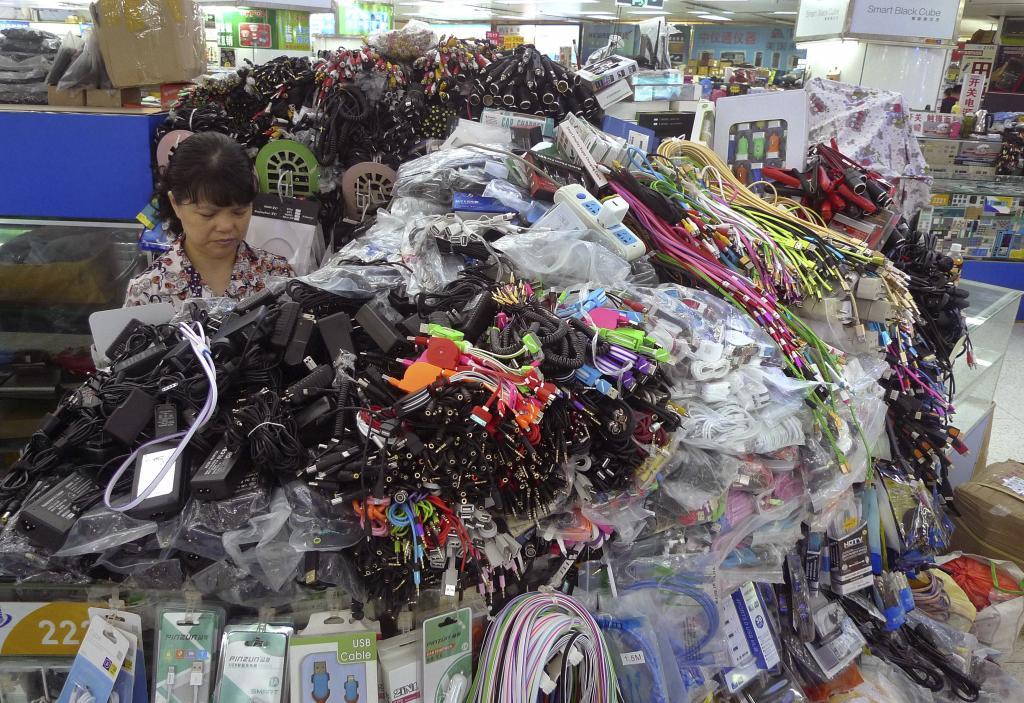
In the galleries of Huaqiangbei —labyrinths of corridors filled with screens, cables, and motherboards— thousands of devices circulate daily. Some are new. Others are refurbished. And a portion, hard to quantify, comes from thefts thousands of kilometers away.
This newspaper once entered one of the shopping centers in Huaqiangbei, in a huge ground floor of a building filled with stalls selling second-hand phones of dubious origin. Prices ranged from 30 to 500 euros. At one point, a merchant opened a box in front of another vendor. Inside were a dozen iPhones stacked from different models.
There, the fate of each device depends on a single variable: if it can be unlocked. If successful, the phone is restored and re-enters the market as a used device. If the lock is insurmountable, the phone is dismantled: components like the screen, back panel, or internal modules are sold for repairs. Other units end up in recycling plants, where valuable materials like lithium-ion batteries and metals present in the circuits are recovered.
HONG KONG, THE OTHER HOTSPOT
The proximity of Huaqiangbei to the port of Shenzhen and Hong Kong makes this corner of China a strategic enclave for international trade and the movement of goods, both legal and illegal. A portion of the stolen phones that arrive stay in Shenzhen, while the rest end up in Hong Kong, precisely in one of the shadiest places in the former British colony: Chungking Mansions. It is a 17-story old building with cheap hostels, Indian, Turkish, and Senegalese food stalls, currency exchange booths, clothing stores, and kiosks selling phones.
This place was built in 1961 as a luxurious residential building. But the complex ended up engulfed by the businesses of the feared triads, the local mafias that opened their brothels and drug trafficking operations here. Authorities, after decades of raids, managed to clean up and expel the triads from the building. But it still maintains the essence of a ghetto where marijuana and stolen phones are still mainly traded.
Recently, the London Metropolitan Police dismantled a criminal network that had sent 40,000 stolen phones from the UK to China. The investigation started after agents found a box near Heathrow airport containing around 1,000 iPhones destined for Hong Kong. Their final stop was likely a stall in the Chungking Mansions, where an American boy named Thomas Baker last year discovered the location of the phone that had been stolen from him months earlier in North Carolina.
"Now it's easier than ever to sell stolen phones on the black market, especially in ground zero, which is Shenzhen, where traders buy and sell used phones without asking questions," explains Douglas McKelway, an FBI agent who has been investigating transnational networks moving these phones.
Organized crime experts have been warning about this phenomenon for years. "Despite Apple's efforts to improve device security, the demand in China for second-hand phones and their components is driving an increase in thefts," details McKelway.
In Spain, the Mossos d'Esquadra dealt a blow in October to a mafia based in Barcelona that sent stolen phones from Spanish and European cities to China and Morocco. Investigators explained that, if the criminal group managed to unlock the devices, they were sent by road to Morocco, which acts as a regional absorption market. If they couldn't be unlocked, the phones ended up in Shenzhen, where they were dismantled for spare parts. That was probably the fate of Raúl's iPhone.