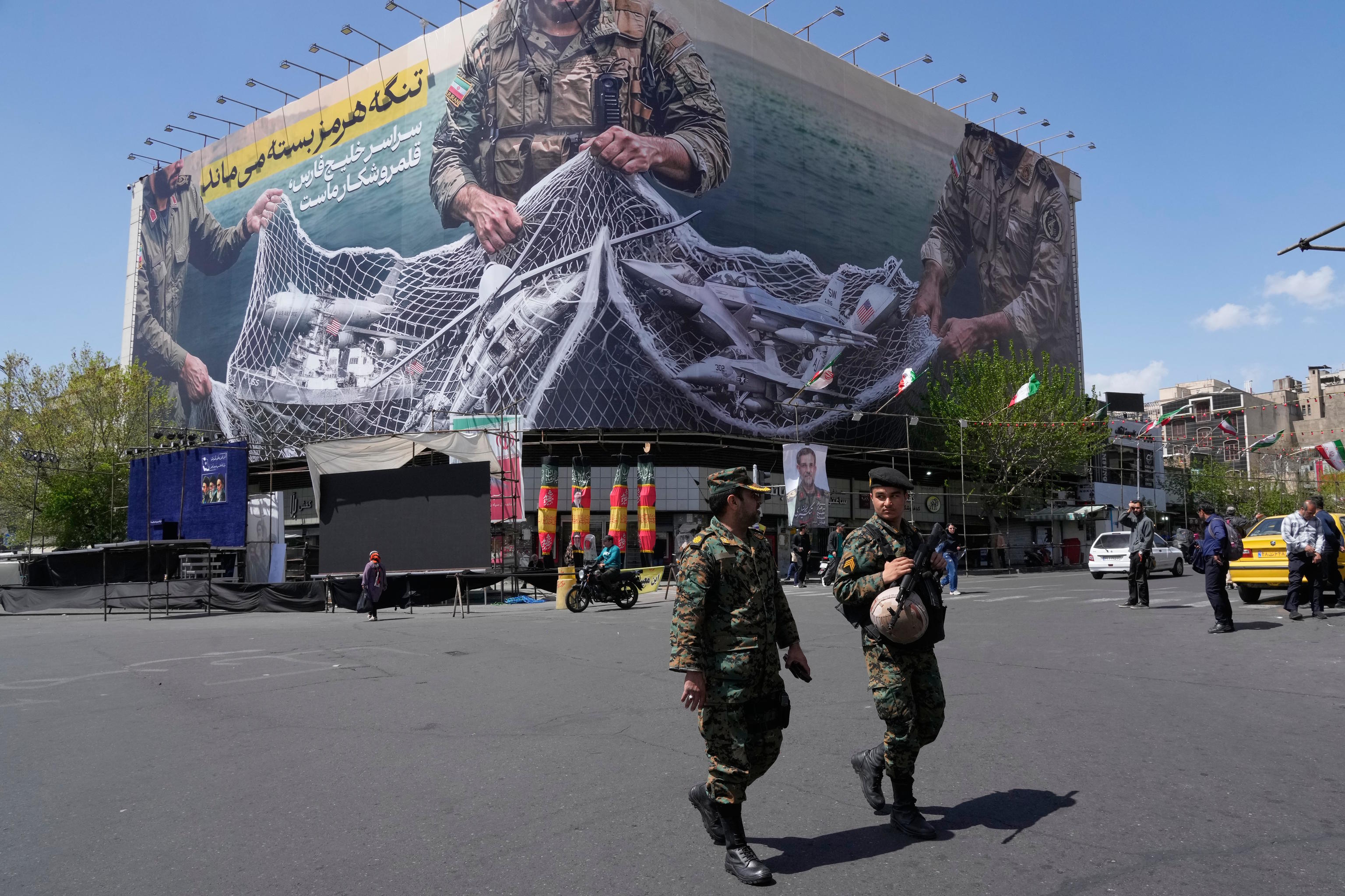
The successful mission to rescue the F-15 crew has given a lifeline to Donald Trump in his most critical weekend since returning to power, after the failure of his bet for a quick intervention in Iran and the unexpected blockade of the Strait of Hormuz. However, not even all the war slogans favored by the White House, such as "we will not leave anyone behind", can hide the chaotic situation of a war designed to last days and now in its fifth week with no end in sight. For now, the operation "Epic Fury" - the name Washington gave to the offensive against Iran - raises more questions than answers:
Can Trump claim victory in the war and withdraw?
That window closed in the early days. Trump could have done so when his bombers decapitated the regime and killed Ayatollah Ali Khamenei. But as soon as Tehran began attacking tankers and closed the Strait of Hormuz a few days later, the option of declaring victory and going home lost credibility.
Who is actually winning the war?
The United States and Israel are decisively wearing down the military capabilities of the ayatollahs, but it cannot be said that they are winning the war, just as it cannot be said that Iran is losing it. Despite suffering significant casualties and material losses, the regime remains standing and has activated a key strategic lever: its ability to influence global oil traffic. Approximately 20% of global oil passes through the Strait of Hormuz, allowing Iran to absorb blows for months while exerting pressure on the international economy.
What does the Tehran regime aim to achieve at this moment?
To negotiate from a position of strength. They know that the United States cannot afford to have the Strait of Hormuz closed, despite Trump's claims to the contrary. The ayatollahs know they have trapped Trump in a maze and the only way out they offer him is that of a loser: to recognize Iranian sovereignty over Hormuz and provide security guarantees that there will be no further attacks, something that would separate US interests from those of its ally Benjamin Netanyahu. In return, they could agree to halt their nuclear program, as they have realized that controlling the Strait is a more effective short-term deterrent than developing a nuclear weapon.
Why does Trump keep issuing ultimatums?
Because he has no exit plan and is hesitant to launch any ground operation, no matter how limited. Before launching the regime decapitation operation on February 28, General Dan Caine, the US military commander in the Middle East, warned him about the risk of Iran closing the Strait of Hormuz. Trump ignored that warning. Now it seems that he is considering the risks of escalating the conflict with troops on the ground. However, the Tehran regime clings to that strait as its main lifeline and has no incentives to negotiate now, as they constantly repeat.
What are the risks of carrying out a limited invasion of one of the islands controlled by Iran in the Persian Gulf?
Militarily, for a powerful and advanced army like that of the United States, it may be a complicated but manageable maneuver. The problem is that any operation of that level would result in casualties, which could have a significant political cost in terms of unpopularity. These are islands that can be invaded but are difficult to maintain and require complex logistics, as the Iranians could attack them from their coast with the arsenal they still possess. Additionally, the Houthi militia in Yemen, allies of Iran, have made it clear that any invasion attempt would lead to the immediate closure of the Bab el Mandeb Strait in the Red Sea, in addition to Hormuz, affecting two of the main arteries of global maritime trade, an extremely serious scenario for the global economy.
Can attacking Iran's energy facilities and bridges lead Tehran to reopen the Strait?
Unlikely. Once the United States embarked on decapitating the Tehran regime and calling for civilian insurrection, Tehran understood that it is fighting for its survival. It will be difficult for them to surrender no matter how many power plants the US destroys. In fact, the ayatollahs have already begun a strategy of regional retaliation, targeting refineries, pipelines, ports, or desalination plants to impose costs on US allies. Furthermore, unlike bridges, which are considered military targets, attacking energy generation facilities is, by definition, a war crime. It is striking that the President of the United States is threatening this.