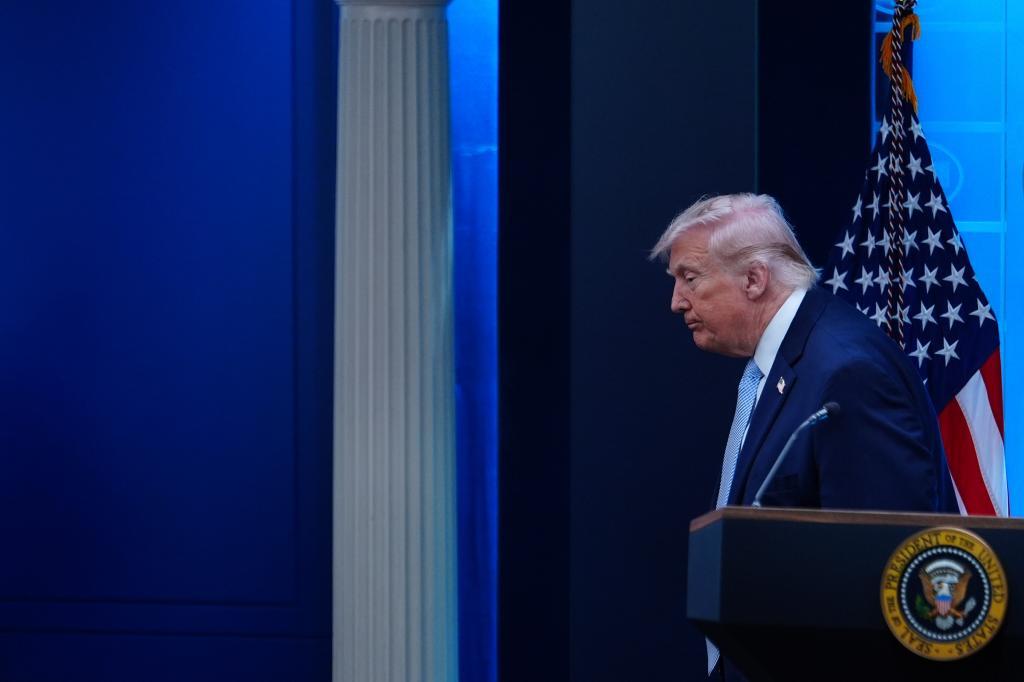
On Tuesday at 8:00 p.m. in Washington (2:00 a.m. in Spain), the deadline given by Donald Trump to Iran to reopen the Strait of Hormuz expires. After the outbursts and threats over the weekend, calling the leaders "crazy bastards," Trump has stated on Monday that there will be no further extensions (although in reality his presidency is marked by doing so over and over again in all kinds of negotiations) and that the consequences will be devastating: "The entire country could be wiped out in a single night. And that night could be tomorrow," he insisted in a press conference alongside CIA Director John Ratcliffe, Defense Secretary Pete Hegseth, and Chief of Staff Dan Caine, to explain the spectacular rescue of the two pilots shot down last week over Iran.
The Republican leader has also taken the opportunity to criticize the media. Against The New York Times, one of his obsessions. And stating that a journalist could go to prison for publishing what happened with confidential information, as that, he claimed, complicated the operation and put lives in danger. "There was a leaker. We will find out who it was, and we can do it because we will go to the media company that disseminated the information and tell them: 'For national security, hand over the data or go to jail'. The person who published the story will go to jail if they do not reveal the source," he said without clarifying which media or reporter he was referring to.
The past weeks have been marked by constant claims, rumors, and denials about peace talks, something on fire, or even a 15-point American plan sent to Tehran through Pakistan. Today, Trump said they have received a new and promising proposal, although not enough to avoid massive bombings. While Iran, amid attacks on universities and energy facilities, insisted that they do not want any ceasefire and will only accept the total end of hostilities. "It's a significant proposal. It's a significant step. Not enough. But it's a very significant step," the American said from the White House, without going into specific details.
He even speculated about the possibility that it might be the United States, and not Iran, who will start charging tolls for the passage of ships in the Strait of Hormuz. "Why not charge them ourselves? We're not going to let them keep it, right? Why shouldn't we? We are the winners. We win. Right? They are militarily defeated. All they have left is the psychology of 'Oh, let's throw a couple of mines in the water.' Understand? No, I mean, we have a plan to charge tolls," he said.
"We will never allow them to have a nuclear weapon; and if we have to pay a little more for fuel for a couple of months, we will, but we will never allow Iran to have a nuclear weapon, because this beautiful White House wouldn't look so good," Trump insisted, saying he would "love to keep the Iranian oil," but lamenting that the American public wants "the soldiers to come back home." Specifically asked how it would not be a war crime to attack Iran's bridges and power plants, as he has been promising for days, his response was clear: "They are animals," he said first. They have killed 45,000 people, protesters," before insisting that the Iranian population is eager for those bombings and that they even "get sad" when they stop hearing the detonations. "It's what they want, they are willing to endure."
The situation is very similar to that of recent weeks. Trump insists that his enemies "cannot counterattack. They have no capacity. I mean, they have some missiles, they have some drones, but essentially, they have no capacity." Which is word for word what he said in mid-March. Nevertheless, in recent days, Iran has been able to shoot down two fighters, while the US lost two more planes and helicopters in the rescues. And all this while Tehran continues to be able to attack not only US bases in the region or its embassies but also its Gulf allies.
"Today will record the highest volume of attacks since the first day of this operation. Tomorrow, even more. And then Iran will have to choose. Let it choose wisely, because this president does not beat around the bush. Ask Soleimani, ask Maduro. Ask Jamenei," said Hegseth, who also uses that same formula in each and every one of his appearances at the Pentagon and who today compared the pilot's rescue to the resurrection of Jesus Christ.
One of the most striking elements of today's appearance has to do with the Iranian Kurdish militias. In the early days of the war, Trump said he thought it was a great idea for those groups, many of them refugees in Iraq, to cross the border to try to overthrow the ayatollahs' regime. Now, however, he has changed his mind.
Trump has provided more details on something he had already begun to allude to in various interviews over the weekend: a confusing arms theft that the CIA, probably, was going to distribute among the militias. On Sunday, the president said they had sent weapons to the protesters, and the Kurds denied it. "They didn't have weapons. We sent some, but the group that was supposed to distribute them so they could fight against those tyrants, said 'Oh, what beautiful weapons, I think we'll keep them!' They will pay a very high price for it," he promised.
When a later Iranian journalist asked him if he still considers it a good idea for them to try to overthrow the regime, he said no. "I would prefer them to stay away because I think they bring as many problems as good things. They bring death. I mean, you know, to themselves; but still, I would prefer they didn't," he concluded.