Even if the war between Israel, the United States, and Iran were to end tomorrow, the global energy market would not return to normal immediately, not even in a matter of weeks. Prices would not return to the pre-crisis path until, at the earliest, the end of the decade. A recent report from the Oxford Institute for Energy Studies (OIES) anticipates that the damage already inflicted on various critical infrastructures in the Persian Gulf will leave lasting effects, with the European Union and Asia being the most exposed regions.
As is the case with every major economic shock — from the Great Depression of 1929 to the 2020 pandemic — the longer the conflict in the Middle East and the blockade in the Strait of Hormuz last, the greater the economic and social damage will be. In this case, even a quick peace agreement would not be enough to prevent a deep and lasting blow to prices and the supply guarantee for half the world.
The reason lies at the heart of the global natural gas industry. Israel bombed the South Pars petrochemical complex on Monday, the world's largest natural gas field shared by Iran and Qatar, which was already targeted on March 18. For Israel, it means dealing an economic blow of billions to the Iranian regime. For energy markets, it represents crossing the Rubicon of energy warfare, a structural blow to the global fuel supply that fuels the fears of Oxford analysts.
According to the report, two key liquefaction trains at the Ras Laffan complex (Qatar) have been taken out of service and will not fully resume operations until 2031, even in the most optimistic scenario, where the Strait of Hormuz reopens in a matter of weeks. The repair of these trains — where gas is cooled for transportation by ship — will be of utmost priority, forcing Qatar to delay vital expansion projects, such as the ambitious North Field East, which were expected to boost the global gas supply. Contrary to expectations, this supply will remain under constant pressure for years.
The result will be a structural shortage that will prevent the global liquefied natural gas (LNG) export capacity from returning to pre-crisis levels (before February 2026) until late 2028. Until then, the market will operate under a "new normal" of high prices and extreme volatility. The document warns that full convergence between supply and prices will not occur until the 2030s. For Europe, this means less room to fill gas inventories that could reach historic lows in the coming winters.
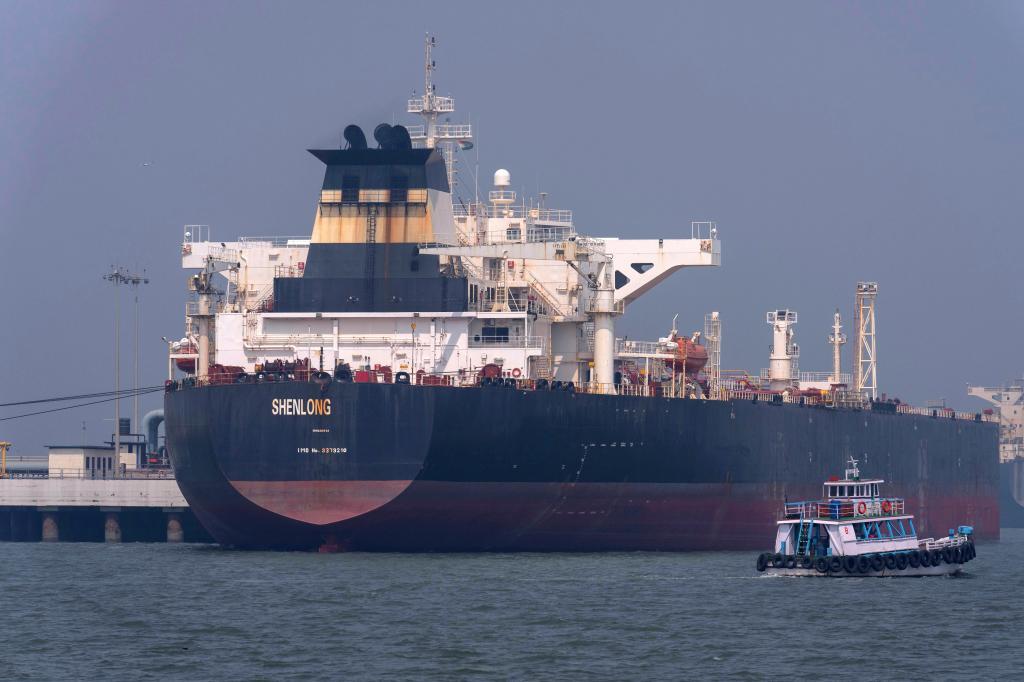
As demonstrated in the nearly 40 days of conflict, the Strait of Hormuz is Iran's biggest card in this war, a physical bottleneck capable of shrinking the global energy market. In the first two weeks of March, traffic dropped from an average of 94 ships per day to just over five. The decline was even steeper for oil tankers and LNG carriers, dropping from 53 to just two transits per day.
Oxford presents three scenarios. One is "very optimistic," where the strait reopens in three months. Another is intermediate, with the reopening occurring after the summer, on the eve of the next cold season. And a third, the most pessimistic, where the closure of Hormuz extends for a whole year. While price spikes are more severe as the closure prolongs, the reality is that in any scenario, gas will remain more expensive than anticipated before the war until 2030.
Although the report focuses on the evolution of the gas market, it does not hide that the collateral effects of a prolonged blockade on trade through Hormuz would drive prices up globally in multiple essential sectors, from food to transportation. "If the closure causes a significant shortage of oil and other products, such as fertilizers, the economic repercussions could be considerable, especially in industrial production, transportation, and food production and prices. The prospects of increased inflation, economic stagnation, and even a global recession remain high," it warns.