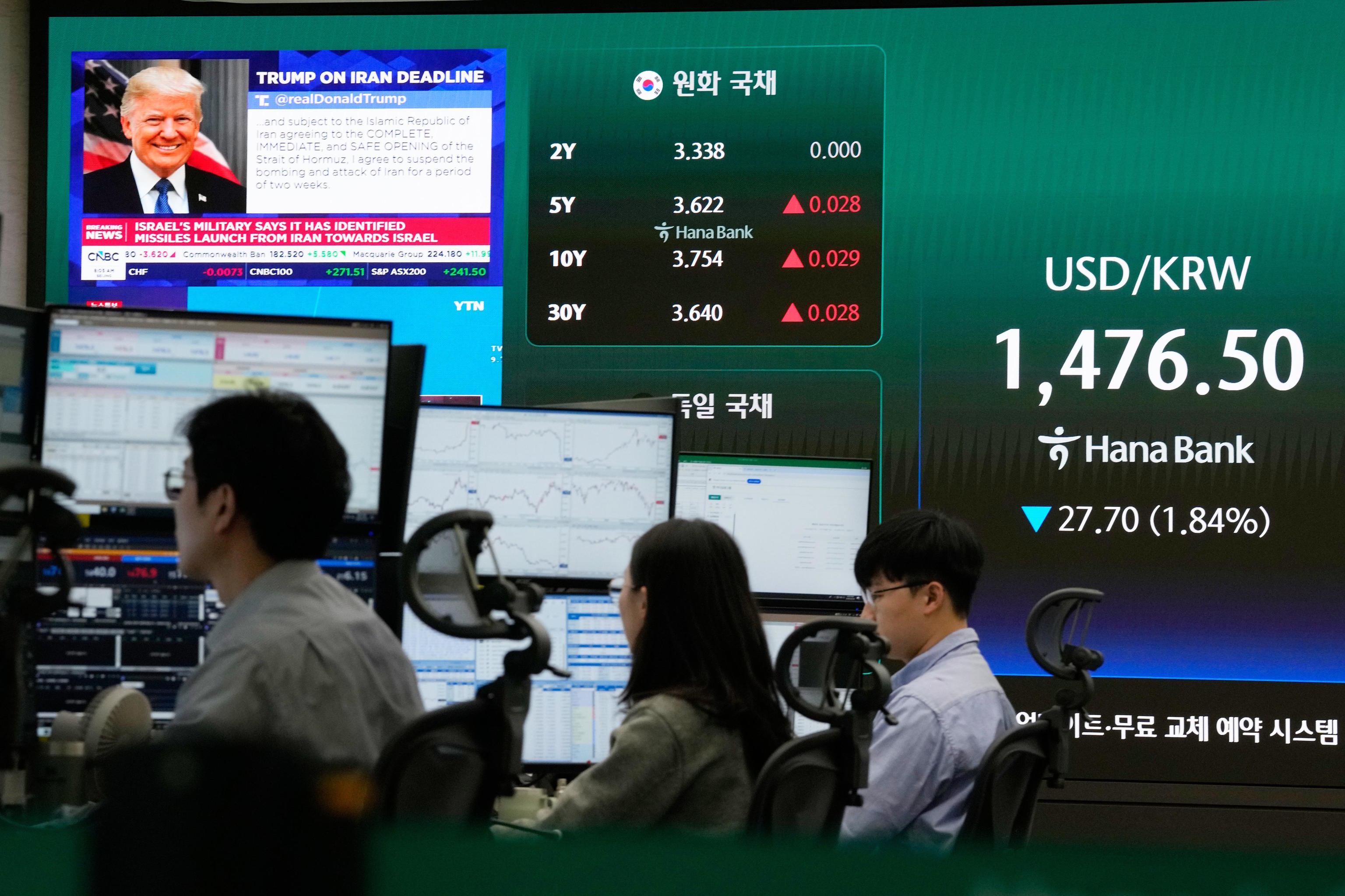
Two weeks of truce are music to the ears of investors who have been hedging their positions in different directions due to the erratic decisions of US President Donald Trump in a conflict that has now entered its sixth week in the Middle East. However, past midnight in Spain, the US government announced a 15-day pause to sit down with the Iranian regime and attempt to reach an agreement. The key lies in the immediate reopening of the Strait of Hormuz, through which 20% of the world's oil and gas supply, as well as various chemicals crucial for industry, or essential raw materials for agriculture and livestock, pass.
The strong hands moving the market are buying into the negotiation and truce, following a pattern seen during Donald Trump's second term in the White House, now that a year has passed since the Liberation day and the announcement of tariffs by his government. The famous TACO, the idea that Trump always backs down (Trump always chicken out), has once again proven true, a script recognized by those in the market.
In this context, the price of oil plunges over 15% and European gas falls to five-week lows, with a 17% drop. Traders are unwinding bullish positions after a month and a half of escalation, during which the European TTF had doubled in price due to the armed conflict in the Persian Gulf, and the Brent, also a reference in Europe, had surged nearly 80%. At the opening of continental stock markets, the gas price collapses to 44 euros per MWh, while the price of oil drops below $93, the lowest since March 11th.
Currently, there are around 800 ships stranded in the region awaiting the reopening of the Strait of Hormuz. Experts say it will take time to return to normalcy because the first step is for the crews themselves to believe in the ceasefire and decide to resume their journey through the strait.
In the stock market arena, Europe follows Asia's lead with gains in its main indices of 4% and 5%. At this hour of the morning, the German stock market leads the purchases. The DAX rises by over 5%, as does the EuroStoxx 50, where the largest continental companies are listed. With the collapse of oil prices, oil companies are plummeting by over 7% in the early stages of the session.
The Ibex 35 surges by 4%, reclaiming the level of 18,100 points. Investor purchases are focused on companies like the airline IAG, with gains close to 10%, benefiting from the drop in fuel prices. Flight manager Amadeus also rises by 5%. On the other hand, Repsol's plummet reaches 11% in the early stages. Banco Santander's rise above 7.5% is also noteworthy.
The session in Asia has also been fruitful. Japan's Nikkei index rose by 5% to 56,106 points; South Korea's Kospi surged by 5.9% to 5,819, while Chinese stock markets recorded more moderate increases close to 2%, despite being one of the major beneficiaries of the Strait of Hormuz reopening due to its strong dependence on Iranian oil. "Nevertheless, the mood remains cautiously optimistic rather than openly celebratory," said Tim Waterer, chief market analyst at KCM Trade, in a note quoted by Associated Press. "The ceasefire only lasts two weeks, and the markets will closely monitor whether maritime transport through the Strait of Hormuz normalizes as promised and if the fragile truce can pave the way for a more lasting peace agreement."
Some of the money exiting the commodities market has flowed into precious metals, where purchases extend to gold, silver, and copper. Gold rises by 2.5% and reclaims the $4,800 level. Silver is the most bullish of the session, with gains exceeding 6%.
There are sales in bonds, easing pressure on potential interest rate hikes in Europe and the US, and Bitcoin is also falling after starting Wednesday with gains. The euro is gaining ground and touched the 1.17 level against the dollar early in the morning.