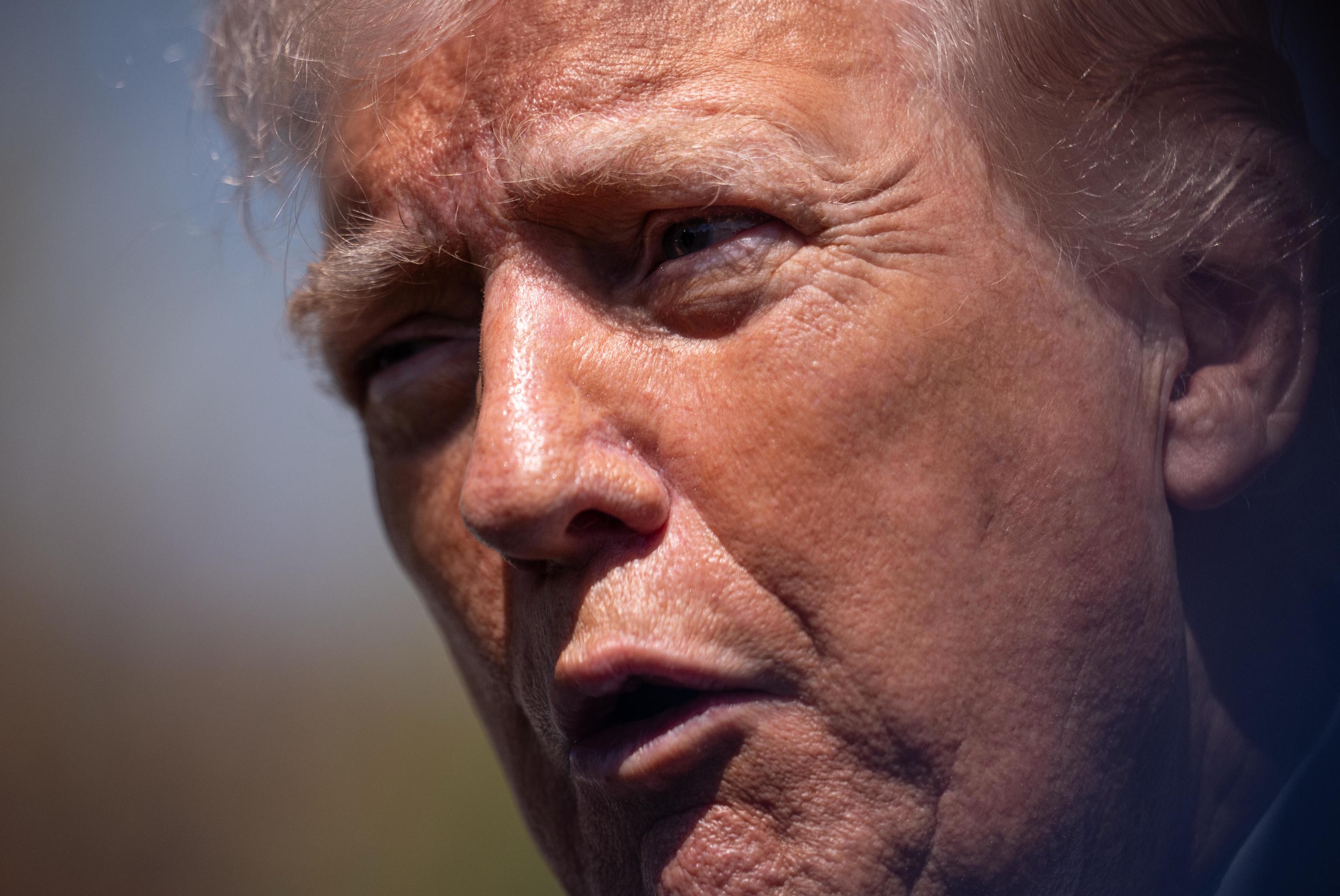
Just hours before Donald Trump's ultimatum to Tehran expired, Pakistan managed to score an unexpected diplomatic goal. Islamabad brokered a two-week ceasefire agreement between the United States and Iran, introducing a critical pause. As per the announced terms, Iran will once again allow maritime transit through the Strait of Hormuz, a key artery for global energy trade, while Washington suspends attacks on Iranian infrastructure. Additionally, both parties have reportedly agreed to initiate negotiations in Islamabad on Friday to work towards a peace agreement.
Trump himself confirmed the understanding through his Truth Social platform after discussions with Pakistan's Prime Minister, Shehbaz Sharif, and the Army Chief, Field Marshal Asim Munir. The central condition was the immediate and secure reopening of Hormuz. Trump added that Washington had received a "10-point proposal from Iran" through Pakistani mediators and believed it could serve as "a viable basis for negotiation."
Another key aspect in advancing the negotiations was China's pressure on Iran. Trump himself stated in a phone call with AFP that he believed Beijing had persuaded Tehran to engage in negotiations. The Asian superpower, which has long supported Iran's sanctioned economy, reportedly committed to act as a guarantor for the acceptance by the US of some conditions put on the table towards a definitive end to the conflict.
As a gesture of trust, as some sources suggest, Beijing vetoed a UN Security Council resolution regarding the reopening of Hormuz just hours before the ceasefire announcement. Last week, China issued a joint statement with Pakistan urging an immediate halt to military attacks and initiating talks to reach a peace agreement.
Regarding Pakistani mediation, for weeks, Islamabad engaged in discreet dual-track diplomacy, maintaining open channels with both the White House and the Islamic Republic. Its value as an intermediary lies in a unique geopolitical position: a historical —though volatile— ally of Washington, sharing borders, commercial interests, and a functional relationship with Iran simultaneously.
Unlike other US regional partners, Pakistan does not host American military bases and retains strategic maneuvering room. Additionally, being the only nuclear power in the Muslim world gives it a significant symbolic and deterrent weight.
Tehran, on its part, quickly acknowledged Islamabad's role. Foreign Minister Abbas Araghchi publicly thanked the efforts of Sharif and Munir, emphasizing that safe transit through Hormuz would be possible through direct coordination with Iranian armed forces. The nuance is crucial: Iran is not relinquishing control but managing it under new conditions, thus preserving its sovereignty narrative.
The backdrop of this diplomatic move also hints at a reconfiguration of relations between the US and Pakistan. After years of mistrust —especially following the 2011 discovery of Osama bin Laden in Pakistani territory— both sides seem to have found incentives for a pragmatic rapprochement. This has been crucial for Islamabad's effective role as an intermediary between Tehran and Washington.
Sharif stated on Wednesday that Iran and the US, along with their allies, "have agreed to an immediate ceasefire everywhere, including Lebanon and other places, with immediate effect." He also mentioned inviting delegations from Tehran and Washington to Islamabad on Friday "to continue negotiating a definitive agreement to resolve all disputes."
The Pakistani Prime Minister is the most visible face of this mediation, but the main interlocutor has been General Munir, who was described last year by Trump, after being received at the White House, as his "favorite field marshal". Earlier this year, Munir presided over the signing of a cryptocurrency agreement between the Pakistani government and a company owned by Zach Witkoff, son of Steve Witkoff, the US Special Envoy for the Middle East. Munir's direct communication with Washington reflects a diplomacy where military, economic, and personal aspects intertwine. This negotiation style, less institutional and more personalized, aligns with the transactional logic that has characterized Trump's foreign policy.
Reconciliation between Washington and Islamabad
For many years, Washington relied on Pakistan as an ally. The CIA closely collaborated with the Pakistani military and intelligence services in the hunt for Al Qaeda militants responsible for the September 11, 2001 attacks, including their leader, Bin Laden. When he was found living in a Pakistani city, US trust in Islamabad plummeted. The Biden Administration even alleged in 2024 that Pakistan was attempting to develop a missile that could reach US territory.
Relations began to be restored at the beginning of Trump's second term, after the Pentagon sent a message to Islamabad: find and deliver the terrorist responsible for the bomb attacks at Kabul airport in 2021. Pakistan actively responded to the counterterrorism cooperation. Later on, Islamabad acknowledged US credit for the ceasefire in a brief conflict with its neighbor, India, a claim denied by New Delhi. As a result, the Pakistani government nominated Trump for the Nobel Peace Prize. Subsequently, Pakistan was among the first countries to join Trump's International Peace Board.
Beyond geopolitics, there is a decisive internal factor in Pakistan's efforts to mediate in the Middle East war: 81% of all imported energy passes through the Strait of Hormuz. No other nation is as dependent on Gulf oil and gas. Additionally, Pakistan lacks sufficient strategic reserves to cushion prolonged disruptions. In a context of inflation and social protests due to rising fuel costs, ensuring the stability of the supply was an economic and political priority for Islamabad.