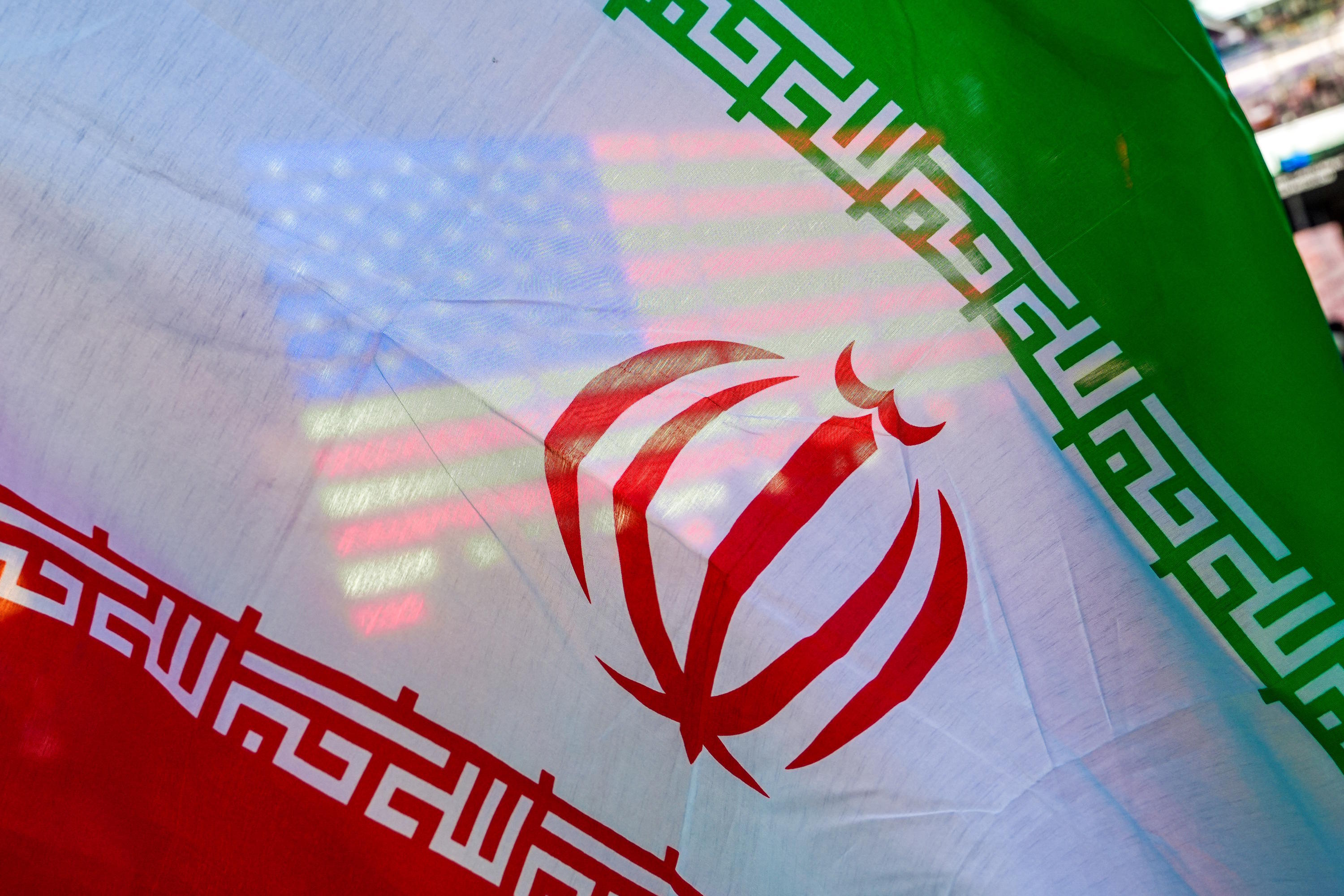
So far, it seems that Trump's ceasefire is unilateral. The United States stopped bombing Iran, but Iran continues to bomb the Gulf States. All these Washington allies feel disappointed by Trump. They expected the United States to "finish the job" and culminate its assault on the ayatollah regime. In fact, according to some sources in Saudi Arabia, the Revolutionary Guard has attacked the East-West pipeline, which connects the Persian Gulf with the Red Sea, through which a good part of the oil production was being transported without having to pass through Ormuz. Bombings have also been reported in Kuwait, Bahrain, and the United Arab Emirates. The phone alerts have not stopped ringing all day.
Now, all these Gulf countries not only have to continue living with the same toxic neighbor who has unilaterally attacked them with missiles and drones, but Tehran may end up taking a share of their oil profits for crossing that Strait. Javier Blas, Energy Analyst for Bloomberg, states that "Ormuz will never be as crucial as it was six weeks ago: Iran's rivals will rush to build more diversion pipelines" to avoid crossing the channel.
In total, considering that 150 oil tankers pass through that channel daily, Iran could annually obtain profits of $60 billion.
Danny Citrinowicz, an expert in security and the Middle East, states that "by effectively recognizing Iran's control over the strait, the United States has helped solidify this reality. Iran can now begin to reap the economic benefits associated. However, any expectation in Washington that Tehran will make concessions in the accumulation of forces or strategic capabilities is likely wrong."
The Strait of Hormuz remains closed de facto, or at least under Tehran's management. In the early hours of the ceasefire agreed upon by the United States and Iran, traffic remains almost completely halted, and only a handful of vessels are seen moving on ship tracking websites. Most of them remain stationary, either off the coast of the United Arab Emirates, at the canal's exit, or in the Gulf of Oman, just at its entrance. Some Iranian sources claim that Tehran would only fully open the Strait starting from Friday, when peace talks begin in Islamabad.
Since the ultimatum came into effect, only 10 vessels have passed through that maritime roundabout now managed by Iran, according to the framework agreement accepted by the United States. Beyond the shipping companies linked to China or Iran itself, large cargo ships or tankers of other nationalities remain anchored. It seems that no captain wants to be the first to proceed to navigate towards the maritime customs set up by the ayatollahs between the islands of Qeshm or Larak, which only open when two million yuan dollars are deposited for either direction.
By paying the money in yuan or cryptocurrencies, the ship's captain receives a password that must be used in the channel between those two islands. Revolutionary Guard military personnel approach the ship to check the cargo. If the password is correct, the ship can continue sailing. If not, it will have to turn back or be "attacked" with drones and "destroyed".
This reporter was recently on the southern shore of the Strait, and Omani fishermen took for granted that the central area of the channel was mined. But no one knows if it's true, and if so, where those mines are. Also, no one knows what role Oman will play in collecting the same fee, as the southern end of that same Strait is part of its territory, and Tehran claims it would have the right to participate in the same collection system.
Although Donald Trump maintains on his Truth social network that the ceasefire with Iran allows the reopening of the Strait of Hormuz, the reality on the ground is slower and more cautious. Maritime transit depends not only on a tweet but on verifiable operational conditions. After weeks of bombings, with 17 tankers attacked, mines, and threats, shipping companies and captains continue to act cautiously, waiting for security to be truly guaranteed and reliable navigation corridors to be defined.
One of the key factors is the role of insurers. Without war risk coverage, no tanker can operate, and these policies tend to become more expensive or withdrawn in conflict scenarios. Even if a truce is announced, companies need time to reassess the risk, confirm that there are no active threats, and set new premiums. Until then, many ships remain blocked or avoid the area, explaining why the political reopening of the Strait does not immediately translate into an effective resumption of traffic.