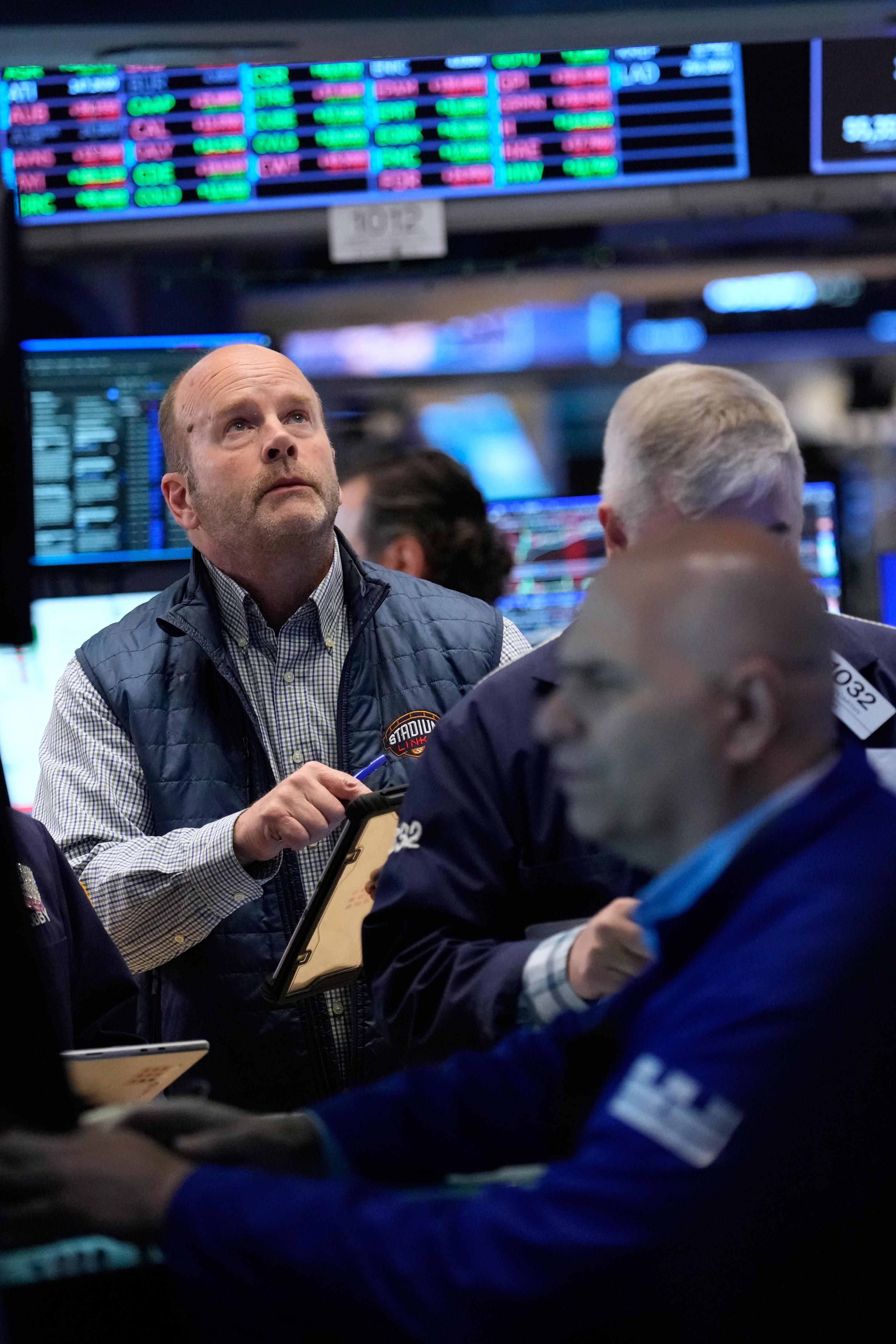
Markets have learned that happiness in Donald Trump's times is short-lived. They seize every opportunity to celebrate, even with some euphoria, decisions that are a relief today ... and tomorrow remains to be seen. It is not easy to be a trader when the world's largest economy is in the hands of a leader who makes erratic decisions, but above all, who publicly comments on any change of mind in international politics. It is a script already known, and that is why on Wednesday investors bought the fifteen-day truce announced by the US and Iran with jubilation and without hesitation, despite the information that emerged throughout the day about attacks by Israel in Lebanon or by Iran on the Emirates, putting the ceasefire at risk.
The day was exuberant for the bulls in the main global stock exchanges... and for the bears in the commodities market. The Dutch TTF, European gas, plummeted by 18%, to 44 euros per MWh. Still, the cost for European consumers and industry is 38% higher today than before the US attacked Iran on February 28. The same situation was seen with oil futures, where Brent and West Texas saw drops of 13%-15%. European crude even dropped to $91 per barrel during the session, only to close around $95 at the European market close.
The main indices saw increases of over 5% for the German stock market, or close to 4% for Paris or Madrid, where the Ibex 35 gained 3.9%, reaching 18,125 points. The pattern, repeated throughout Europe, was massive sales in oil companies - Repsol saw a 6% slump - and purchases in more cyclical companies, such as steelmakers, miners, tourism, or banks.
"If the truce fails, communication channels have been opened that will remain open, and all of this is positive for investors (...) However, since the start of the war, we continue to see declines of 4% in European stock exchanges, 2% in bonds, or 8% in gold [measured in euros]. We are not at a pre-war level," says Francisco Quintana, Director of Investment Strategy at ING Spain.
The rehearsed dance in the markets was executed perfectly. Wall Street followed the European trend with gains in its main indices; volatility decreased, the euro rose against the dollar, Bitcoin lost ground, and gold gained almost 2%, a clear sign that investors were once again putting their liquidity, which they needed weeks ago to cover their positions, into safe assets like precious metals.
"Trump does it again. With just over an hour left before the supposed apocalypse in Iran, a two-week ceasefire agreement was reached with the Persian country. Beyond the usual twist in the script by the US president, the real reason for optimism lies in Tehran's apparent willingness to compromise (WACO: Will the Ayatollahs Chicken Out) and show readiness to ensure safe passage through the strait, something that just a few hours earlier seemed unthinkable," analyzed Banca March in a report titled 'From TACO to WACO'. Trump deserves credit for having half the free world naturally using acronyms coined during his term, ranging from MAGA (Make America Great Again) to TACO (Trump Always Chickens Out), referring to the negotiating style of the Republican leader where he first threatens and then backs down.
Yesterday's market rally is seen as a moment of temporary euphoria by major investment banks. Now it is time to calculate the impact the war will have on energy prices and supply chains and determine if the truce will alter current monetary policy forecasts, which already anticipated interest rate hikes in the Eurozone to combat inflation. Bank of America finds it unlikely that the market will not price in at least two of the three expected rate hikes. Looking ahead, Trump's decision to attack Iran on February 28 turned expectations on their head, even anticipating a 10-basis-point cut in official rates in Europe, compared to the 85-point increase expected just 24 hours ago. "Uncertainty has not disappeared, considering that negotiations could become more complicated in the next two weeks", they point out as the first issue. "The shock on energy prices" will not dissipate even with the immediate reopening of the Strait of Hormuz, and they speak of "permanent damage" to the oil and gas supply chain until the end of the year.
Investor purchases in the bond market, with declining yields, signal a distance from future interest rate hikes. The German two-year bond plummeted yesterday from 2.7% to below 2.5%, and this is the best short-term indicator to gauge market sentiment on Christine Lagarde's next move.
Barclays analysts believe "further de-escalation remains the most rational option" as it would benefit all parties: "Trump needs to reduce tension given the growing political and economic costs of the war, while Iran needs to maintain its oil revenues." However, they mention "growth and inflation repercussions." The European Central Bank (ECB) expects price peaks before the summer, with inflation growing at annual rates of 3.1%, ending the year above its target at 2.6%.
It is crucial to "assess the damage to energy infrastructure to determine how long it will take for Brent prices to return to pre-conflict levels (if they do), to then determine how inflation and growth evolve. We could be facing a situation similar to a year ago when Trump gave his trading partners 90 days to negotiate agreements on tariffs," notes Renta 4. This entails months of uncertainty and high market volatility.
However, there are many shadows in the negotiation. The Pakistani government itself acknowledged attacks by Iran in the region yesterday, and the ten demands that have emerged from the Iranian regime seem difficult to meet. Among them, Tehran wants to recover all its seized assets and rejoin the international community "without questioning its political regime." Then there is the nuclear issue, as a commitment is sought from the ayatollahs to halt uranium enrichment.
But a key issue affecting global trade is how the future operation of the Strait of Hormuz will be. Philippe Waechter, Chief Economist at Ostrum (part of the French asset manager Natixis IM), believes that the ayatollahs' aspirations "would transform an international public good into a regional strategic asset with income-generating potential," which could lead other countries to do the same, monetizing their straits, and this "represents a radical change in global trade dynamics."
For now, what seems unquestionable is that the strait's closure "imposes inevitable logistical delays, as it will take several weeks to redirect tankers, replenish inventories, and fully reactivate production," according to Edmond de Rothschild AM, indicating a longer-lasting impact on prices.