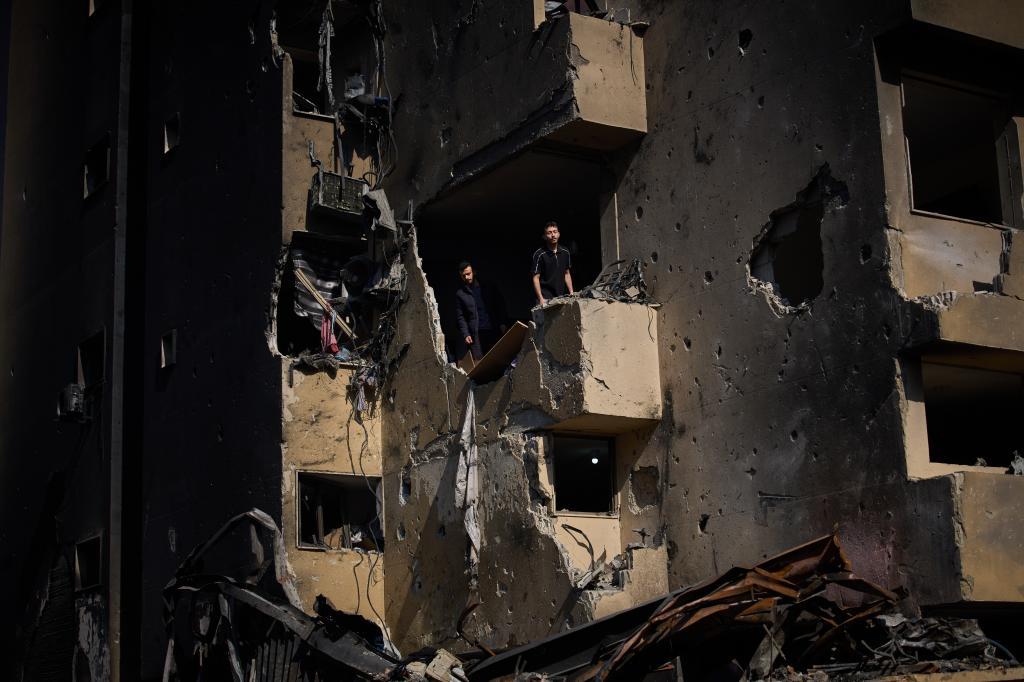
This military operation intensifies a front that Tehran considers crucial to maintaining the two-week truce agreed with the United States. The humanitarian impact has been devastating: the Lebanese government has confirmed 182 dead and 890 injured, although the Civil Defense raises the death toll to 254 people after the attacks recorded throughout the country on Wednesday.
The escalation has triggered a deep diplomatic crisis. Despite Pakistan's mediation indicating that the cessation of hostilities in Iran would extend to Lebanese territory, Israeli Prime Minister Benjamin Netanyahu contradicted such claims by launching his most violent attack in five weeks. In this situation, the President of the Iranian Parliament, Mohamad Baqer Qalibaf, has described the continuation of violence as a violation of the peace plan, warning that it is "unreasonable" to continue negotiating. Meanwhile, Lebanese President Joseph Aoun is in contact with Emmanuel Macron to try to include Lebanon in the ceasefire.
Internally, Israel has been accused of using a rhetoric of religious division to destabilize the country. The bombings have hit Sunni-majority neighborhoods and mixed areas of Beirut without prior notice, under the pretext that Hezbollah hides outside Shiite suburbs. However, leaders of various faiths, such as the Druze Teymour Jumblatt and the Christian Gebran Bassil, have called for a "unified national stance" to avoid internal confrontations and respond to external aggression.
On the ground, Israeli forces are advancing in the south with the aim of controlling 8% of Lebanese territory up to the Litani River. The Israeli air force bombed the Qasmiye bridge, virtually isolating the southernmost region and facilitating a possible long-term occupation. Meanwhile, Hezbollah claims to be engaged in fierce clashes in border towns like Taybeh to halt the advance of invading troops.