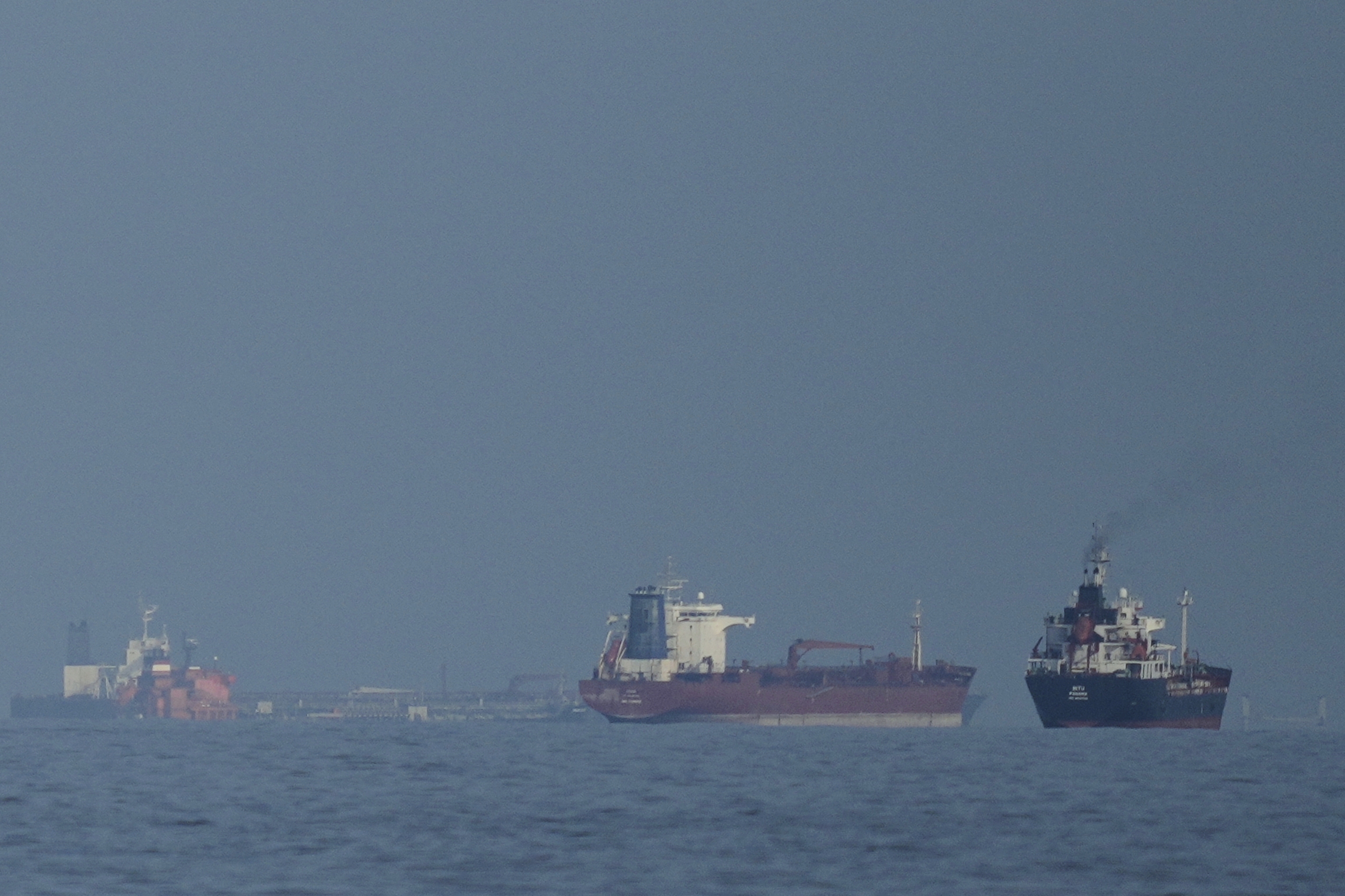
In the last few hours, the vessels that have crossed the Strait of Hormuz, whose full opening was demanded by Donald Trump as a negotiating condition, can be counted on one hand. None of them have been oil tankers or ore carriers, but container ships. Faced with the Israeli escalation in Lebanon, Iran decided to completely close the Strait, almost as at the beginning of the crisis, until the ceasefire is also implemented in the country of the cedars.
Apart from that pressure measure, there is something that Tehran does not verbalize, but that becomes evident when observing its recent attack actions: on Wednesday, their ballistic missiles hit both the port of Furaija (United Arab Emirates) where the pipeline that carries their oil to the Gulf of Oman ends (beyond the Strait of Hormuz) and a pumping station on the Saudi East-West pipeline, which crosses the desert from the Persian Gulf to the Red Sea. In other words, the ayatollahs wanted to destroy the two viable alternatives (through which the equivalent of the combined crude oil of four or five tankers leaves daily) so that all the black gold has to travel through the maritime customs they have set up in Ormuz.
With both measures as a presentation card in the peace talks in Islamabad, oil prices have continued to rise, putting even more pressure on the US team. The calculation made by the Iranians was that they could endure the military pain for longer than Trump could endure the economic pain, and they were right. Furthermore, the regime has declared that, at best, only 12 to 15 vessels will leave per day.
To further emphasize effective control of the Strait, Iran published a nautical chart yesterday offering an entry and exit route from Ormuz, both close to its coast (and therefore subject to its control and within the range of its weapons). In that same document, it is explicitly stated that the entire center of the channel, through which tankers sailed in peacetime, is mined by Tehran.
"The repeated aggression by Israel against Lebanon is a blatant violation of the initial ceasefire agreement and a dangerous indicator of deception and lack of commitment to possible agreements," said the President of Iran, Masoud Pezeshkian. In reality, no one knows very well what the ceasefire agreement is based on and which points must be respected. Faced with such confusion, the first thing the United Arab Emirates, an ally of the US, did yesterday was to seek clarification on what kind of issues had been agreed upon to accept the truce, as no one has seen the 10-point document that, according to the White House, was negotiated with Iran, and which they claim is not the same as the one shown by Tehran, although Trump himself, in a rather confusing message, stated that this Iranian document could serve as a framework for sitting at the table.
Additionally, Trump has set a deadline for European allies to commit to specific military support in the Strait of Hormuz, including offering warships, as reported by Der Spiegel. NATO Secretary-General, Mark Rutte, informed European capitals after his meeting at the White House that the political commitments made since the beginning of the war are no longer sufficient. Multiple European diplomats described the demand once again as an ultimatum. The blond president has little chance of any European country joining his proposal.
In this context, the Gulf countries seem increasingly divided between those who are fed up with Iran's aggressive attitude and those who prefer not to escalate and negotiate with Tehran. One group is led by the UAE, which includes Bahrain and Kuwait, believing that Iran has been strengthened by this war and must be stopped. The other group includes Turkey, Qatar, Oman, Egypt, or Pakistan, who prefer to negotiate.
Dennis Ross was one of the most influential US negotiators in the Middle East for three decades. He participated in key milestones of the Arab-Israeli peace process: he was part of the team that worked on the Oslo Accords and was a central figure in the Camp David Summit 2000 negotiations under the Bill Clinton Administration. In his X account, he wrote yesterday: "The ceasefire agreement may hold, but the negotiations will be full of difficulties: is Lebanon part of the ceasefire or not?; are the Straits open without tolls or not?; will the almost weapon-grade fissile material remain in Iran or be removed? The gaps are real, not easy to overcome."
Rory Johnston, oil markets analyst at Commodity Context, believes that "a true ceasefire that would even partially reopen the Strait of Hormuz, even under suboptimal conditions and under effective Iranian control, would be a divine blessing for markets on the brink of collapse due to shortages and would prevent considerable economic and human misery. A false ceasefire announcement aimed at appeasing the markets actually worsens the long-term consequences of this crisis by delaying more lasting adjustments to ongoing shortages." Yesterday, the Abu Dhabi National Oil Company said that around 230 ships are loaded with oil in the Gulf and ready to sail, but added that none of them can leave Ormuz.
Gregg Carlstrom, Middle East analyst for The Economist, states that "shipowners are concerned about security, as well as the implications of paying Iran to cross: "If the Iranians are demanding a toll at this time, if you pay that toll, you are likely violating US sanctions against Iran." According to Gregory Brew, analyst at Eurasia Group, "Ormuz remains closed and as long as that is the case, next month's Brent cannot really stay below $100 a barrel, product prices will continue to rise, shortages will continue to appear, demand destruction will proceed, economic activity will take a hit. It doesn't matter who is shooting and who is not."