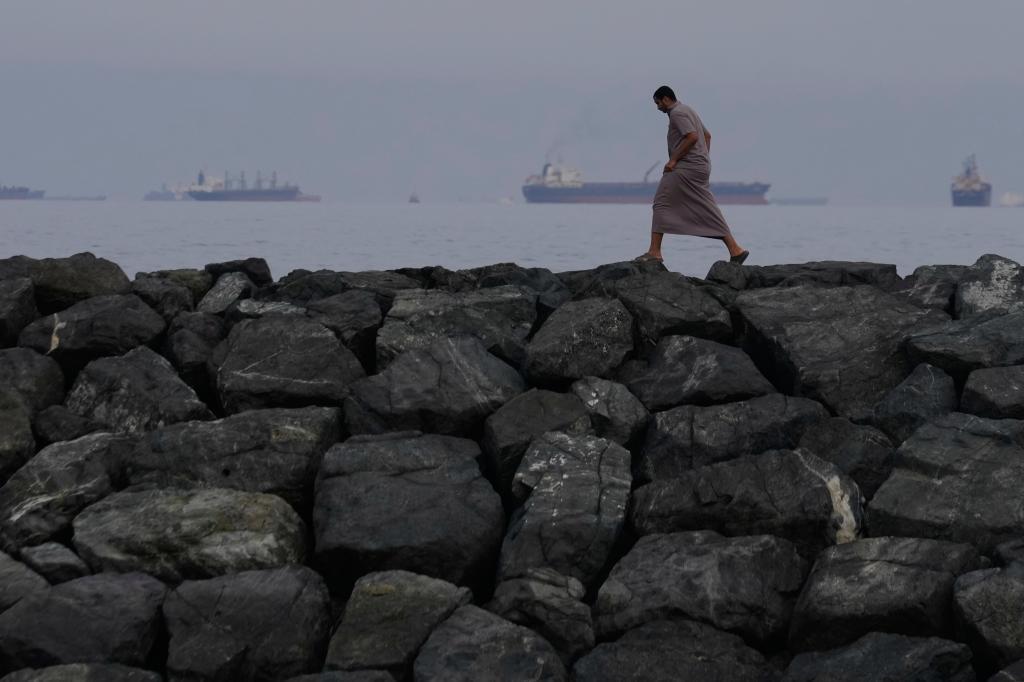
Despite the truce conditioning the resumption of maritime traffic — vital for 20% of global trade — normalcy is far from being restored.
Iran's Deputy Foreign Minister, Dr. Saeed Khatibzadeh, recently stated that the waterway is "open." However, he emphasized that civilian vessels must mandatory seek guidance from Iranian authorities to transit safely. According to the senior official, this assistance is necessary because Iran "mined the channel" during the conflict, in addition to maintaining other "wartime arrangements." Khatibzadeh underscored that Tehran possesses maps of the mined areas to ensure passage, a measure analysts interpret as a tool of pressure on Washington.
Operational reality contradicts market optimism: on Wednesday, only five vessels transited, a minuscule number compared to the 120 to 140 daily before the war. Currently, around 230 oil tankers loaded with crude remain stranded awaiting security. The situation has worsened due to the accusation of "coercion" made by the United Arab Emirates, after it was revealed that Iran intends to charge transit fees.
Hamid Hosseini, spokesperson for the Iranian Oil Exporters' Union, detailed that vessels will have to pay tolls, preferably in Bitcoin or cryptocurrencies, to avoid tracking and international sanctions. The process involves contacting intermediaries of the Revolutionary Guard, providing detailed cargo information, and paying around one dollar per barrel in exchange for an authorization code and route instructions to evade mines.
In response to these demands, the European Commission has rejected any form of payment, reminding that the right to free navigation is guaranteed by the UN Convention on the Law of the Sea and should not be subject to permits or political pressures.