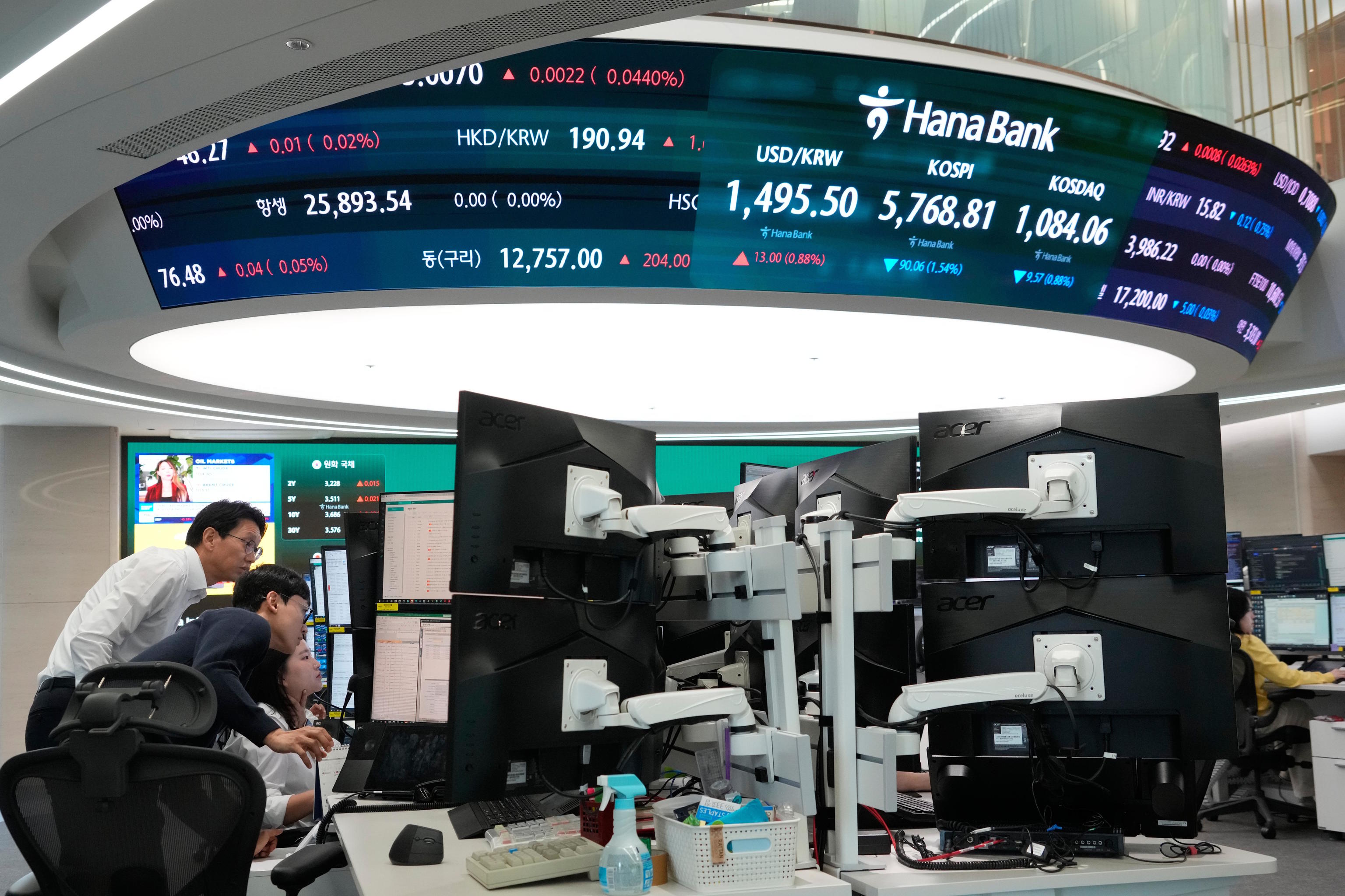
The failure of negotiations between Iran and the US in Islamabad (Pakistan) to end the open war in the Middle East has once again unsettled the markets. President Donald Trump's threats to block the entirety of the Strait of Hormuz and resume selective bombings on the Islamic Republic have brought investors back to a familiar scenario, although it cannot be said to be starting from scratch given how this Monday has begun in Europe.
The price of oil Brent, the European benchmark, reaches the $100 per barrel level with an increase that reaches almost 7%. The same goes for the American West Texas, which is trading above the European barrel price - something unusual that has caused the current war crisis in the Middle East - with increases of over 7%, above $103. European gas is also not immune to the volatility of this week's start, with an 8% price surge, bringing it back to the level of 47 euros per MWh, leaving behind the lows of the last five weeks in anticipation of de-escalation. At its worst moment in the last two months, it exceeded 60 euros.
Why hasn't volatility spiked as in previous occasions? Apparently, the market has learned to contain its nerves regarding the conflict in the Persian Gulf region. It has quickly learned and does not fully believe Donald Trump's apocalyptic threats, referring to what is known as TACO (Trump Always Chickens Out), always backing down, as seen in previous negotiations such as the new tariff policy in the spring of 2025, when he also granted and extended a truce for several months, or in his eagerness to forcibly acquire Greenland. Beyond all this, the US military itself has clarified the president's words by stating that they will start a blockade on all ports and coastal areas of Iran from 4 p.m. (Spain time) on Monday.
The announcement of the blockade halted the limited ship traffic that had resumed in the strait since the ceasefire, according to an early intelligence report from Lloyd's List. Maritime trackers indicated that over 40 commercial vessels have crossed since the start of the ceasefire, below the approximately 100 to 135 vessel passages per daybefore the war, as reported by the Associated Press. Meanwhile, the Iranian Revolutionary Guard maintains that the strait remains under its "total control" and is open to non-military vessels.
The US objective, according to various analyses, is to prevent Iran from financing itself through its exports, which effectively implies a new economic blockade imposed by the American administration. "It will stop any ship that has paid a toll to Iran, while also destroying the mines laid by Iran in the Strait," as stated by Renta 4. "The market seems to interpret with its limited movements that negotiations will resume, and they will be crucial in determining whether the truce is consolidated (the two-week ceasefire expires on April 22) or if, on the contrary, hostilities resume," conclude the experts.
The Ibex 35 opens with a drop of over 1%, losing the 18,000 points level, with Repsol as the only exception in green in a session tinted with losses. In the rest of Europe, the German Dax Xetra is the most sensitive to what is happening in the Middle East, and today it falls more than 1.2% in the European opening. Indices like the Parisian Cac 40 are down by about 0.8%, awaiting the start of the first-quarter earnings season that will kick off today with the luxury giant LVMH.