After a marathon day of intense peace negotiations in Islamabad, the United States and Iran have not reached an agreement. And, according to Washington, it was unlikely to happen without a key concession from Tehran: to verifiably and durably renounce the nuclear path.
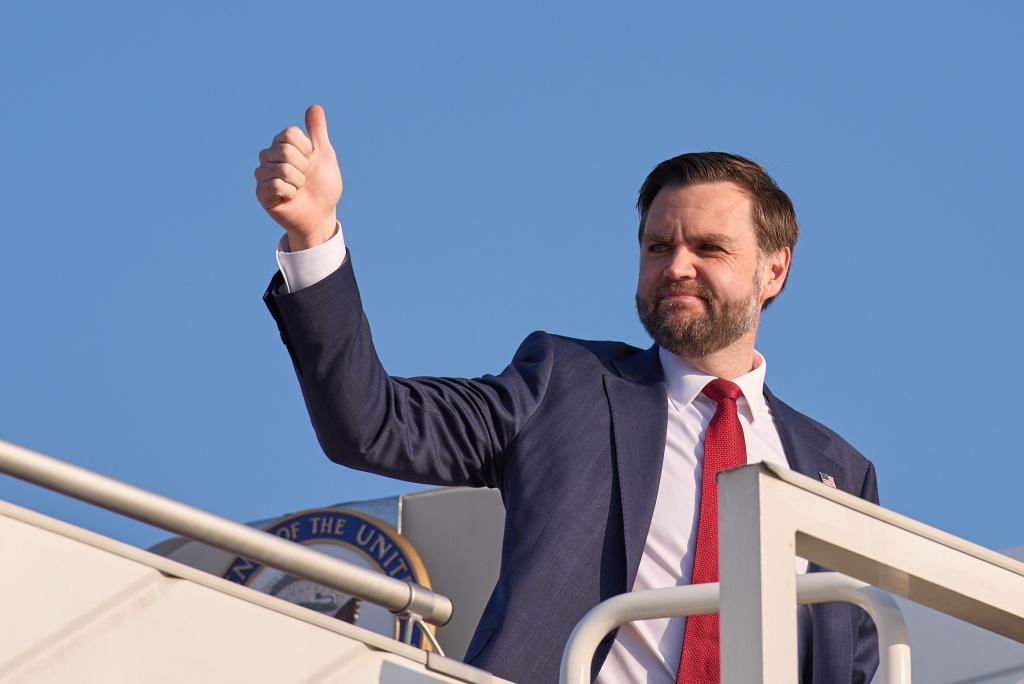
US Vice President JD Vance appeared well into the early hours of Sunday with a clear message: the US needs to see an "affirmative commitment" from Iran that they will not attempt to develop nuclear weapons. Short-term promises are not enough. Washington demands long-term guarantees.
"The key question is: do we see a fundamental commitment from the Iranians not to develop a nuclear weapon, not just now, not in two years, but in the long term? We have not seen it yet," emphasized Vance, who left Pakistan shortly after the negotiations concluded.
From the other side, the narrative is different. Tehran attributes the failure to the "excessive demands" of the United States, which, according to the Tasnim agency, would have blocked any common framework. Hours earlier, and in a less conciliatory signal, Donald Trump had already downplayed the value of the talks: "Whether we reach an agreement or not, I don't care... because we have won."
Vance's assessment leaves no room for nuances: many hours of dialogue, some technical progress, but no political outcome. "We have been working for 21 hours and have had several substantial conversations with the Iranians. That's the good news. The bad news is that we have not reached an agreement, and I think that is bad for Iran, and even more importantly, bad for the United States," emphasized the Vice President without clarifying if the fragile two-week truce will continue.
Washington maintains that they presented a "clear" and "final" offer. Tehran, according to this version, decided not to accept it. The negotiation remains, for now, in limbo. The Iranian delegation also left Pakistan on Sunday morning.
The regime's Tasnim agency quotes a source stating that now "the ball is in Washington's court" and that "Iran is not in a hurry" to negotiate. "Iran presented reasonable initiatives and proposals in the negotiations," they stated, warning that nothing would change in the Strait of Hormuz "until the US accepts a reasonable agreement."
In Islamabad, the face-to-face meeting at the highest level between the main negotiators of both countries began on Saturday afternoon. It was the first time that senior US and Iranian officials participated in negotiations since the 1979 revolution that led to the creation of the Islamic Republic. The US delegation was led by Vance; the Iranian delegation by the Parliament President, Mohammad Qalibaf, and the Foreign Minister, Abbas Araghchi.
The first round of talks lasted about two hours, followed by a second phase of more technical discussions between the advisors of both countries, focusing on security issues and, above all, the Strait of Hormuz. A team of mediators from the host country led by the army chief, Asim Munir, a key figure in the two-week ceasefire agreed upon by the Americans and Iranians this week, participated in all these meetings.
"The success of this diplomatic process depends on the seriousness and good faith of the other party, refraining from making excessive demands and illegal requests, and accepting Iran's legitimate rights and interests," declared the Ministry of Foreign Affairs spokesperson, Esmaeil Baqaei, after the meetings.
Pakistani sources stated that there was a deadlock in the dispute over control of the strait. Iran insists on maintaining control of Hormuz and demands tolls for maritime transit. For the US and its Gulf allies, that line is untenable. The strait is not just a strategic passage: it is a critical valve for the global energy market.
Another major point of friction, according to several international observers, would have been the US's reluctance to commit to stopping its ally Israel from bombing Lebanon.
Meanwhile, contradictory reports circulated about possible economic concessions. Iranian state television claimed that Washington agreed to release billions in blocked funds. A US official denied it even before the talks began. Nevertheless, several reports suggest that the option to unlock assets —including $6 billion in Qatar— was on the table.
As Vance highlighted, there were also no advances in the nuclear file. Trump maintains his demand for Iran to abandon uranium enrichment, a red line for Tehran. Added to this is the issue of the 440 kilograms of highly enriched uranium, allegedly buried under facilities bombed during the recent 12-day war between Israel and Iran. Without an agreement on that material, any pact remains incomplete.
While negotiators discussed in Islamabad, tension continued to escalate on the ground. The US Central Command announced naval movements to prepare for mine-clearing operations in Hormuz. Tehran denied this and claimed to have halted a US destroyer. The Revolutionary Guard Corps went further: any military vessel crossing the strait, they warned, "will be treated severely." Diplomacy and deterrence are advancing in parallel. However, after the failure of the talks in Islamabad, the balance is even more fragile.