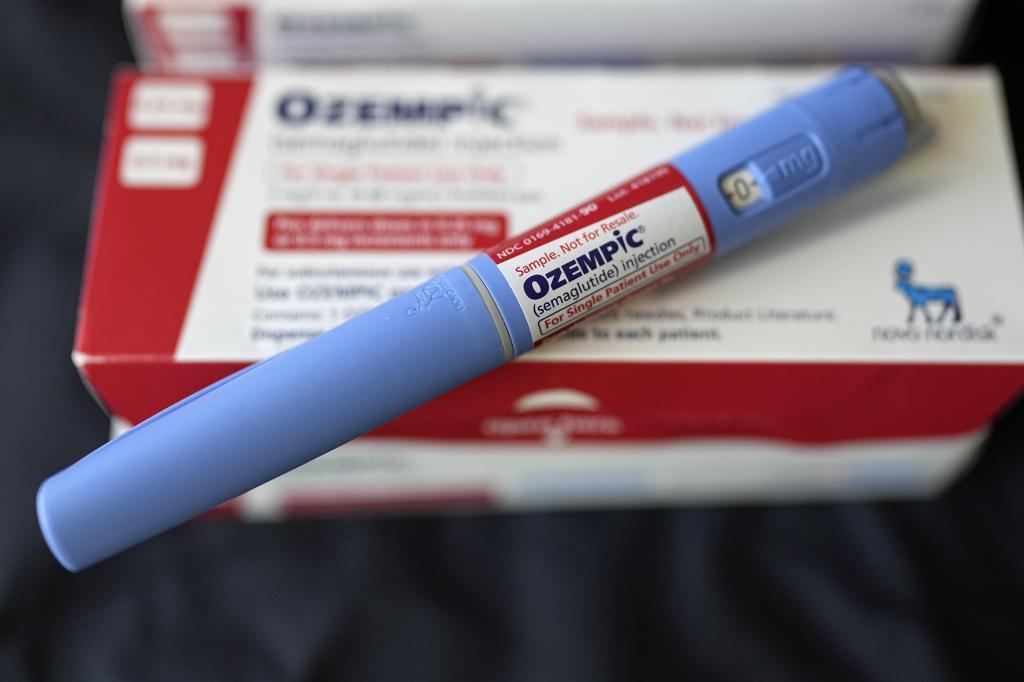
Turning to drugs from the Ozempic family (such as Wegovy and Mounjaro) is not synonymous with healthy weight loss. Doctors emphasize that "these medications do not work if proper eating and necessary exercise are not done." Now, one of the first studies examining the eating behavior of people using GLP-1 is coming to light.
The conclusions of a team of researchers from the University of Milan and the IRCCS San Raffaele Hospital, to be presented at the upcoming European Congress on Obesity (ECO), emphasize that "prescribing GLP-1 without addressing nutritional adequacy can leave patients vulnerable to clinically relevant deficiencies," explains one of the lead authors, Rebecca De Lorenzo, from the Internal Medicine Unit specializing in Metabolic Health and Aging at the Italian hospital.
The researchers analyzed 5,741 days of data from 332 overweight or obese adults (who consented) using a food tracking mobile app (Robin Health) between July 2025 and February 2026.
Protein Deficiency: The Invisible Risk to Your Muscles
Using an app with artificial intelligence, the researchers have determined that those using these medications consume significantly fewer calories and proteins, with 88% of users below recommended levels.
The results indicate that appetite suppression affects all nutrients proportionally, leading to a critically low protein intake that jeopardizes muscle mass. While experts recommend between 1.0 and 1.2 g/kg/day during active weight loss, the analyzed users consumed only 0.6 g/kg/day, approximately half of what is needed to preserve lean mass.
Skipping Meals: The Mistake of 40% of Patients
Furthermore, a marked tendency to skip meals was observed. Specifically, they skip dinner 40.4% of the days, breakfast 31.3%, and lunch 30.5%. This reduces the chances of reaching the necessary protein thresholds for muscle synthesis, estimated at around 20-30 grams per meal.
One of the mistakes is "using" the medication without a medical prescription. "It is necessary to integrate personalized nutritional guidance and active monitoring to avoid complications such as sarcopenia during treatment," emphasizes another author of the study, Patrizia Rovere Querini, director of the Internal Medicine Unit. "Nutritional monitoring is not a luxury but a clinical necessity for patients taking these medications," she insists.
Many patients use GLP-1 drugs without adapting their dietary habits to their new reality of reduced appetite or without seeking personalized nutritional guidance. By consuming very few calories (an average of 1,100 kcal/day), it is logistically very difficult to obtain the necessary nutrients solely from whole foods without deliberate planning, as indicated in the study.
This caloric or food restriction is not ordered; patients tend to eat less of everything proportionally, instead of improving the diet quality. "This means they do not prioritize nutrient-dense foods, which can lead to micronutrient deficiencies such as iron, vitamin B12, calcium, vitamin D, and fiber," adds nutrition biologist Valentina Vinelli.
Sarcopenia and Lack of Nutrients: Consequences of Lack of Medical Guidance
In addition to this nutritional deficiency, there is no increase in the physical activity required for this anti-obesity therapy. And this is another common mistake: not combining the medication with resistance exercise. The lack of this stimulus, combined with low protein intake, significantly increases the risk of sarcopenia (muscle mass and function loss). "This justifies early and proactive intervention rather than waiting for clinical signs of muscle loss to appear," says De Lorenzo.
"Although these medications lead to significant weight loss, the question of whether fat loss with these therapies comes at the expense of muscle is the subject of intense debate. Meanwhile, the general consensus is that protecting muscle tissue should be a fundamental goal of any weight loss program," insist the three researchers.
Therefore, the experts highlight that this study provides the clinical evidence base to define what those thresholds and interventions should be. "We believe this represents an important opportunity to integrate digital tools into the clinical management of patients on GLP-1 therapy."
They also point out that "platforms that prescribe without providing, or at least facilitating, adequate dietary support may be exposing patients to avoidable nutritional risks." Here, they refer to issuing a prescription without subsequent control, which puts patients at risk because they do not fully understand the requirements of GLP-1 medications.
The most effective and safe approach requires not only medication "always under clinical control" but also "a focus on proteins in every meal, avoiding skipping meals, and maintaining a structured physical activity program," they emphasize.