European countries are already taking on more real responsibilities in the NATO. This is what US President Donald Trump demanded, and what the EU has understood as vital for European security. They are doing so at the same time that the magnate recurrently threatens to leave the Alliance for being "cowards" and "selfish." Diplomatic sources and the Organization itself affirm that this is not the reason, and no one envisions the United States leaving NATO. However, they confirm the undeniable increase in European influence.
"Europeans are stepping up. That is what the Secretary-General [Rutte] has been saying for some time, and in this process, they will take on more responsibilities and have more weight," NATO sources point out. "The United States wants to redistribute its troops and focus on Iran, China, and other theaters of operations. No one is planning a NATO without the United States. That is not realistic. But what will be seen is a stronger European pillar within NATO," they insist.
"The process was triggered after the United States published its new strategies, and indeed there will be more European positions. There are already some, in fact," corroborate sources from the diplomatic sphere. "This implies investing more in Defense, but also taking on more responsibilities within the NATO structure. It is something that the United States has been pushing for some time, and Europeans have clearly heard the calls," they emphasize.
And it is in this context that, according to those questioned, the significant meetings held this week by the President of the European Commission, Ursula von der Leyen, in Brussels must be analyzed. On Wednesday, with the Supreme Allied Commander Europe (SACEUR). Currently held by Alexus Grynkewich, a key figure in NATO, this position has always been occupied by a four-star American general. Few details emerged from this meeting, but it surely also addressed Trump's threats.
Yesterday, with Mark Rutte, to "discuss how to further strengthen our essential cooperation between NATO and the EU, including increasing industrial defense production, continuing vital support to Ukraine, and protecting critical infrastructures," as stated by the Alliance's Secretary-General on his X social media profile. "A stronger Europe means a stronger NATO," Rutte added.
"We took stock of our joint work to strengthen European defense and continue supporting Ukraine. We talked about the upcoming NATO summit and how we can increase industrial defense production in Europe. We need to invest more, produce more, and do both faster," Von der Leyen posted. Institutional messages in both cases that, however, make more sense when considering all that has been pointed out so far. Discussions and conversations for Europe to take on more responsibility, rearm, and be able to defend itself are evident.
Regarding this issue, NATO insists, there is no debate. But where significant tension exists is around Iran. Although the sources consulted insist that this will not lead to the departure from the Alliance as Trump has threatened, they do point out that US representatives are heavily pressuring their European allies to participate in the war.
In other instances, the magnate's threats and grandiose words did not have a faithful reflection in the day-to-day of the Alliance, or at least, coexistence was calmer than one might think based on the statements of the US President. But in this case, the situation is delicate.
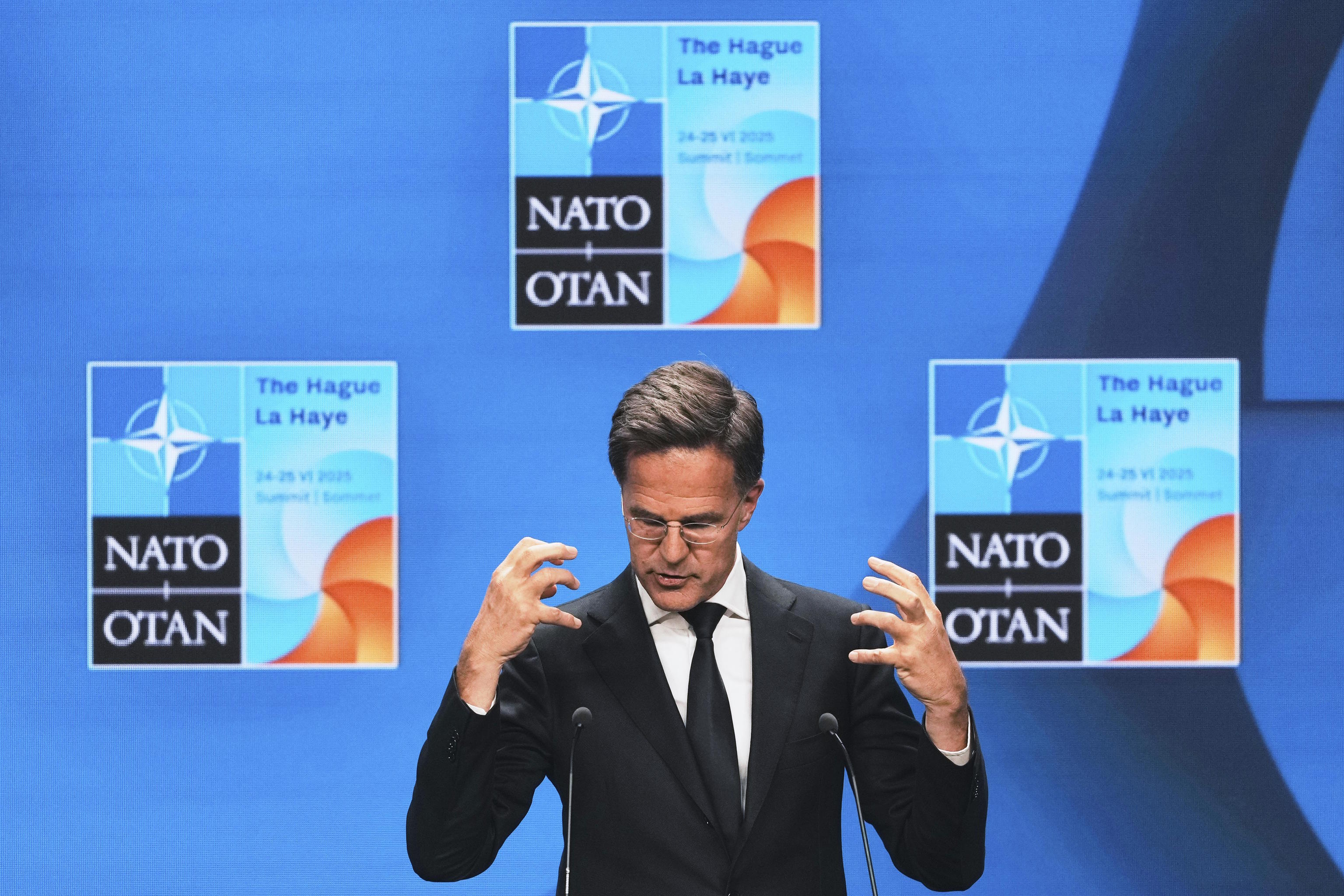
The next step in NATO will be the meeting of Foreign Ministers scheduled for May in Helsingborg (Sweden) and, above all, the Ankara summit. Last year's summit, held in The Hague (Netherlands), was historic as it was agreed that countries would increase their annual defense spending to 5% of Gross Domestic Product (GDP). All except Spain, of course. The possible agreements and discussions in this summit will also be very relevant. It will take place on July 7 and 8, so the war in Iran should have ended. But one never knows, just as it is not even certain if Trump will attend or if he will, precisely, announce that he is leaving NATO, although in reality, US law does not allow this decision without Congressional approval. But it is also not clear how much he cares.