From Monday to Friday, with the market open, Donald Trump talks about ceasefires, peace, agreements, and collaboration. On weekends, with the market closed, the U.S. president resorts to threats, says he does not rule out resuming bombings, and shows his tougher side. He has been doing this since February, and the last 24 hours have been no different.
On Thursday, Trump announced a truce between Israel and Lebanon, or rather imposed it. On Friday, he celebrated the complete reopening of the Strait of Hormuz and guaranteed that Iran would never close it again, also stating that they would work closely with the Iranian government to recover and transfer the nuclear material buried in the brutal attacks of the summer of 2025 to the U.S.
The problem is that all these announcements, including the unilateral declaration that the U.S. Navy would continue to control maritime access, were made unilaterally. It only took a few hours for it to become clear that nothing was holding up.
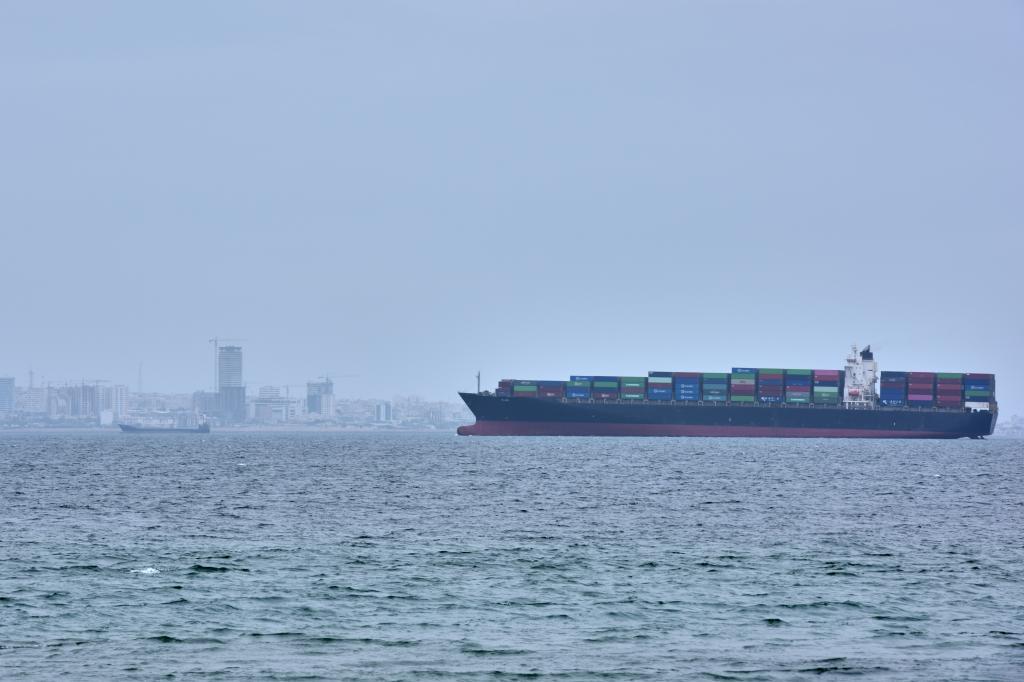
Between Friday night and Saturday morning, tankers that, following Trump's words, attempted to cross the Strait had to turn back upon realizing that passage was not possible. Those who tried to bypass the Iranian blockade, like at least two ships, received warning shots very close, a clear sign that the situation remains very tense.
The United Kingdom Maritime Trade Operations (UKMTO) reported an incident where a tanker was attacked near the Strait of Hormuz by two patrol boats linked to the Islamic Revolutionary Guard Corps. The incident occurred 20 nautical miles northeast of Oman, according to the UKMTO, citing the ship's captain, who reported that they had been fired upon without prior radio warning.
Tehran's reaction to Trump's attempt to reopen the Strait while controlling Iranian revenues has been angry. If on Friday they had announced a "full reopening," by Saturday they quickly reversed course. They also denounced that no agreement had been reached for a joint mission to recover the buried uranium, let alone for the Americans to take it away.
"As long as the enemy intends to disrupt the passage of ships and impose its naval blockade, Iran will consider that a violation of the ceasefire and will avoid the conditional and limited reopening of the Strait of Hormuz," warned Iran's Supreme National Security Council on Saturday. "Control of the Strait of Hormuz has returned to its previous state," said the military, emphasizing that the Strait remains "under the strict administration and control of the armed forces" until the U.S. restores "full freedom of navigation for ships traveling from Iran to their destinations and from destinations to Iran."
Meanwhile, the U.S. Central Command stated in a release that "since the start of the blockade, 23 ships have complied with U.S. forces' instructions to turn around. U.S. forces are enforcing a maritime blockade against ships entering or leaving Iranian ports and coastal areas," with images of the USS Canberra navigating the area.
On Friday, Admiral Brad Cooper, in charge of the Central Command, stated that the blockade will continue until Trump lifts it. "As announced by the president today, U.S. forces in the Middle East continue to fully enforce the maritime blockade on ships entering or leaving Iranian ports in coastal areas. It will remain in effect until further notice," he said.
Trump, always comfortable in his game of biased and contradictory information, highly skilled at sending optimistic messages to the market on Friday afternoons, reacted on the flight back to Washington from Las Vegas by showing his more aggressive side, saying that with this attitude there are no guarantees that the ceasefire expiring next Tuesday can be extended and opening the door to new bombings.
This despite having stated throughout the day in numerous short interviews that "the war is over" and that it was "a great victory," referring to the reopening of navigation for tankers through an area where 20% of the world's oil passes. "They have accepted all terms," he said unabashedly.
The president did not go much further on Saturday morning from the White House, during an event on medical research with the presence of Joe Rogan, one of the most listened to podcasters on the planet who has distanced himself from Trump in recent weeks and criticized his actions.
In a rare move, the president did not take questions from the gathered journalists and only made a few carefully worded and open statements. "They have become a bit naive, as they have been for 47 years. Actually, everything is going very well, and we will see, but we will have information by the end of the day," he began. "We are having very good conversations with Iran. It is going very well. They have no navy, no air force, no leaders. They have nothing. They wanted to close the Strait again, as they have been doing for years, but they cannot blackmail us. In fact, many ships are coming to Texas. We will have some information by the end of the day. We are talking to them, and you know, we are taking a firm stance," he cryptically added.
This is his usual way of operating, full of traps, hasty and unilateral announcements, combined with bombastic threats while dozens of diplomatic negotiations are taking place simultaneously. For Trump, it is important to reopen the Strait of Hormuz, but even more important that the whole world thinks he has absolute control, that he leads every step, that all actors dance to his tune, and that the rest of the players follow his instructions.
Following the initial negotiations between the U.S. and Iran last weekend in Pakistan, Iranian Deputy Foreign Minister Saeed Khatibzadeh stated on Saturday that a second date will not be set until both parties "have agreed on the framework". Speaking to the press at a forum in Turkey, the Secretary of State stated: "We do not wish to engage in negotiations or meetings doomed to failure that could serve as a pretext for further escalation."
At the same time, the Iranian government announced the end of a three-day visit by Pakistan's top military official, Asim Munir, who brought new proposals presented by the United States.
On Thursday, Trump hinted that the second round of negotiations could take place very soon, even fantasizing about the possibility of attending in person, after his Vice President JD Vance led the first round. Since then, however, Vance has maintained a low profile, not publicly commenting on the matter in recent days.
Meanwhile, taking advantage of the ceasefire, six Iranian airports have reopened their doors this weekend, and airlines are ready to operate domestic and international flights, according to local media. The airspace had been closed since the start of U.S. and Israeli bombings on February 28.