Colorectal cancer is currently the most common tumor in Spain, with 44,573 cases detected in 2025 according to the Spanish Society of Medical Oncology (SEOM).
This type of cancer mainly occurs in older people - where over 90% of diagnoses are concentrated - although in recent decades there has been a progressive increase in its incidence in individuals under 50 years old globally.
Numerous research teams are studying the reasons for this increase, pointing to the influence of lifestyle habits and exposure to certain toxins and environmental factors.
This Tuesday, a study from the Vall d'Hebron Institute of Oncology (VHIO) has shown a relationship between epigenetic changes caused by diet, tobacco, and exposure to a type of pesticides with the development of colorectal cancer in individuals under 50 years old.
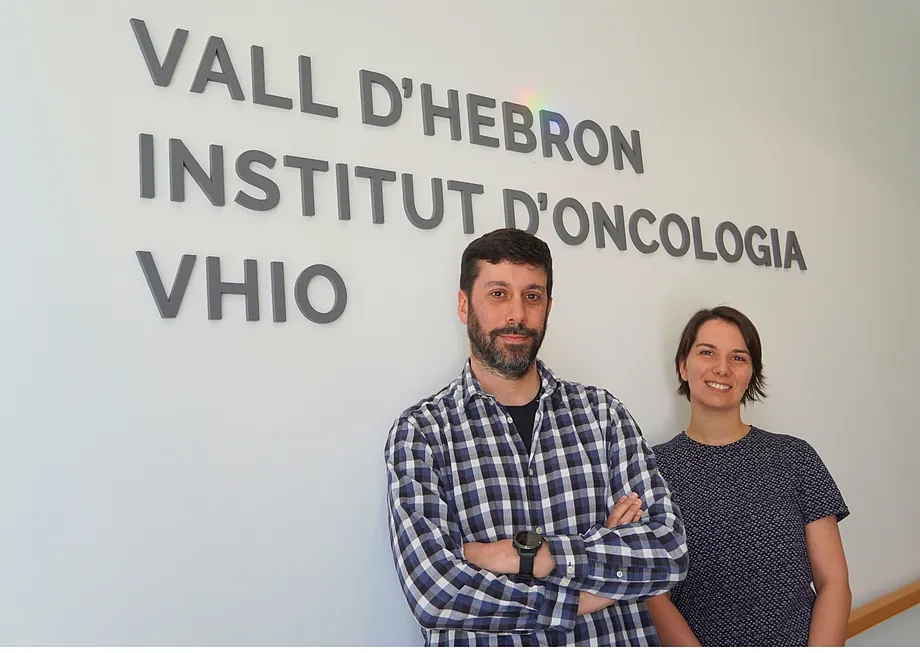
For the first time, this team led by José Antonio Seoane, head of the Computational Biology Group at VHIO, has identified the footprint left by the set of environmental exposures and lifestyle, known as the exposome, and how this footprint is related to colorectal cancer.
"We have developed a methodology that allows us to 'read' the history of environmental exposures and the epigenetic marks that those exposures leave," explains Seoane.
The specialist recalls that epigenetics is a system that 'turns on' or 'turns off' some genes without changing the DNA sequence.
"If we imagine the genome as a book, epigenetic marks do not change the text, but they function as post-its or bookmarks that indicate which chapters should be read and which ones should be skipped," he clarifies. "Furthermore, these post-its can be added or removed depending on the environment and lifestyle, such as diet, stress, or exposure to toxins, influencing how the same book is interpreted over time," he adds.
The objective of this study, he continues, was to "explore the components of the exposome that could contribute to the development of colorectal cancer in young individuals compared to colorectal cancer diagnosed at older ages, using epigenetic markers."
With that goal in mind, the team designed risk scores based on DNA epigenetic marks (specifically regarding methylations) that demonstrate exposure to different factors such as lifestyle and environment. They used data from The Cancer Genome Atlas (TCGA) and confirmed the results in nine other independent patient groups. Subsequently, they compared these scores in patients with colorectal cancer both at older ages and under 50 years old.
The results showed significant differences in epigenetic signatures associated with tobacco, diet, and exposure to a type of pesticides. The details of the work are published in Nature Medicine.
"The study showed us some things we expected to see, such as signals related to tobacco exposure or a low-fiber diet in young patients," the researcher points out. But in addition, the research also revealed some novelties, such as a correlation signal between exposure to the pesticide picloram and early-onset colorectal cancer, Seoane adds.
This herbicide, he adds, began to be used in the 1960s. Its use is highly restricted in Europe, but it is more widely used in other areas, such as the US or Latin America.
"We wanted to delve into this correlation and analyzed population databases of people with cancer and pesticide use by counties in the United States and observed that the incidence of early-onset colorectal cancer was significantly associated with the use of picloram," the researcher points out, emphasizing that the research is observational, so it does not allow establishing a causal relationship between both factors.
"Further research is needed to confirm if exposure to picloram is indeed behind the early development of the tumor," he insists.
Robin Mesnage, a visiting researcher at King's College London, also emphasizes this point, praising the innovative approach of the work and its thorough analyses but noting that this work "shows associations, not causality."
"The signal for picloram is interesting, but exposure was not directly measured in the subjects. Therefore, we cannot conclude that picloram causes these cancers," he stated in remarks to the Science Media Center.
"Furthermore, we must consider the nature of the substance itself. Picloram has not been found to have carcinogenic properties in regulatory tests. However, historically it used to be contaminated with carcinogenic substances like hexachlorobenzene. Any observed effect may have been due to this contamination and not to picloram itself, a problem that should have largely been resolved in modern manufacturing. It is always important to remember that real-world exposures involve not only the active ingredient but also co-formulants and possible contaminants," he adds.
In general, he concludes, "this is a fascinating and well-conducted study that poses a plausible hypothesis. However, more work is needed, specifically with direct exposure data and longitudinal designs, before making causal claims."
Seoane, on his part, indicates that the results of his work "not only identify components of the exposome from epigenetic imprints that could contribute to the development of colorectal cancer, especially in young individuals, but also lay a solid foundation for addressing environmental exposures and lifestyle-related factors in order to reduce risk, highlighting the importance of promoting preventive interventions at both the individual and public policy levels."