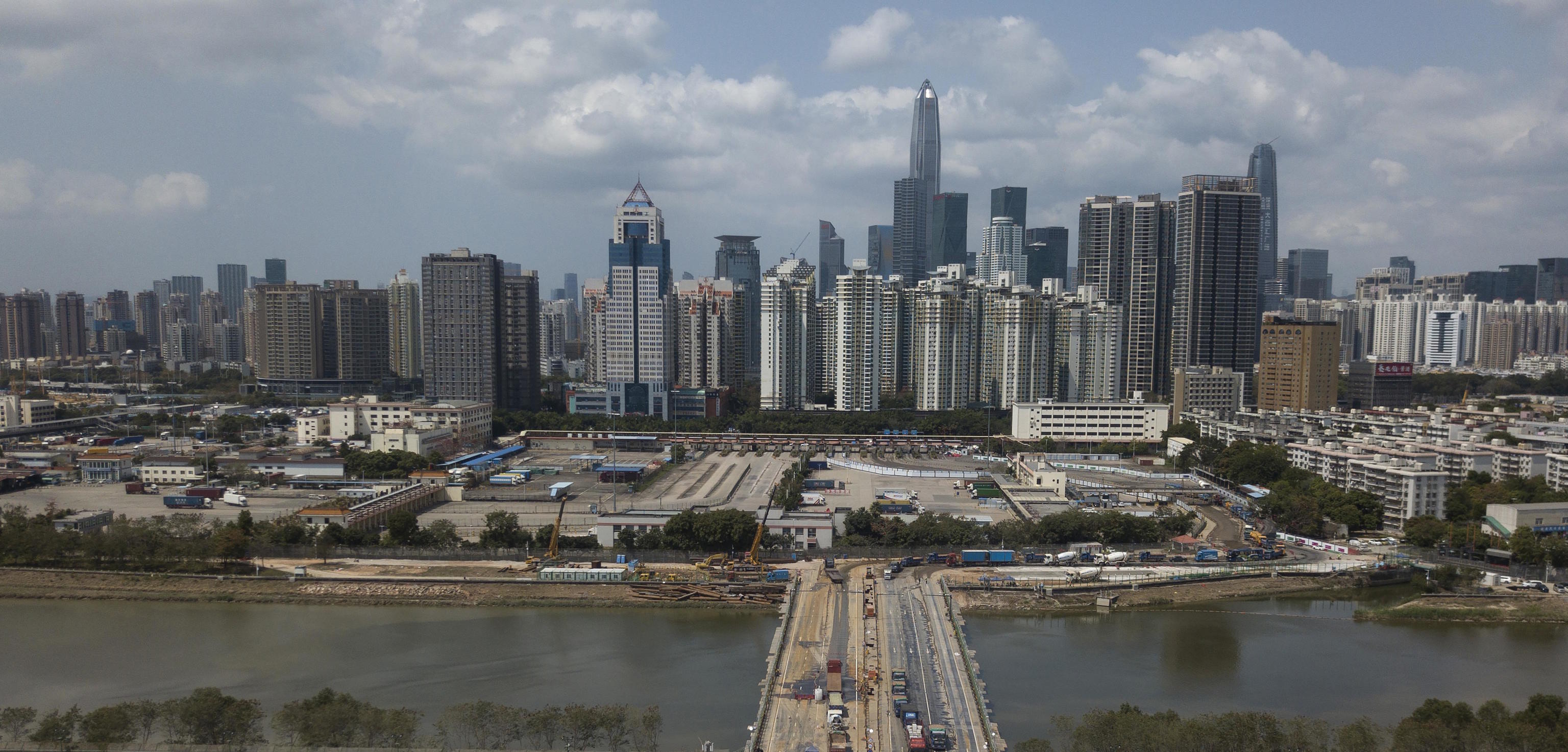
Li Wei owns two apartments on the coast of Yantai. He bought the first one 12 years ago when the square meter seemed like a safe bet in this bustling northeastern port city of China. The second one came shortly after, with the idea of putting it in his son's name when he gets married. Now, at 46 years old with good savings accumulated, Li wants to acquire a third apartment taking advantage of the recent price drop. But in China, speculating with a third property is not so simple.
The local government of Yantai, where more than three million people live, lifted the restrictions last year on the only two properties that a family can register under its name. Now it can be up to three. But the first hurdle that Li, the owner of an academy, has encountered is at the bank. "If it's a loan for a third property, they demand an initial payment of over 75% of the total value," he says. In addition, the mortgage interest rate is no longer as favorable as he obtained in his first two purchases.
The apartment Li was looking at, a 90-square-meter one in the center of Yantai, is around two million yuan, which is approximately 245,000 euros, a much more affordable price than in megacities like Beijing or Shanghai. If a foreigner wanted to buy that property, they would also encounter restrictions. Normally, they could only acquire one house in China, and it must be for personal and residential use, never for renting or investment. Before making the purchase, they must also prove that they have worked or studied in the Asian country for at least a year with a residence permit.
While Li faces limits to acquire a third property, in Spain, prices have soared to historic highs without comparable barriers for those who want to buy multiple properties, beyond their financial capacity. In cities like Madrid and Barcelona, the political debate revolves around how to contain rents and expand public housing, while in major Chinese cities, the dilemma for years has been how to curb excess.
In Beijing, there is a phrase that officials repeat in official speeches: "Houses are for living in, not for speculation." It's not just a slogan. It's the summary of a model that for two decades made real estate ownership the cornerstone of Chinese family prosperity and at the same time, a tool for economic and social control by the regime.
Today, while young people in Spain look in fear at an inaccessible market, China offers a striking paradox: a country where the majority of young people are homeowners, but where the real estate sector is going through one of the biggest crises in its history.
In China, all urban land is ultimately state-owned. Local governments traditionally have sold land use rights for decades to private developers, and those revenues have been for years an essential source of municipal financing. That structure allowed for a dizzying expansion: entire developments built in months, new cities connected by high-speed trains, millions of square meters built to absorb migration from rural to urban areas. The result was a homeownership rate close to 90% in urban households, a figure unthinkable in most European countries.
The model depended on prices continuing to rise. For almost 20 years, housing in China was the safest investment. But there was a rupture in 2021 when Beijing launched a campaign against excessive debt of large real estate companies. Giants like Evergrande collapsed under mountains of debt. Dozens of projects were halted. Confidence evaporated. Since then, prices have fallen in many cities.
But China boasts that most urban surveys agree that over 70% of those under 35 own a home. In some surveys, the proportion even exceeds 80% when counting homes registered under parents' names but intended for the child. It is a stark contrast to Spain, where the homeownership rate among young people has plummeted since the 2008 financial crisis and now stands at historically low levels.
"It is important to understand the cultural context of this country before analyzing the numbers," explains a commercial manager at Lianjia, one of the largest Chinese real estate agencies. "For years, buying a home has not only been a financial decision, but a social requirement. Especially for men. In many families, reaching marriage without a property was seen as a lack of stability or even responsibility."
The agent, who has been selling homes for over a decade in second-tier cities like Yantai, describes it bluntly: "When a couple considers getting married, the conversation about the house arises immediately. And in practice, the pressure falls on the groom and his family. The boy's parents usually help with the down payment, the grandparents contribute savings, and the young man takes on a high mortgage to be able to present himself to the bride's family with a property already purchased."
He explains that this dynamic has had profound effects on the market. "For years, we saw very young men signing 30-year loans for very high amounts relative to their salary. Not because they wanted to speculate, but because they felt it was the essential preliminary step to getting married. Housing became a kind of modern dowry. Without a house, there was no wedding."
Another real estate employee acknowledges that the situation has changed somewhat in recent years. "With the real estate crisis and high youth unemployment, many young people now hesitate. They are no longer willing to take on huge debts if they don't see job stability. But in many cities, it is still very common that the first question when a couple announces their engagement is: 'And the house?'"