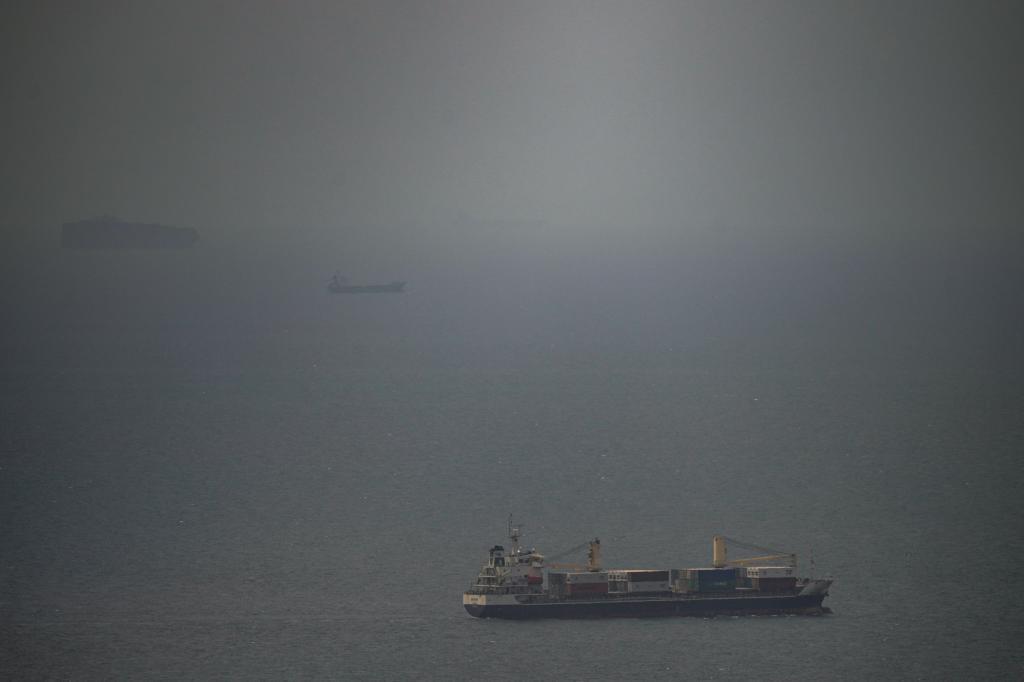
The ships were taken to Iranian territorial waters after being shot at by the naval forces of the Iranian ideological army.
According to the official statement from the Islamic Revolutionary Guard Corps (IRGC), the initially intercepted vessels are the MSC Francesca, directly linked to Israel, and the Epaminondas. Regarding the latter, Tehran alleges that the vessel was disrupting navigation systems and endangering maritime security in the region. Hours later, state agencies reported a third ship, the Euphoria, which had become "stranded" on the Iranian coast after being attacked by the Guard forces.
This military escalation comes at a critical diplomatic moment. U.S. President Donald Trump recently announced an indefinite extension of the ceasefire with Iran; however, Washington has decided to maintain the blockade on Iranian ports. In response, diplomatic sources in Tehran have been clear: talks to end the war will not resume until the commercial blockade is lifted. The seizures suggest that Iranian leaders are willing to negotiate more firmly against the U.S. delegation.
The economic consequences of this instability in the strait, through which 20% of the world's oil and natural gas pass, are already being felt globally. The conflict has caused fuel and food prices to skyrocket beyond the region. Experts warn that the longer traffic remains disrupted in this essential maritime route, the more severe and widespread the effects on the international economy will be, and the slower the recovery will be. The Revolutionary Guards have warned that any activity that jeopardizes navigation security in the strait will be intercepted.