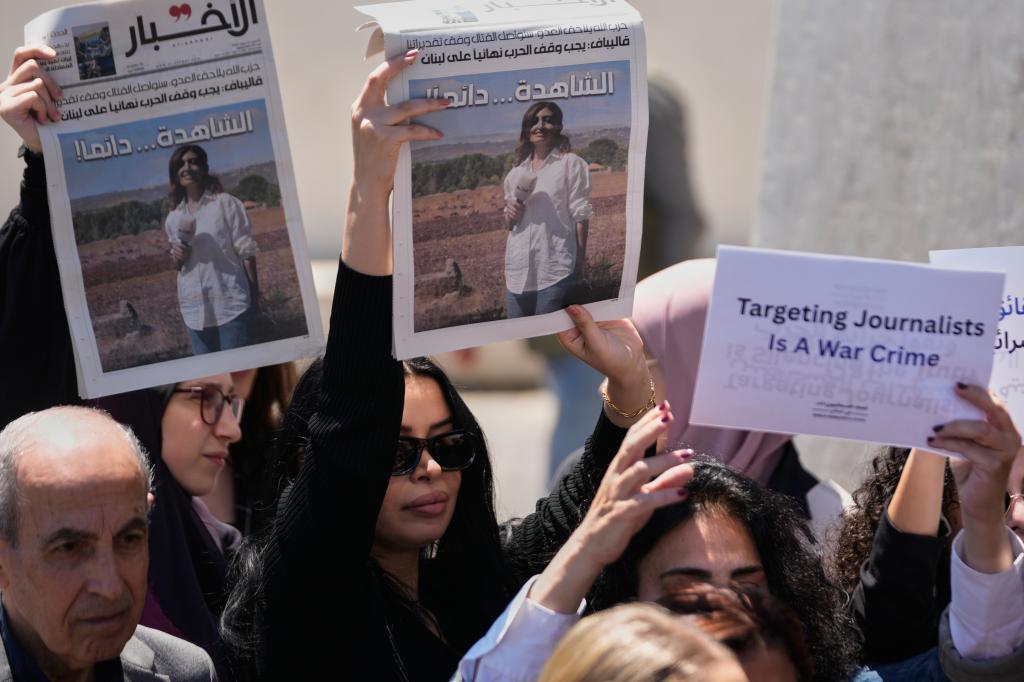
Her body was recovered from the rubble hours later, as reported by rescue teams.
Al-Akhbar newspaper confirmed that their reporter died in the village of al-Tiri, after a second bombing directly hit the house where she was with her colleague Zeinab Faraj, who was seriously injured. Khalil had sought refuge there after an initial attack hit near the vehicle they were traveling in.
The Lebanese Ministry of Health stated that the first attack left two dead, while the second one destroyed the house. Rescuers managed to evacuate Faraj and recover some bodies, but they reported that new attacks forced them to temporarily suspend the operation. Eventually, Khalil's body was recovered hours later by the Lebanese army, civil defense, and the Lebanese Red Cross. Meanwhile, the Israeli army stated that the incident is under investigation and denied targeting journalists or hindering rescue efforts, claiming there was activity violating the ceasefire.
Lebanese Information Minister Paul Morcos described the incident as a "crime and a blatant violation of international humanitarian law." Khalil's death comes just before new ceasefire talks between Israeli and Lebanese authorities in Washington. Khalil, originally from the south of the country, had been covering the region since 2006. Her death brings the total to nine journalists killed in Lebanon so far this year, in a conflict that has resulted in over 2,300 deaths and more than a million displaced since March. Organizations like Reporters Without Borders and the Committee to Protect Journalists condemned the attack and warned that obstructing rescues could constitute a war crime, increasing international pressure on the conflict.