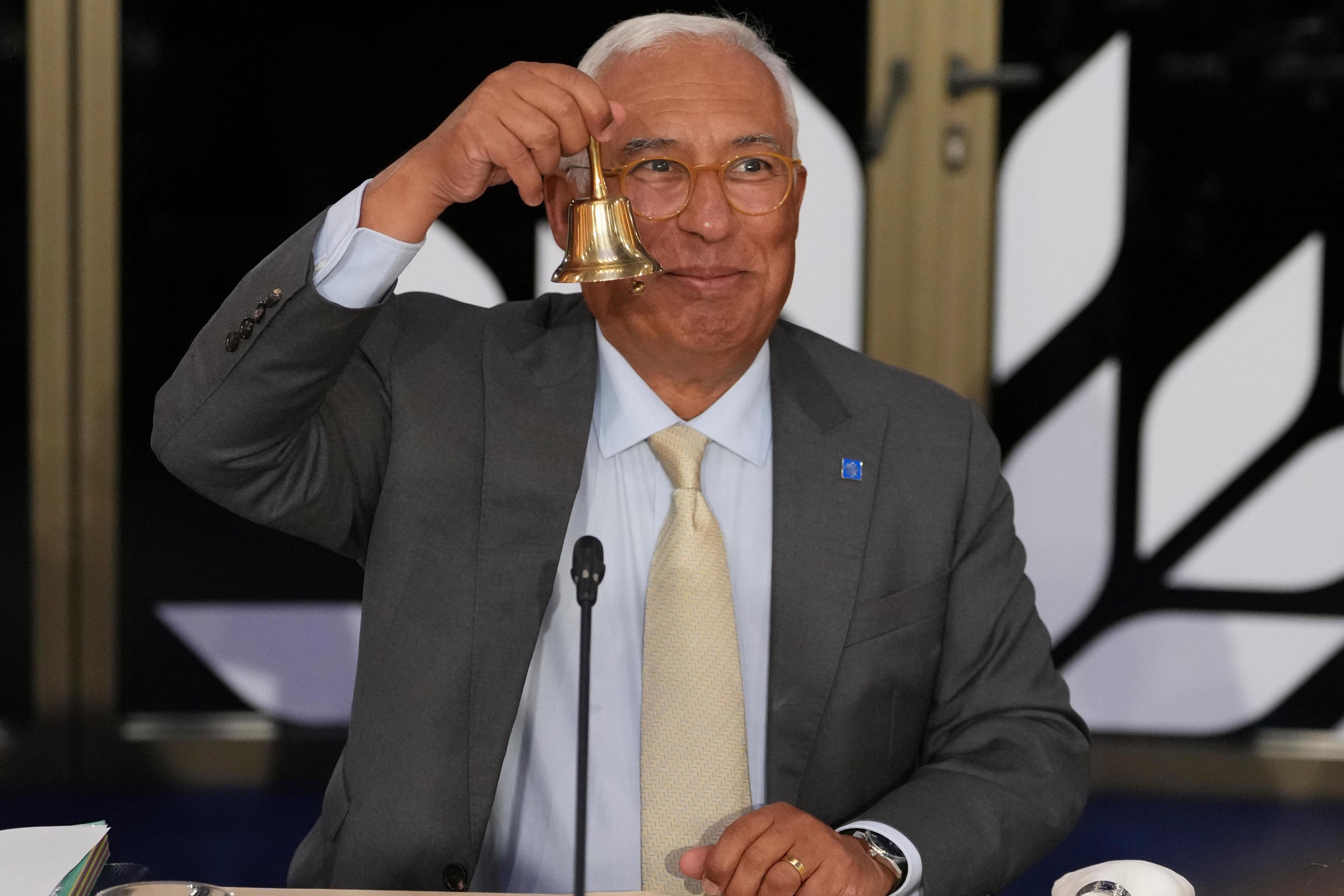
Ursula von der Leyen and António Costa believe that, following the approval of the €90 billion credit to Ukraine, the next step should be advancing in Ukraine's accession process to the EU. "It's time to look forward and prepare for the next step. And the next step is to formally open the first negotiation chapters for Ukraine's accession to the European Union," summarized the European Council President, who, along with the Commission President and the Ukrainian leader, Volodymyr Zelensky, sign a document highlighting "the significant progress made by Ukraine on its path".
The EU High Representative for Foreign Affairs, Kaja Kallas, has echoed these words. "We now have new circumstances, so perhaps we can now move forward with other things that have been blocked before," she added, before the participation of all the mentioned names in the European Council meeting taking place in Cyprus on Thursday and Friday. Leaders from countries like Estonia, Luxembourg, Belgium, or Lithuania have emphasized that during the European leaders' dinner happening today at the marina in Ayia Napa, Ukraine's accession will be the key issue to discuss.
There is no doubt that this is the next step and the path to follow, although many argue that there should be no shortcuts. That is, Ukraine must follow all the steps and meet the requirements because an expedited and shorter process, as Zelensky desires, would be unfair to the other countries aspiring to join the EU. "We want to be part of the European Union as soon as possible, and I believe the EU is also ready to support us," emphasized the Ukrainian leader, who is also present in Cyprus. However, achieving this speed seems challenging.
Nevertheless, the atmosphere at the first summit without the physical presence of the outgoing Hungarian president, Viktor Orban, and after the definitive approval today of the aforementioned €90 billion loan, is one of great optimism. Yesterday, the aid was processed at the ambassadorial level, and only the written procedure, a formality, remained, which was completed on Thursday.
It has been four months of suffering, as the loan was approved in the December Council, but Orban did everything possible to sabotage it. Despite the outgoing Hungarian president agreeing to grant the loan, as long as it did not affect him financially, the way it was structured hid a devilish demand that Orban did not hesitate to exploit: unanimity was required for the EU budget to support the debt issuance that would lead to the aid and, therefore, its approval.
Orban linked his approval of this final step to the resumption of Russian crude oil flow through the Druzhba pipeline, a structure destroyed by Vladimir Putin himself, which both Hungary and Slovakia demanded that Kiev repair. Brussels pressured Zelensky to do so, and even provided financial assistance since initially he refused. Some in the EU capital also point out that his attitude was not the best.
However, he eventually agreed to these demands, and in fact, Slovak sources indicate this morning that the crude oil is already reaching their country through this structure. But what has truly changed everything is Orban's defeat. The significance of this situation can also be seen in the fact that, finally, the EU has approved the 20th package of sanctions against Russia.
These penalties include tightening the ban on Russian tankers, sanctioning more companies in the energy sector, and imposing new restrictions on Russian banks. Brussels' initial intention was to have this package in effect on the fourth anniversary of the war and when European leaders traveled to Kiev on February 24. But Orban made it impossible. Until now.
Brussels crossed its fingers and waited for the ballots to rid them of the leader close to Putin and Donald Trump. And the Hungarians did it, which is why Von der Leyen was ecstatic the day after the elections on April 12.