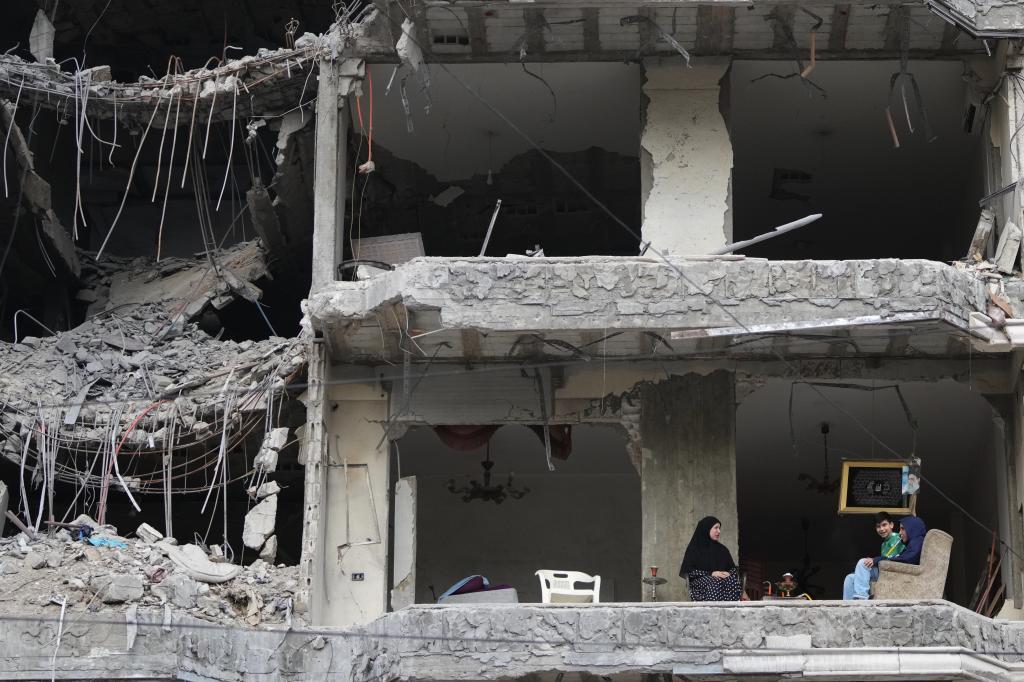
"The ceasefire has spectacularly collapsed in the southern part of the country." The assertion from the Lebanese website 'Al Modon' on Monday highlighted the escalating spiral of violence in the southern part of the Arab country between the Israeli army and Hezbollah, threatening to render the hypothetical ceasefire established on the 16th between Tel Aviv and Beirut ineffective on the ground.
The reality is that the southern area is now witnessing a low-intensity conflict that claims lives every day. Just over the weekend, the repeated Israeli air assaults killed about 20 people and injured many others.
The Lebanese Ministry of Health estimates that the Israeli offensive has already left more than 2,500 dead in the country - and nearly 8,000 injured - since the war was reactivated on March 2.
Meanwhile, Israel acknowledged the death of one of its soldiers and injuries to six others in a new Hezbollah attack in the area it occupies along the border line.
Both sides have exchanged messages in the past hours accusing each other of allegedly violating the terms agreed upon on the 16th.
Israeli Prime Minister, Benjamin Netanyahu, accused the paramilitaries on Sunday of "undermining the ceasefire" and stated that he has ordered to act "vigorously" against the militants of the Shiite movement, despite President Donald Trump's past opposition to Tel Aviv continuing its devastating attacks on Lebanese territory.
Hezbollah issued a statement on the same Sunday insisting that it will continue its actions against the occupying forces, which it defined as "a legitimate response" to the actions of the neighboring country's soldiers and "above all, their continued occupation of Lebanese territory and violations of its sovereignty."
The leader of the armed movement, Naim Qassem, issued another message on Monday warning the Lebanese government that the direct negotiations President Joseph Aoun is holding with Israeli authorities are "a serious sin" that "is plunging Lebanon into a spiral of instability."
"They are a gratuitous, humiliating, and unnecessary concession," Qassem added, emphasizing the growing differences between the Lebanese group and the central authorities, who have already declared the armed branch of the organization "illegal" at the beginning of this conflict.
The divergences among the different religious communities in the country have revived the grim memory of the sectarian confrontation that lasted for 15 years in the last century, fueled largely by the countless invasions and attacks that Israel has carried out against Lebanon since the latter became a state in 1948.
Israeli planes dropped leaflets in the south of the country on Sunday prohibiting access to that region and urging the evacuation of more than half a dozen villages north of the Litani River, which the Israelis have identified as the line marking the territory they have been recurrently bombing since the theoretical truce began.
"For your safety and that of your families, and until further notice, you must not travel to the south of the indicated villages and their surroundings. Nor is it allowed to approach the Litani River area," read another message disseminated by the Israeli forces on social media.
The threat once again caused long lines of vehicles converging in the southern city of Sidon, driven by civilians who were returning northward out of apprehension that this escalation could lead to a new round of open warfare.