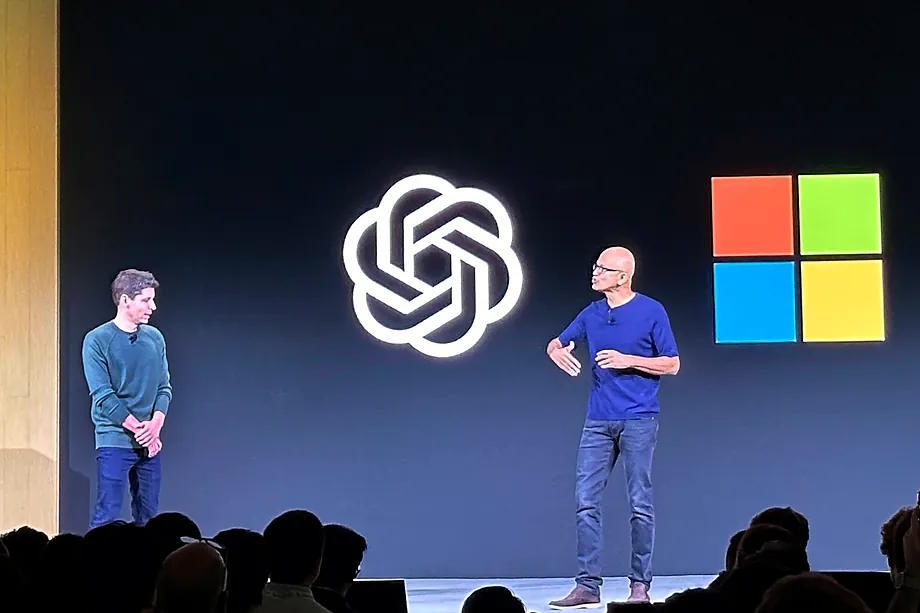
Microsoft and OpenAI have once again rewritten the terms of their most relevant, and perhaps most changing, artificial intelligence ecosystem alliance. Windows' creator is one of the most important shareholders of the company led by Sam Altman, allowing them to enjoy a privileged relationship that has now shifted towards a model that seems to better fit both parties.
On one hand, Microsoft gives up exclusivity on the exploitation of OpenAI's models in the cloud, allowing other companies, primarily Amazon Web Services, to offer one of the most powerful technologies to their customers. On the other hand, the technology company led by Satya Nadella will no longer pay a percentage of the revenue generated with these models to the startup.
The operation also clarifies the end of this agreement, which will be in 2032 and not "when general artificial intelligence (AGI for its acronym in English) is achieved," a vague concept whose measurement is subjective and could have led to a conflict between the parties.
Furthermore, Microsoft ensures that OpenAI uses Azure as its primary cloud, ensuring the deployment of dozens of data centers and a high use of their cloud, crucial for the revenue and profit of the publicly traded company, which, however, experienced a 5% drop after the agreement, although the shares have recovered and remain almost flat.
OpenAI finds itself in a delicate situation due to the rise of Anthropic, which is much more widespread among companies and closer to profitability, in a race that is perceived as crucial for both companies as they face their stock market debut.
However, the company has just found a window of opportunity. First, because their new models seem to be as powerful or even more so than those of Anthropic, as seen in the comparison between GPT 5.5 and Opus 4.7.
The other key element is that Anthropic's growth has surprised the company itself, which had not planned to increase computing capacity as much as it is doing. This is resulting in the firm seeing the need to reduce token usage by its users to avoid the collapse of its data centers, and it is already expected that successful products like Claude Code will no longer be available in the cheap 20 euro subscriptions and will only be accessible to customers paying over 200 euros, after also cutting off access to their tools for third parties.
In this scenario, OpenAI, which had more optimistic forecasts, would indeed have the capacity to accommodate more users, and for this expanding to other clouds beyond Microsoft's would allow them to reach more customers.
On the other hand, Microsoft will no longer make periodic payments to OpenAI and will retain the license to distribute the products and build their models until 2032, allowing them to benefit from the company's scientists for the development of their own AI strategy, which seems to be stalled at the moment despite the initial boost from Copilot and its commercial success.