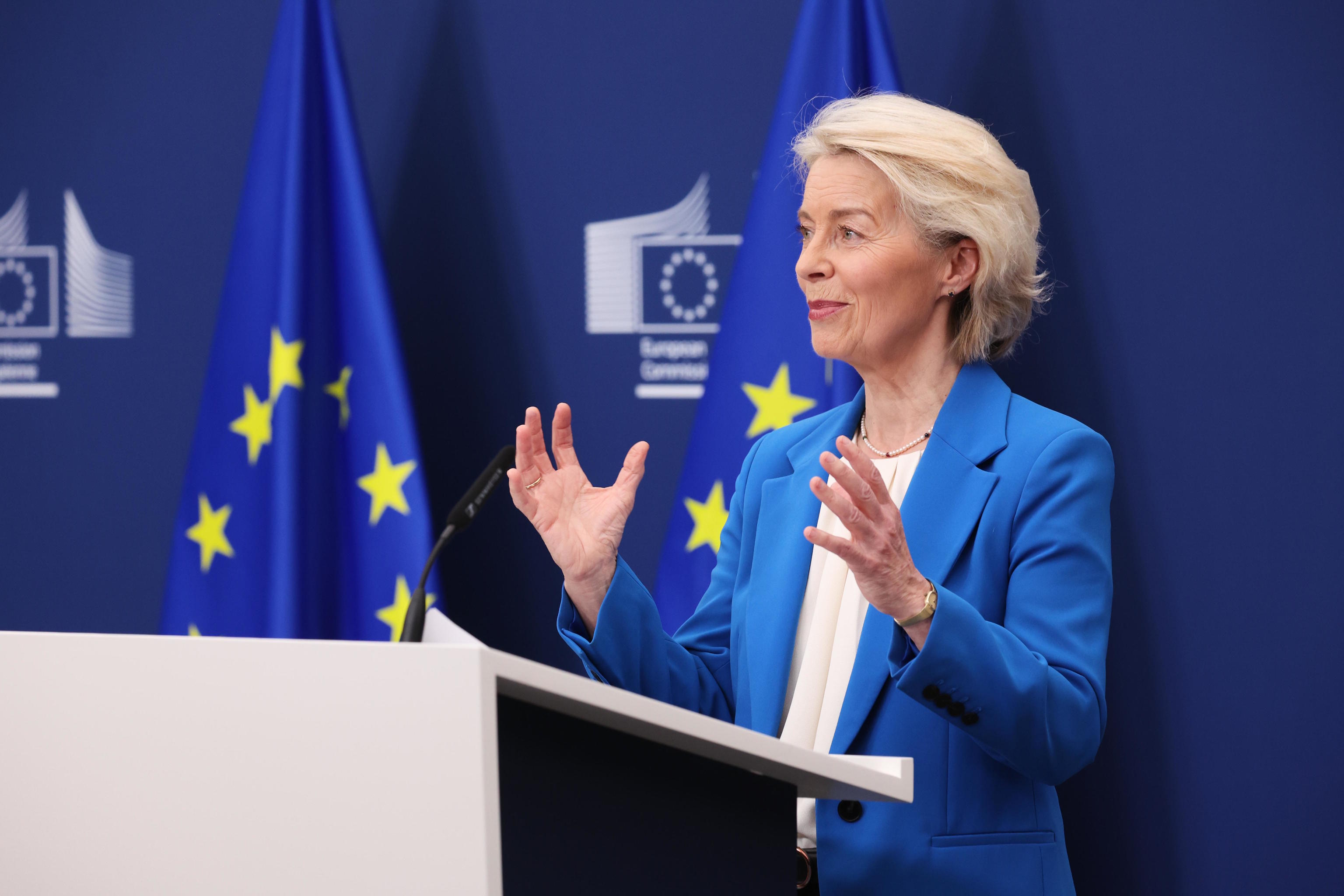
The 60 days of conflict in the Middle East have increased the bill for fuel imports by over 27,000 million euros for the European Union (EU), without changing the amounts of imported energy. "We are losing almost 500 million euros per day," emphasized Ursula Von der Leyen, President of the European Commission, during the session held in Strasbourg this Wednesday.
"The way forward is clear: we must reduce our excessive dependence on imported fossil fuels and increase our own production of affordable and clean energy, from renewables to nuclear, fully respecting technological neutrality," she added.
In particular, and as she later added, the consequences of the conflict in the Middle East "could last for months or even years". "This is the second major energy crisis in just four years. The lesson must be clear to everyone: in a turbulent world like ours, we cannot be too dependent on imported energy," Von der Leyen emphasized.
The Commission President ruled out a "one-size-fits-all solution" for the Member States in this regard, acknowledging the varied energy reality of the countries. She did, however, mention "the toolbox" that the EU presented last week for each government to combine measures as they see fit, with three main axes: greater energy coordination among members and a focus on increased fuel storage (gas and oil), measures to protect consumers from price hikes, and reducing energy demand by modernizing systemic energy use.
She also reiterated "the way forward": reducing Europe's overdependence on fossil fuel imports, citing European countries that have lower carbon emissions in their energy mix and have seen smaller increases in their electricity bills. "In a country like Sweden, when the gas price increases by one euro per megawatt-hour, the electricity bill only increases by 0.04 euros per megawatt-hour, because almost all electricity comes from renewables and nuclear energy. This is how we protect ourselves against future disruptions, and this is the path to an independent Europe," she added.
This is not the first time the President has emphasized the need to maintain other alternative energy sources. Their existence becomes crucial in the current context of rising prices and the need for Europe to gain competitiveness, but the decision ultimately rests with the Member States. In the case of Spain and regarding nuclear energy, the total closure of its plants is scheduled for 2035.