Oil continues to be the best barometer to gauge the market's pulse on the war in the Middle East, and this Thursday it has raised the temperature once again. The American media outlet Axios has exclusively reported that the U.S. Army plans to meet with President Donald Trump this afternoon to discuss new possibilities for its offensive in Iran. This has been interpreted as a clear sign that the conflict is far from being resolved, and as a result, oil traders have rushed to buy futures on its price.
The outcome of this move will be higher fuel prices before the summer. The market trades spot prices for oil, but mainly futures, and the European Brent for June has reached highs of $127 per barrel in the last few hours. These are the highest in the last four years amid the Russian offensive in Ukraine. According to data from the Intercontinental Exchange, somewhat calmer, investors are still buying crude at this hour on Thursday, although the barrel is tempering to levels of $121, ten above the price of the physical barrel, which is currently being paid. If we broaden the focus a bit to the following summer months, a conclusion is drawn that is not new, and that is that investors assume that the war in the Persian Gulf will last longer than anticipated by the Republican Administration, leading to substantially higher fuel prices. A dreadful idea for Donald Trump's electoral ambitions, who must face the midterm elections next November and does not want to do so with a large part of American society against him due to high fuel prices.
Thus, Brent futures for July are trading around $111 per barrel, and the forecast is to remain above the $100 mark throughout the summer, also in August, to then trade slightly below (around $98.5) in September. What does the oil futures price imply? Rising prices. More inflation. Christine Lagarde will likely mention this today in her press conference following the European Central Bank (ECB) monetary policy council meeting taking place these two days in Frankfurt, following the message she already conveyed in March, anticipating a peak inflation in the Eurozone for the second quarter of the year of up to 3.1%. This time there is no revision of the ECB's quarterly forecasts, but the central bank could update some of its projections.
Since the war began in Iran, back on February 28, the Brent barrel was trading around $72. This is already a past reality. Today its price is 67% higher and it is not a temporary spike, after two months of sustained price increases that have stayed below $100 for only 15 days, practically the same duration as the truce announced by the U.S. Administration, which has been interrupted almost daily by selective attacks and incessant exchanges of statements between the U.S. and Iran, making it impossible to ease tensions in the commodity markets. Major investment groups, such as Vanguard, are betting on a more analytical tone from the ECB, which will delay raising interest rates as much as possible to avoid the feared stagflation scenario (which consists of high prices and zero or negative economic growth). "Although the rise in energy costs will push overall inflation upwards in the short term, the loss of growth momentum and the high uncertainty surrounding the persistence of inflationary pressures discourage an immediate monetary policy response," says Josefina Rodriguez, economist at Vanguard.
This Wednesday, the U.S. Federal Reserve decided to keep interest rates stable. It was the last monetary policy decision with Jerome Powell as head of the Fed, although yesterday he decided to challenge his archenemy, Donald Trump, by announcing that he will remain on the board, at least until his term ends in January 2028. Unprecedented in the organization, as no other president has remained at the table once their term as head of the central bank has expired. Thus, the Federal Reserve will keep official rates between 3.5%-3.75% for another month and a half, at least until the next meeting on June 16 and 17, despite inflationary pressures on its economy.
The partial closure of the Strait of Hormuz, crucial for global oil and gas supply, is pushing supply chains and consumers' pockets to the limit. Today, the European reference gas, the Dutch TTF, is trading around 47 euros per megawatt-hour. The market does not see it dropping below that level until next November, when it is expected to slightly decrease to 46 euros throughout the winter. This is relevant because even though it is not the 300 euros per megawatt-hour seen during the crisis due to the Ukraine war in 2022, gas today is almost 50% more expensive than before the Iran conflict began and three times more costly for Europeans compared to the average prices four years ago, before Russia entered the scene and disrupted the peace climate enjoyed by Europe.
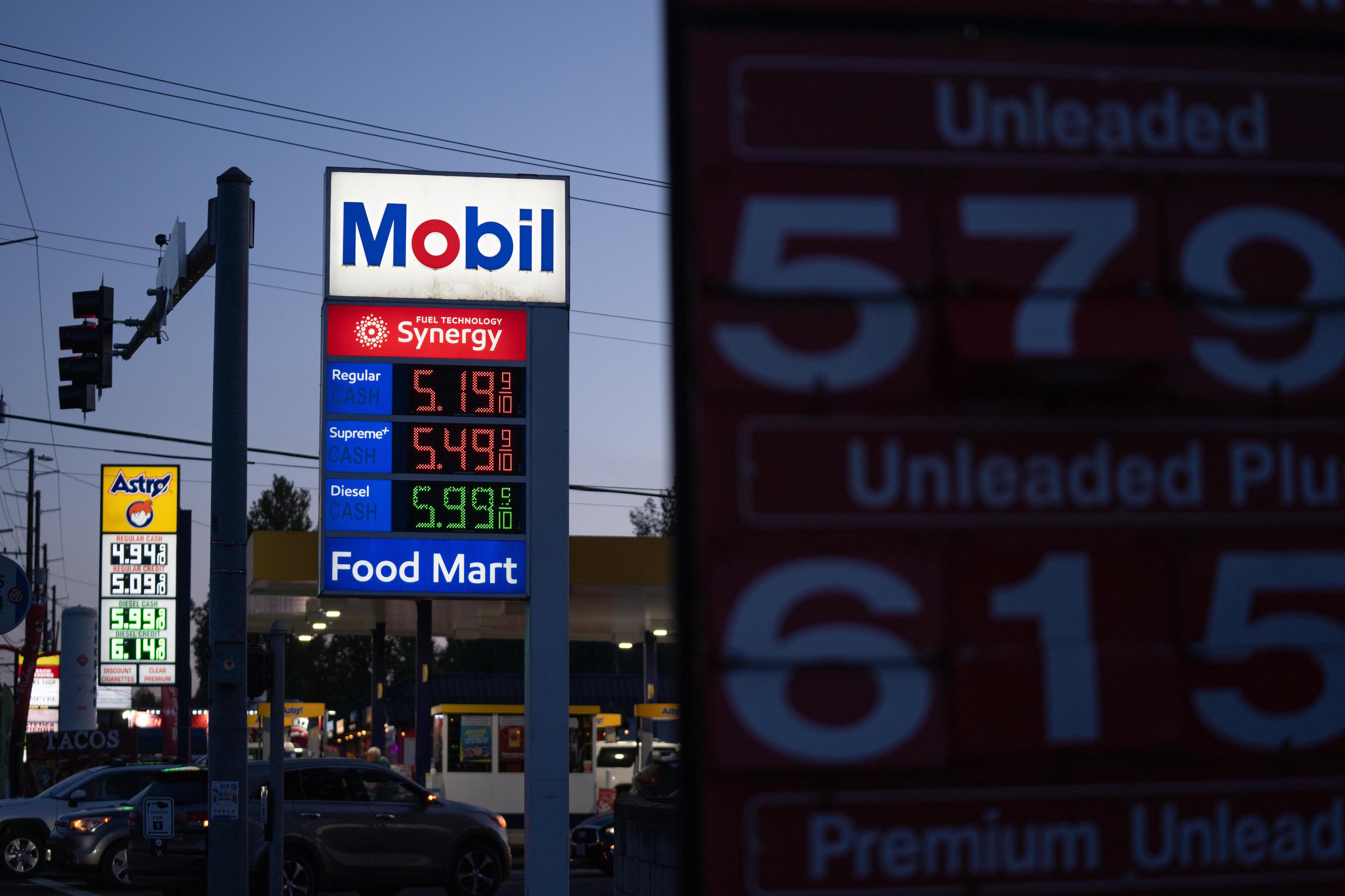
The fuels used for refueling combustion vehicles in the U.S. are at their highest price in four years. A gallon of gasoline is trading around $3.6, and the crude oil used for heating is at $4.15, its highest level in three weeks.