The Spanish diplomatic machinery has been working for months to ensure that the Ibero-American Summit to be held in Madrid is a success. The event will take place on November 4 and 5, and from the Head of State to the Ministry of Foreign Affairs, they are working to secure a strong representation at the highest level at the meeting, which in recent years has fallen into stagnation due to polarization and a lack of willingness to discuss Ibero-American issues in meetings with heads of state from different political spectrums. The government wants Madrid to be a turning point in these meetings and has involved the Zarzuela Palace to achieve this.
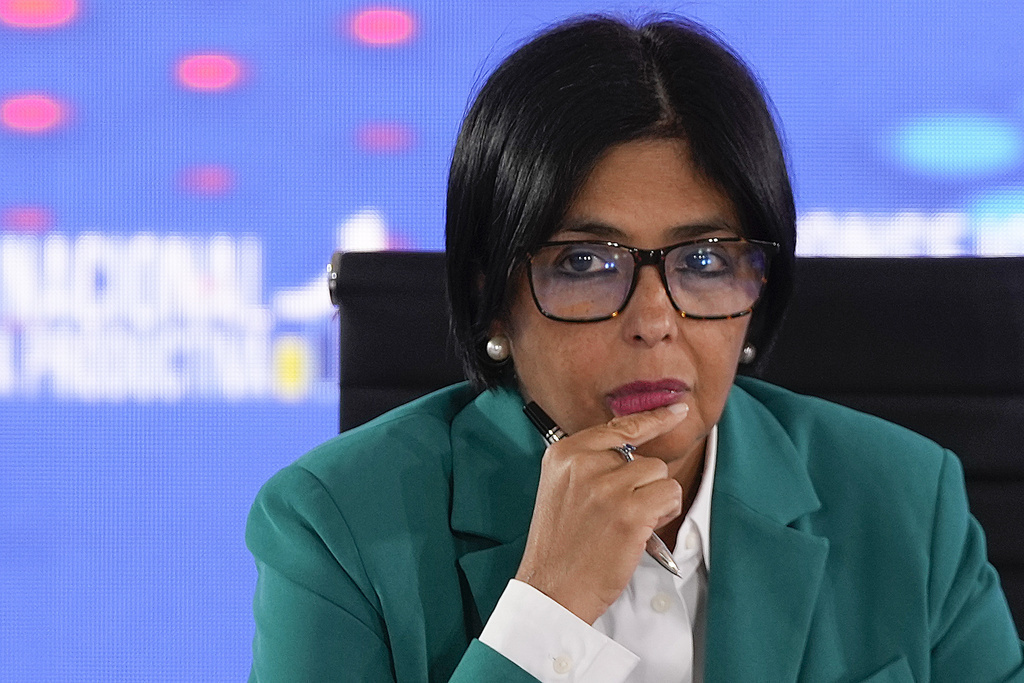
"At the moment, what we are doing is addressing all countries and invitations are always extended to those with international representation. This summit will not be different from others. The pro tempore secretariat (Spain in this case) does not change the established rules," responded the Minister of Foreign Affairs, José Manuel Albares, last Tuesday when asked if an invitation would be sent to the President of Venezuela, Delcy Rodríguez.
It is the Zarzuela Palace, on behalf of the King, that issues the invitations. As EL MUNDO has learned, three different types have been drafted. The first are nominal for those presidents who, except for any institutional crisis, are expected to remain in office in November when the meeting takes place. In this group are Chilean José Antonio Kast, Argentine Javier Milei, Brazilian Lula da Silva, Bolivian Rodrigo Paz, and Mexican Claudia Sheinbaum, who received the invitation from the King through Albares on Wednesday. Secondly, invitations have been drafted for those countries where, due to electoral issues, they cannot be nominal, as it is unknown who will be the head of state at the time of the summit.
It is still unknown who will govern in Colombia and Peru, so no specific person has been addressed but rather the country, using the formula of inviting "at the highest institutional level." Venezuela has been included in this group. The acting president, Delcy Rodríguez, took office on January 5, but the first condition set by Donald Trump was to hold elections within six months. Although that scenario seems distant and work is already underway for elections in 2027, it is unknown who will be the country's president in November. Therefore, the invitation is not nominal to the former vice president of Nicolás Maduro, but to "the highest representation of the country."
It is noteworthy that Rodríguez cannot enter the European Union due to the sanctions imposed on her. A ban since 2017 that Albares has tried to lift in Brussels, but has not yet succeeded. The argument put forth by the Spanish foreign minister was that sanctions are usually not imposed on the current head of state to ensure some level of dialogue with the country. Rodríguez has been banned from setting foot on EU soil since her time as vice president and this did not change with her appointment.
According to diplomatic sources consulted by this newspaper, the government plans to invoke Article 6 of Chapter II of the Decision (CFSP) 2017/2074 of the Council, of November 13, 2017, concerning restrictive measures in view of the situation in Venezuela. The text explains that "Member States may grant exemptions from the measures imposed in paragraph 1 when travel is justified for urgent humanitarian reasons or for the purpose of attending meetings of intergovernmental organizations (...) that promote directly democracy, human rights, and the rule of law in Venezuela," a reason that Spain could cite to secure Rodríguez's presence.
In addition to the two formulas already mentioned, a particular one has been found for Nicaragua from Protocol. The Sandinista dictatorship of Daniel Ortega has ruled with an iron fist since 2007. In this case, the invitation has been extended to the country without requesting the attendance of "the highest representation of the State."
Felipe VI recently made a brief tour last month that took him to Portugal, Chile, and Bolivia, where he met with a large number of Ibero-American leaders. Additionally, in the next three months, he plans to attend the inaugurations in Costa Rica, Peru, and Colombia, where he holds bilateral meetings with leaders from other countries in the region. In addition to the constant presence efforts of the Monarch in the region, there is now a constitutional mandate: he is the one who invites countries to the upcoming summit in Madrid.
This is regulated by Article 56 of the Constitution, which establishes that Felipe VI is the one who invites the rest of the heads of state. It is noted that the Monarch "assumes the highest representation of the Spanish State in international relations, especially with the nations of his historical community." Therefore, invitations have been sent from the Zarzuela Palace to the entire region, including Andorra and Portugal.
Months of diplomacy and subtleties are being employed to ensure that the Madrid Summit revitalizes Ibero-American meetings. A challenge, as in recent months, Ibero-American leaders have shown their different positions in two summits. The first was the Summit of the Americas with Donald Trump. The second took place in Barcelona a few weeks ago, with Sánchez as the host. The challenge is for the neutral figure of Felipe VI to achieve the greatest consensus among sister regions.