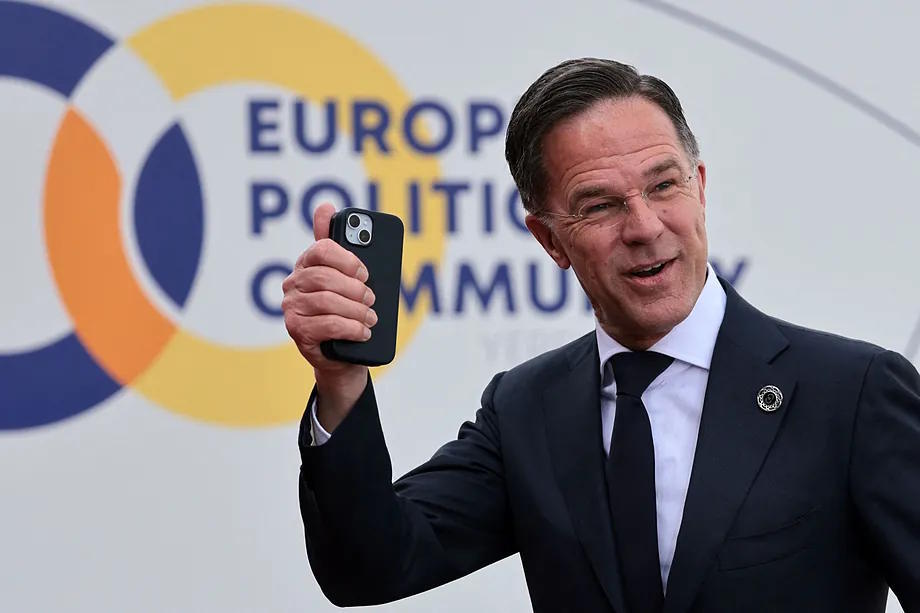
"Yes, there has been some disappointment on the part of the United States, but the Europeans have listened." NATO Secretary-General Mark Rutte explained the current situation of relations between the US and European countries in the context of the Iran war. He added that EU nations "have understood the message from the United States and the US President, just as they did last year when, at the NATO summit, they committed to the 5% spending target," and "are now ensuring that all bilateral agreements on the stationing of forces are being implemented."
This means that they will allow the use of military bases, as stipulated in existing bilateral agreements. However, Spain's position has not actually changed. Under a clause in the agreement reached between both parties, the government can refuse to provide its facilities, which is what it will continue to do despite Rutte's remarks.
In his speech before participating in the European Political Community meeting taking place in Yerevan (Armenia), the head of the Alliance also highlighted that NATO members such as Albania, Portugal, Greece, Italy, France, and Germany are indeed implementing the base agreements. He did not mention Trump's decision to withdraw 5,000 military personnel from Germany, as well as the decision not to deploy long-range missiles on German soil.
Ultimately, Rutte has once again avoided any criticism of Trump and has tried to appease the mogul with his words. However, the situation in Europe is changing, there is a certain weariness towards the successive threats and decisions of the US President, and what is perceived in the leaders' statements is that it is necessary to advance in the European pillar of NATO.
"The withdrawal of US troops from Europe has been talked about for a long time, but the timing of this announcement is surprising. I think it shows that we really need to strengthen the European pillar of NATO and do more," stated the EU High Representative for Foreign Affairs, Kaja Kallas.
"I wouldn't exaggerate that because I believe we expect Europe to take more control of its own security. I don't see those figures as dramatic, but I think they need to be managed harmoniously within the framework of NATO," emphasized Norwegian Prime Minister Jonas Gahr Store.
The President of the European Commission, Ursula von der Leyen, also pointed out that one of the key issues of this meeting will be "the issue of an independent Europe." "We have to reduce our excessive dependence in three specific areas," she continued, and one of them, of course, is Defense. "There is a large amount of money available for investments, and now we have to take a step forward and accelerate the process of developing military capabilities," added the head of the European Commission.