When Ferdinand Magellan arrived in Cebu in April 1521, he planted a large cross wrapped in bamboo and cane. With this gesture, the navigator marked the taking possession of the island on behalf of the Spanish Crown and the beginning of Christianity in a territory that would eventually become the country with the largest Catholic population in Asia. More than five centuries later, that cross - dark, cracked, still with fragments of its original wood - is preserved in a small chapel next to Fort San Pedro, just 300 meters from the Basilica of Santo Niño, the oldest church in the Philippines. Every week, Romeo Wagayan, a jeepney driver for two decades, goes there to pray. "I come to pray for strength from God. I had to quit my job due to the rise in fuel prices," he says.
Magellan's cross, a silent witness to the history of the Philippines, now absorbs the anguish of those struggling to survive an energy crisis that is already collapsing the daily lives of millions of Filipinos. EL MUNDO travels to the country that imports around 95% of its oil from the Middle East, making it the most vulnerable in Asia - and the world - to the blockade of the Strait of Hormuz. From the streets of Cebu to the highlands of the mountainous province of Benguet, where farmers despairingly look at their fields, the increase and scarcity of fuel hits hard at every link in this fragile economy.
Cebu wakes up under a stifling heat. It is a chaotic and humid city where more than two and a half million people live. Thousands of vehicles traverse the congested avenues, and the honking mixes with the constant murmur of street vendors. Noisy motorcycles zigzag between the gaps in the cracked pavement along the central streets of Colon and Legaspi. But something is changing in the urban landscape: the colorful jeepneys, like the one Romeo drove and that were everywhere, have been reduced by more than half.
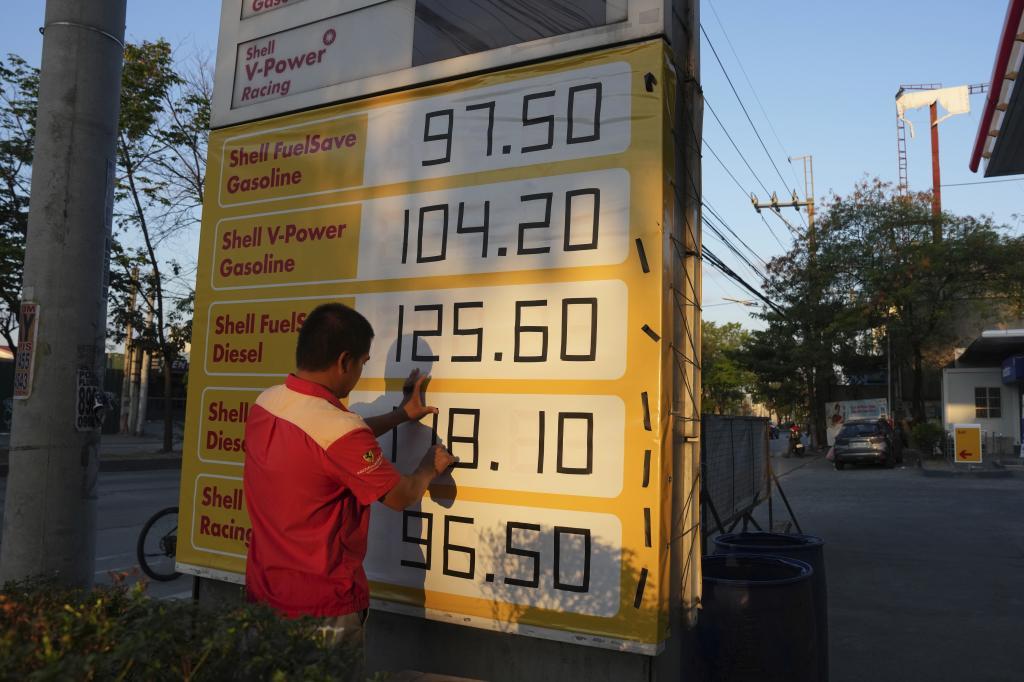
These vehicles, a national symbol, were born from the abandoned bodies of US military vehicles after World War II. Filipinos transformed them into colorful minibusses, decorated with religious iconography and fabrics instead of windows. "My jeepney was on lease. I returned it because I was already losing money. I used to earn about 1,000 pesos a day (around 14 euros), but the price of diesel exceeded 100. It was unsustainable," explains Romeo, who now helps out at a fried chicken restaurant run by his cousin.
PAY THE RENT OR REFUEL
In the shade of a banyan tree on Borromeo Avenue, Manny Jefferson, another driver, tells his own story. "I am an owner, but with the skyrocketing diesel prices, I had to choose between paying rent or refueling. I chose the latter. Now my wife and I live in the vehicle."
When diesel prices reached 150 pesos per liter (2.10 euros, one of the highest increases across the continent), many jeepney, taxi, mototaxi, and tuktuk drivers began to protest and strike across the archipelago. In Cebu, the protests reached the mayor's house, Nestor Archival, who announced a fuel subsidy that has not yet materialized. Dozens of farmers from the mountainous areas also showed up at Archival's house to request declaring a "state of calamity" in the villages, in order to claim more assistance. They face a devastating paradox: producing costs more than selling.
THE VEGETABLES ROT
"We are letting vegetables rot", explains Mateo Baluyot, a farmer from a village north of Cebu who sells cabbages and radishes every night at a market a few meters from Magellan's cross. "The price of diesel for irrigation pumps, tractors, and transportation to markets has risen so much that many times it costs more to move the harvest than what we are paid for it. Before, a kilo of cabbage gave us minimal profits, but now, with the increase in fuel and fertilizers, each kilo generates losses. It is frustrating to see how our efforts go to waste while city prices still do not reflect the real increase in production costs."
Esteban Lunas, another farmer, describes the domino effect: "Transportation costs have doubled, and middlemen pay less. Many farmers no longer harvest. It's not just the fuel: it's the labor, the packaging, everything. The crisis threatens our survival."
While Mateo and Esteban demand more public assistance so their crops do not go to waste in the fields, in the port of Cebu, owners of motorized boats feel the same pressure. Arong Delara, who maintains a small cargo and tourist transport boat, has seen his costs triple. His boat remains docked longer. "Tourists and products no longer arrive as before," he says.
It takes a two-hour ferry ride from Cebu to the island of Bohol, famous for its paradisiacal beaches, for hosting one of the smallest primates in the world (tarsiers), and for the "Chocolate Hills," over 1,000 geological formations, shaped like cones and up to 120 meters high, that change appearance with each season.
Here, outside the tourism bubble - especially Chinese in these early days of May - natural beauty becomes a stage where a distant war also impacts the lives of farmers and transporters. "We notice fewer tourists. It is more expensive for them to come now," adds Randy, who works for a diving company at a pier in the south of the island where, on a mid-morning holiday, there are many more boats docked than usual. Jeepneys are hardly seen on the streets.
The dramas unfolding in Cebu and Bohol extend throughout the country. In March, the Philippines became the first nation to declare an energy emergency. By late April, reserves barely covered 52 days. The government of Ferdinand Marcos has resorted, like most Southeast Asian countries, to purchasing Russian crude for the first time in five years, taking advantage of the US lifting sanctions on oil shipments from Vladimir Putin's regime. Filipino authorities have also requested "energy assistance" from China, which holds the world's largest strategic oil reserves.
A report from the Philippine Institute for Development Studies warns that the crisis could push 3.1 million people into poverty. In a country where more than one in eight inhabitants is already poor, the rise in fuel is not just a macroeconomic problem: it is a direct threat to the social fabric.
COLLECT USED OIL
In Manila, Archbishop José Advincula has spearheaded a groundbreaking initiative: collecting used cooking oil to transform it into biodiesel. The proposal aims to generate a local, cheaper, accessible, and cleaner fuel, capable of reducing emissions by up to 80% compared to conventional diesel. Parishes act as collection points. In Bacolod, in the Visayas region, local authorities are collaborating with IF Green Technologies, a company specializing in clean technologies, to convert this oil into biofuel through fermentation machines, which they then sell for 35 pesos per liter (0.48 euros).
The Philippines has become one of the most visible examples of the impact of the energy war outside the Middle East. Its dependence on the Persian Gulf makes it especially vulnerable in a region where supply chains are critically reliant on fossil fuels. Even before the conflict, Asia was already struggling with an energy deficit.
Now, a catastrophic storm has hit the entire region: thousands of flights canceled, small airlines suffering millions in losses, factories shut down, basic goods in short supply, crops halted by a lack of fertilizer (also stranded in the Strait of Hormuz), businesses going bankrupt, governments borrowing to curb inflation, and travel agencies, hotels, and restaurants facing a collapse in business.
The most pessimistic projections from the United Nations warn of a possible food crisis before the end of the year if the blockade of the Strait of Hormuz persists. This could lead to widespread unrest. "There are robberies at gas stations and attacks on tanker trucks," says Wilfred, an employee at a hotel in Bohol that, for the first time since the pandemic, has empty rooms during the May bank holiday weekend.
In the Philippines, Labor Day has historically been celebrated, as in much of the world, with slogans and remembrances of workers' struggles. But this year, the day arrived without room for any sense of patriotism. Churches are full. But no prayer can compensate for empty gas tanks, lost harvests, or workdays that no longer pay enough to cover a fare. On the streets of Cebu or in the ports of Bohol, work is still there, but it is no longer a guarantee. And while the cross that Magellan planted still stands, five centuries later, what is beginning to waver is not faith, but the old certainty that working is enough to live.