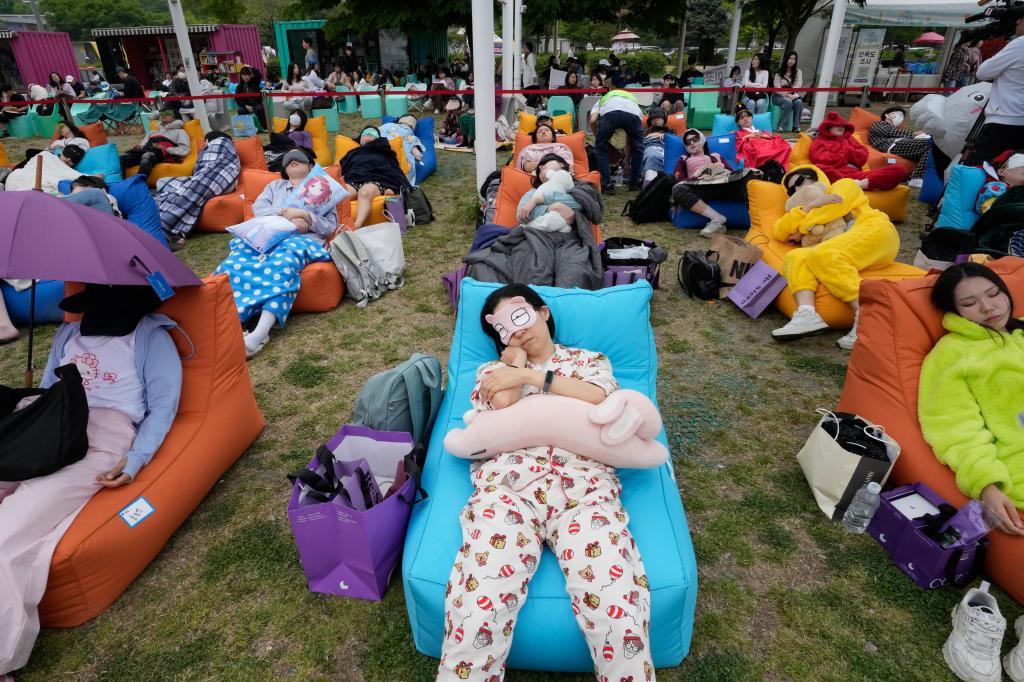
Under a hazy spring sun last Saturday, May 2, hundreds of South Korean residents gathered in a park by the Han River to participate in the third 'Energetic Nap Contest', an initiative by the Seoul Metropolitan Government to raise awareness about the issue of chronic exhaustion in the country. The event, now in its third annual edition, imposed mandatory conditions on the "sleeping beauties" contestants to compete: come tired, with a full stomach, and wear appropriate attire for the occasion.
Among the participants, Yoo Mi-yeon, a 24-year-old English teacher, stood out wearing a plush koala pajama. The young woman explained her choice of clothing in a revealing way: "I usually don't sleep well. I have trouble falling asleep and wake up easily," she confessed, adding that "koalas are famous for their deep sleep. I came dressed as one hoping to borrow some of their magic."
At three in the afternoon (06:00 GMT), the park turned into a collective bedroom as participants put on their eye masks. To determine who achieved the most effective rest, officials measured the participants' heart rate, looking for a stable reading that would serve as an indicator of deep and peaceful sleep. The first prize went to a man over 80 years old, while the runner-up was Hwang Du-seong, a 37-year-old office worker seeking a break from his demanding work routine. After the competition, Hwang expressed his satisfaction: "I was completely exhausted. So when I saw the contest, I decided to sleep to fully recharge amidst the breeze from the Han River, and I am very happy to have placed second, fortunately."
Beyond the anecdotal aspect, this contest highlights a structural problem of insufficient rest in South Korea. According to data from the Organization for Economic Cooperation and Development (OECD), the country ranks as one of the most overworked nations with the least hours of sleep among its members. The palpable fatigue on the grass by the Han River reflects a society where competitive hustle sets the daily pace, turning such a natural act as sleeping into a challenge —and now also into a public health competition.