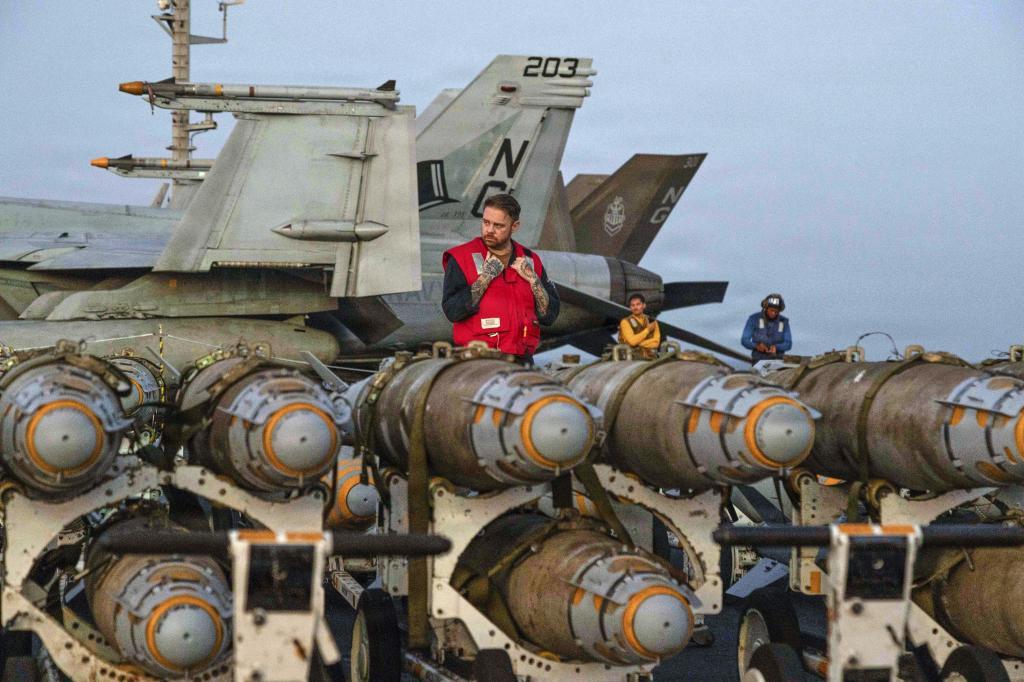
During a political dinner at the Forum Club in West Palm Beach, Florida, the Republican president made it clear that the Castro regime is now at the center of his foreign strategy, stating that "we will be taking Cuba very soon. Cuba is next." Trump's threat goes beyond political rhetoric. The White House's plan includes a massive military deployment once operations in the Middle East are concluded. As detailed by the president himself, the intention is to mobilize the USS Abraham Lincoln aircraft carrier, considered the largest in the world, towards the island's shores.
Trump has predicted a quick outcome solely with the presence of the U.S. navy: "We will have it enter and stop about 100 meters from the coast and they will say thank you very much, we surrender!" This escalation occurs in a context of maximum pressure, where Secretary of State Marco Rubio has denounced that Cuba facilitates the presence of intelligence services from "adversaries" of the United States "just 90 miles from its territory," something the current administration claims it will not tolerate. Alongside the military threat, the Trump Administration has intensified economic sanctions against the island. A new executive order targets directly strategic sectors of the Cuban economy, such as energy, defense, mining, and financial services.
Under this new regulation, any entity or person engaging in commercial relations with the Havana government will face a total block of their assets on U.S. soil. This tightening comes after months of intense oil blockade initiated in January. Additionally, leaks from the State Department suggest that Washington had a "direct line" with Raúl Guillermo Rodríguez Castro, known as 'Cangrejo' and head of Raúl Castro's bodyguards, to monitor the movements of the Cuban power elite.
Washington's ultimate goal seems to be a forced regime change. The ultimatum given to Havana demands not only the release of over 1,200 political prisoners and deep economic reforms but also the immediate departure of President Miguel Díaz-Canel. Cuba's reaction has been swift. Foreign Minister Bruno Rodríguez has outright rejected the measures and invasion threats: "While the U.S. government represses its own people on the streets, it seeks to punish ours, who heroically resist the attacks of U.S. imperialism." Meanwhile, the U.S. Senate has already rejected a proposal to limit Trump's ability to order military operations on the island, leaving the stage open to any Pentagon moves in the coming weeks.