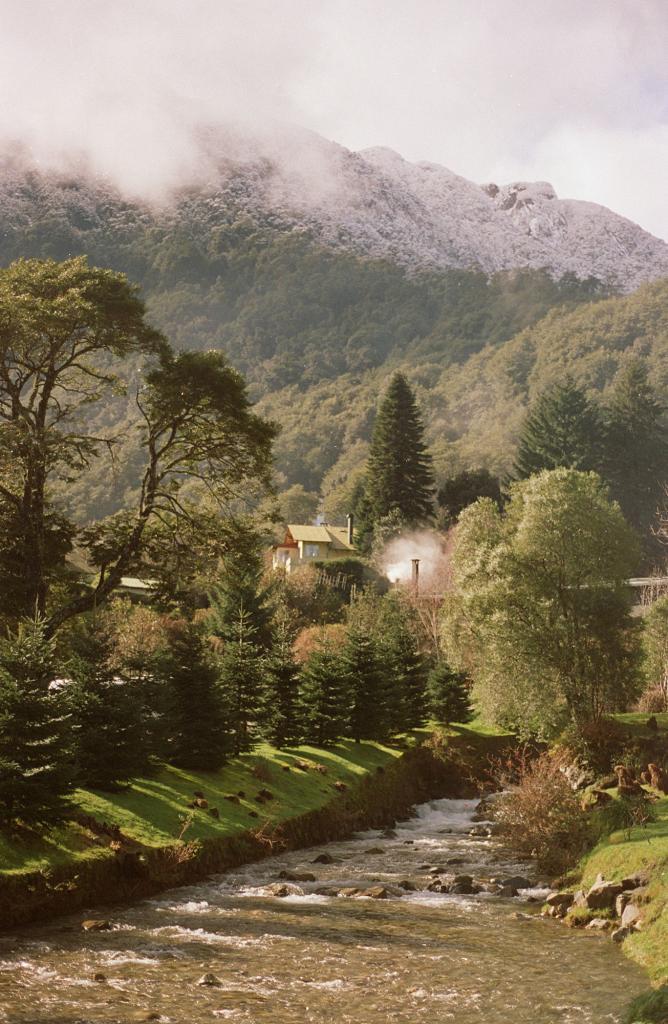
There is a place in the world where the map becomes a mystery and where the land seems to surrender to the breath of the Andes mountain range. They call it the End of the World, but it is not an end but the beginning of an exciting adventure through one of the most remote places on the planet.
There, on the island of Tierra del Fuego, the wind doesn't blow, it tells stories; the mountains don't hide, they speak, and the horizon is not still, but it invites you to cross the unknown.
It was the Portuguese navigator Fernando Magellan who named this territory when he saw numerous bonfires on the shore from his ship, lit by the Selk'nam, the indigenous people who inhabited the islands at that time.
In this province of Argentinian Patagonia, nature does not ask for permission, wild animals live freely in their natural habitat, the sky changes mood in an instant, and every step reminds us that there are still corners untouched by the rush of man.
Those who visit Ushuaia do not return the same but come back with a different perspective and with unforgettable experiences imprinted in their minds, such as touring the Lakes Route in a 4x4, climbing Martial Glacier in a snowcat, or kayaking in Lapataia Bay.
If there is something this extreme winter region offers (temperatures can drop to 10 degrees below zero), it is a good dose of adventure and adrenaline for the 800,000 travelers it receives annually in search of nature tourism.
Ushuaia enjoys a strategic location that can be felt at every moment, making it a town that breaks all records: it is the southernmost city on the planet, the gateway to the Antarctic continent, and the only Argentine city located on the other side of the Andes mountain range.
This port town is located on the island of Tierra del Fuego - a territory belonging to both Argentina and Chile - and is situated on the shores of the Beagle Channel, which acts as a border between the two countries.
Sailing through this legendary channel is one of the most exciting experiences in Ushuaia, following in the footsteps of explorers like Charles Darwin or Robert Fitzroy.
The legendary Beagle Channel
The channel - stretching over 240 kilometers - owes its name to the HMS Beagle, the ship that explored it between 1826 and 1830, in British Navy expeditions, under the command of Captain Fitzroy.
At the town's pier, several companies offer all kinds of excursions through this strait - connecting the waters of the Pacific Ocean with those of the Atlantic - where species that are rarely found elsewhere can be observed.
The boat journey allows you to see humpback whales swimming peacefully through this corridor or dolphins jumping in groups among the waves. One of the most striking moments of the trip is sighting the iconic Les Éclaireurs Lighthouse - wrongly called the End of the World Lighthouse - surrounded by sea wolves.
Watching them play or fight for the best spot on the rocks and listening to their howls is a fascinating scene that is hard to forget.
The next stop is equally impressive, as it allows you to observe two species of penguins, which between October and April come to reproduce on Martillo Island: the Magellanic penguin and the Gentoo penguin.
These animals are undoubtedly favorites for tourists to capture in their photos, due to their funny walks and their graceful way of diving into the water.
Another great way to explore Ushuaia is by taking a 4x4 route, stopping at the most emblematic places in the area, such as the Carbajal Valley viewpoint, where you can catch a glimpse of the Andes mountain range or Garibaldi Pass.
The 4x4 vehicle also ventures into the old lumberjack road to reach the shores of Escondido and Fagnano lakes, two authentic wonders nestled among the mountains.
Museum of vintage motorcycles
The excursion organized by Aswalek Expeditions also stops at Haruwen, a venue that features a museum dedicated to vintage motorcycles, as this space is a pilgrimage site for motorcyclists from around the world.
Here you can find gems like an Alpino 175 with which Juan José Degratti traveled 30,000 kilometers from Ushuaia to Alaska in 1960 and another belonging to Tamaki Muriaki, a Japanese man who crossed half the planet on a motorcycle and decided to settle on the island. At 88 years old, he still resides there.
This tourist complex also has its own distillery, where gin is made with wild mountain herbs and pure glacier water. No wonder Alfred Tozzi, who created this Moto Café 3005 with Damian Muriel, claims that "the best gin and tonics are not made in London but in Ushuaia."
The city has over 80,000 inhabitants, and its steep streets alternate modern buildings with low tin and wooden houses, many painted in bright colors, contrasting with the usual gray skies.
San Martín Avenue is the nerve center of this town with its numerous souvenir shops, cafes, tourist agencies, and various ski clothing stores, where you can buy or rent.
Ushuaia is a paradise for skiers with one of the longest seasons in the world: from June to October. It is worth noting that, being in the southern hemisphere, winter in Argentina coincides with the European summer.
Skiing is part of the DNA of the town's inhabitants, as it is a sport that the Fueguinos practice frequently. When the season ends in Europe, many skiers also travel here to continue training along its numerous slopes.
The town boasts two specialized centers: Cerro Castor, located 27 kilometers from the city, with a large number of facilities for all levels, and the base of Martial Glacier, just seven kilometers from the center.
Nighttime mountain route
This ski resort is currently under renovation to replace the old chairlift and modernize all its facilities.
In the meantime, it offers tourists the option to ride a snowcat to reach the imposing Martial Glacier and take a night route through the mountain, culminating in a delicious dinner at the glacier refuge's cafeteria.
Another great place to treat yourself in the Argentine town is Volver, a classic restaurant where you can taste the famous Ushuaia king crab, a huge crustacean caught artisanally in the cold waters of the Beagle Channel, or the black hake, another local specialty.
This authentic venue is full of historically charged objects such as snowshoes, gramophones, fishing nets, or a collection of rugby shirts, treasured by the chef and soul of the tavern, Lino Gómez.
The chef is one of the most well-known figures in the city, due to his defense of the Presidio, the former prison.
This prison was built in Ushuaia in 1902 as part of the Argentine government's strategy to populate this inhospitable region of the world. The prison was constructed by the inmates themselves, who also built the famous End of the World Railway, now a tourist attraction.
The country's most dangerous criminals were sent to this prison, including El Petiso Orejudo (The Big-Eared Shorty), a serial killer of children who, according to legend, was killed by his fellow inmates, who beat him to death after he killed their pet cat.
The prison was slated for demolition, but thanks to the efforts of Lino and other citizens, it was declared a National Monument and converted into the Prison Museum, one of the town's current attractions.
The Beginnings of the City
The origins of Ushuaia date back to the mid-19th century, when British missionaries arrived in the area inhabited by the Yámana people, who lived in canoes and subsisted on hunting and fishing.
After several failed attempts to establish an Anglican mission there, in 1884, the Argentine government established a sub-prefecture to assert its sovereignty in the region, and shortly thereafter, the city was officially founded.
Since then, the government has implemented various policies to attract settlers to this town, located 2,300 kilometers from Buenos Aires.
One of these policies was the construction of a military prison, which ultimately had to be closed for humanitarian reasons.
In the 1970s, the Argentine government enacted an Industrial Promotion Law to encourage the arrival of various mobile phone and appliance companies to the area, offering them tax-free incentives. Currently, the population is focused on tourism and Antarctic research.
Ushuaia offers a wide range of apartments, inns, and high-end hotels. Among them, the luxurious Arakur resort stands out, located atop a mountain, where actor Leonardo DiCaprio and the entire crew of the film The Revenant stayed, which was filmed in these stunning locations.
Undoubtedly, one of the hotel's highlights is its spa with heated outdoor pools and jacuzzis offering spectacular views of the city and Martial Glacier.
The hotel offers guests numerous activities such as horseback riding or hiking along the many trails of the Cerro Alarkén Nature Reserve.
Ushuaia is also a prime destination for hikers, boasting dozens of trekking routes of all kinds: from challenging circuits to the Ojo del Albino Glacier or Vinciguerra Glacier to easier options like the Coastal Trail in Tierra del Fuego National Park.
This eight-kilometer route hugs the coastline, allowing hikers to savor the breathtaking views that make Ushuaia an exceptional place, thanks to its combination of sea and mountains.
Along the way, you can also admire the diverse flora of this Patagonian forest, the southernmost in the world, with plants like the calafate berry and trees such as the canelo and lenga.
The excursion organized by Canal Fun can be combined with a fun kayaking trip on the freshwater Lapataia River.
"We want more Spaniards to come to this still relatively unknown and uncrowded tourist destination, where you can find a true connection with nature in its purest form," concludes Martín Bianchi, Olympic skier and Director of Tourism Promotion for Ushuaia.
HOW TO GET THERE
Aerolíneas Argentinas has direct flights from Madrid to Buenos Aires, where you have to take another flight to Ushuaia, a three-and-a-half-hour journey.
WHERE TO STAY
The luxury Arakur resort, located high in the mountains, offers spectacular views of the city.
EXCURSIONS
Aswalek Expediciones, Canal Fun, and Rumbo Sur organize sea voyages or hiking, 4x4, and kayaking trips to explore the area.