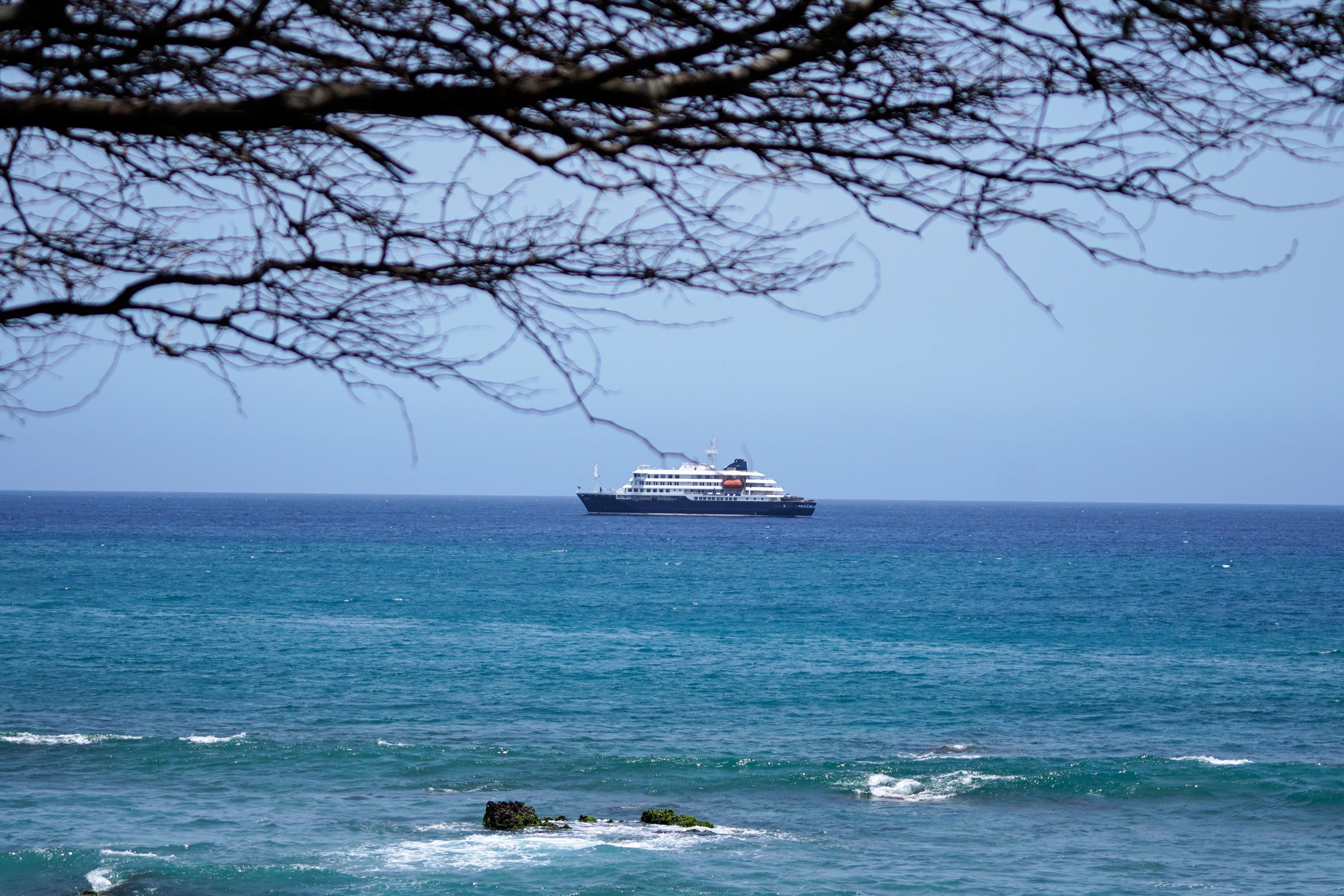
A possible outbreak of hantavirus has caused the death of three people traveling on the MV Hondius cruise ship in the Atlantic and has affected at least four other passengers, as reported by the World Health Organization (WHO), which is investigating the origin of the infection.
There are around 150 people on board, 14 of whom are Spanish nationals, as confirmed by the Oceanwide Expeditions cruise line.
This Tuesday, the WHO confirmed the presence of the pathogen in another affected individual through laboratory analysis, making it two cases with clear evidence of the infection. According to the organization, "an in-depth investigation is underway," including epidemiological studies and genetic sequencing of the virus. One of the passengers with a confirmed hantavirus infection is hospitalized in an intensive care unit in South Africa.
"This is not a new virus," clarifies María del Mar Tomás, a member of the Spanish Society of Infectious Diseases and Clinical Microbiology (SEIMC) and a specialist at the A Coruña Hospital.
What is the impact of this infectious agent?
Hantaviruses, she explains, are a family of viruses known for decades that can cause severe illness or even death in humans. The infection is mainly associated with inhaling particles contaminated with the urine or feces of rodents carrying the pathogen, although it can also occur through direct contact with these fluids or by being bitten by these animals.
"Person-to-person transmission is very rare," confirms Tomás, who explains that this type of transmission has been documented on rare occasions with a specific variant of the virus.
The detected possible outbreak "is rare, unusual," continues the specialist, who emphasizes the need to await the results of the ongoing investigations before drawing conclusions about what happened and the possible origin of the infection. "It is most likely that there was either a previous exposure before boarding or a specific environmental focus on the ship," she points out.
In this regard, the Ministry of Health has reported that "current evidence" suggests that the infections occurred on the ship itself or during one of the excursions taken by two of the deceased.
One of the affected individuals is the ship's doctor, as indicated by the information released by the Health Ministry. In this case, it is not ruled out that the healthcare professional may have been infected "through close contact with one of the deceased," it clarifies.
The Spanish health authorities state that they "are in continuous contact with the WHO, the ship's authorities, those of the Netherlands (the cruise's nationality), and the United Kingdom, and will provide all verified information available." Currently, the ship is near Praia (Cape Verde), although the cruise line is considering disembarking in the Canary Islands, "where additional medical examinations and treatments could be carried out," as stated in a press release.
"Investigations need to be conducted, but it is important to emphasize that the risk to the general population is low," highlights María del Mar Tomás, who stresses that "it is not a virus with easy community transmission."
"It does not spread like other respiratory viruses, such as Covid, but usually results in sporadic cases, isolated outbreaks," related to exposure to contaminated rodent excreta, she points out, emphasizing the need to reassure the population.
Onboard infection, what are the next steps?
To control the situation, an exhaustive epidemiological study will be conducted, possible cases with symptoms will be isolated, and the common focus will be investigated. Additionally, hygiene and environmental control measures will be established, as well as thorough cleaning and possible rat extermination of the entire ship.
Antoni Trilla, a Preventive Medicine professor at the University of Barcelona, agrees with this perspective: "The risk to the general population is low," emphasizes the specialist, noting that conclusions about the outbreak will have to wait for the ongoing investigation results.
Since the initial signs of the infection are quite nonspecific, some of the cases under study may not actually be due to the pathogen.
In any case, we are not dealing with a virus with a high potential for spread, he reminds.
"Most passengers, if asymptomatic, should not need to undergo any quarantine," he explains. "After a health examination, no special control measures beyond monitoring their health in the coming days would be necessary." Isolation would be recommended for passengers with compatible symptoms as a precaution, he clarifies.
What are the consequences of infection with this pathogen?
Hantaviruses can mainly cause two syndromes: hantavirus pulmonary syndrome (HPS) and hemorrhagic fever with renal syndrome depending on the variant responsible for the infection. These are two potentially very serious diseases. Thus, 38% of people with respiratory symptoms die from the disease, according to data from the Centers for Disease Control and Prevention (CDC).
The Patagonia region of Argentina where the cruise departed from is precisely an endemic area for a hantavirus variant related to the development of pulmonary syndrome, the so-called Andes, explains Miguel Ángel Jiménez Clavero, a researcher at the Center for Animal Health Research (CISA).
Since 2025, eight countries in the Americas Region, mainly in the Southern Cone, have reported confirmed cases of hantavirus pulmonary syndrome (HPS), with a total of 229 cases and 59 deaths, resulting in a regional fatality rate of 25.7%, according to data from the Ministry of Health. The countries that reported cases last year are: Argentina, Brazil, Bolivia (Plurinational State of), Chile, the United States of America, Panama, Paraguay, and Uruguay. "There are mainly four major types known, each in a different region of the planet," notes Jiménez Clavero.
Although the first descriptions of these pathogens date back to the 1950s, new hantavirus variants have continued to be detected more recently.
Thus, in 1993, in an area of the United States known as Four Corners, on the borders of Utah, Arizona, New Mexico, and Colorado, an outbreak of an unknown disease was detected, which turned out to be a new type of hantavirus spread through the dry feces of rodents. "Initially, it was proposed to name the pathogen the Four Corners virus, after the location, but both the residents and authorities of the area completely rejected it. There were other unsuccessful attempts until someone came up with a solution that finally convinced everyone. In that area, there was a small settlement that had been called 'Sin Nombre' since the times of Spanish presence, meaning 'Nameless' in Spanish. And that was what they decided to name it: the Nameless virus," explains Jiménez Clavero.