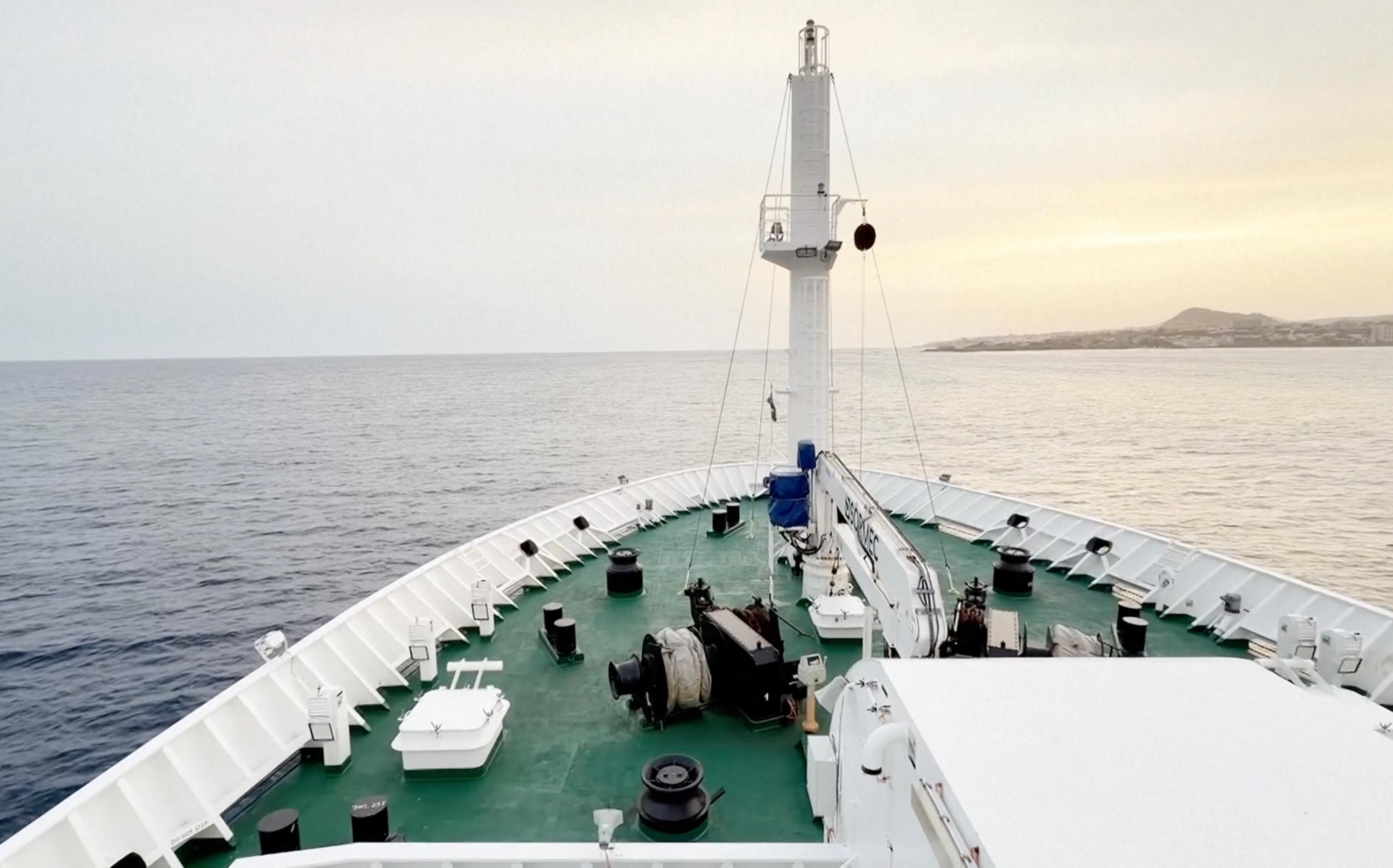
The World Health Organization (WHO) confirmed on Tuesday that the cruise ship where a hantavirus outbreak, causing a severe infectious disease, has been declared, is planned to head to the Canary Islands for hosting.
"We are working with the Spanish authorities, who will host the ship, as they have communicated, they will carry out a thorough investigation, a complete epidemiological investigation, a total disinfection of the ship, and, of course, evaluate the risk of the passengers on board," stated Maria Van Kerkhove, the director of epidemic and pandemic preparedness, as reported by Efe.
The organization has confirmed a second case of hantavirus on the cruise ship MV Hondius and has raised the number of possible affected individuals to seven. The origin of the possible outbreak, which has resulted in three deaths, is still under investigation, although the WHO has indicated suspicion of person-to-person transmission.
"We believe there could be human-to-human transmission among individuals in very close contact," Kekhove stated, as reported by Apf. Although person-to-person transmission is very rare with this type of virus, some cases of this type of contagion have been documented in the past.
Since April 1, when the ship set sail with 147 passengers and crew members, "seven people have fallen ill, of whom three have died, one is in critical condition, and three have mild symptoms," confirmed the organization.
"Considering the current information, including how the hantavirus spreads, the WHO assesses the global population's risk from this event as low," stated the organization in a release. "We are working closely with the health authorities of the countries involved and the ship operators to ensure that passengers and crew receive the information and support they need," they added.
The organization is also taking steps to locate passengers from a flight between the island of Saint Helena to Johannesburg (South Africa) where one of the affected passengers who later died traveled.
This is the timeline of the events:
On May 2, 2026, the WHO received a notification from the United Kingdom regarding an outbreak of severe acute respiratory illness, which included two deaths and a passenger in critical condition, aboard a Dutch-flagged cruise ship traveling in the Atlantic.
The ship had departed from Ushuaia, Argentina, on April 1, 2026, and followed an itinerary through the South Atlantic, with multiple stops in remote and ecologically diverse regions, including continental Antarctica, South Georgia, Nightingale Island, Tristan da Cunha, Saint Helena, and Ascension Island. "The degree of contact of passengers with local wildlife during the trip or before boarding in Ushuaia is unknown," stated the WHO in a report on the case.
On the same May 2, laboratory tests conducted in South Africa confirmed hantavirus infection in the aforementioned critically ill patient admitted to intensive care, as reported by the WHO.
On May 3, a second death was reported in another passenger aboard the cruise ship. As of May 4, a total of seven cases had been reported (two confirmed and five suspected), including three deaths.
The ship carries a total of 147 individuals, including 88 passengers and 59 crew members from 23 different nationalities. As of May 4, the ship was anchored off the coast of Cape Verde.
This is what is known about the affected individuals:
Case 1: Adult male who presented symptoms of fever, headache, and mild diarrhea on April 6, 2026, aboard the ship. On April 11, he developed respiratory distress and died on board the same day. No microbiological tests were conducted. The passenger's body was transferred from the ship to Saint Helena (a British Overseas Territory) on April 24.
Case 2: An adult woman, close contact of case 1, disembarked in Saint Helena on April 24, 2026, with gastrointestinal symptoms. Her condition worsened during a flight to Johannesburg, South Africa, on April 25. She died upon arrival at the emergency department on April 26. On May 4, PCR confirmed that the case corresponded to a hantavirus infection. The WHO has reported that contact tracing of passengers who traveled on the same flight has begun.
According to the WHO, both cases had traveled through South America, including Argentina, before boarding the cruise ship.
Case 3: On April 24, 2026, an adult male visited the ship's doctor with fever, difficulty breathing, and pneumonia symptoms. On April 26, his condition worsened. He was evacuated by air from Ascension to South Africa on April 27, where he is currently hospitalized in the Intensive Care Unit (ICU). Laboratory tests for an extensive panel of respiratory pathogens were negative; however, PCR confirmed hantavirus infection on May 2, 2026. Serological, sequencing, and metagenomic studies of the virus are being conducted.
Case 4: An adult woman, with pneumonia symptoms, died on May 2, 2026. The first symptoms appeared on April 28, with fever and general discomfort.
Three other suspected cases have presented high fever and/or gastrointestinal symptoms and remain on board the ship. Different medical teams in Cape Verde are evaluating the patients and collecting samples for analysis.
How hantaviruses are transmitted
Hantaviruses are a family of viruses known for decades that can cause severe illness or even death in humans. The infection is primarily associated with inhaling particles contaminated with the urine or feces of rodents carrying the pathogen, although it can also occur through direct contact with these fluids or by the bite of these animals. Person-to-person transmission is very rare, although some cases of this type of transmission have been documented in the past.
According to data from the Ministry of Health, in the Americas, there are reports suggesting person-to-person transmission, mainly associated with the Andes virus, endemic in the Southern Cone. These events, described in previous outbreaks in Argentina (1996, 2018) and Chile (1997, 2004, 2014), have occurred in contexts of close and prolonged exposure, usually in domestic environments or during the prodromal period of the index case.