Ramzi Samha recalls how the price of citrus fruits doubled immediately on April 13. "The Israelis killed a group of 12 Syrians who were picking oranges. No Lebanese dared to go. Only the Syrians did because they were paid $70 a day [the average salary in Lebanon is around $300 per month]," he explains in front of his juice stand in the southern city of Tyre. Since that date, Samha has been forced to travel to the town of Sidon, nearly 40 kilometers to the north, to buy lemons and pomegranates, which have disappeared from the few local markets that remain open.
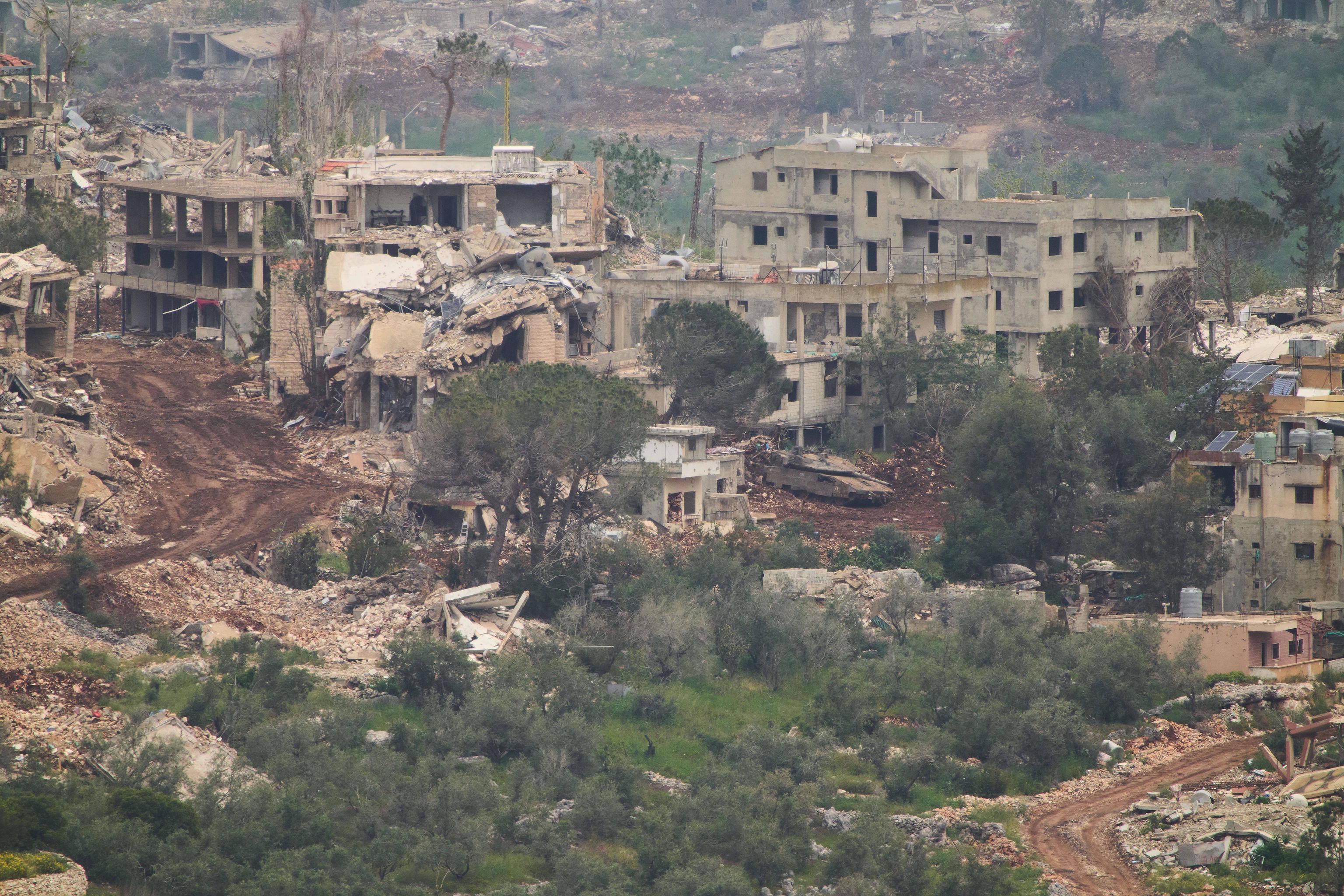
The price escalation of citrus fruits in Tyre reflects the devastating statistics handled by the Lebanese Minister of Agriculture, Nizar Hani. Sitting in his office in Beirut, the Lebanese representative tries to summarize in numbers the immense crisis facing a country, Lebanon, where such hardships seem to be part of the local history and customs. "The damage suffered by Lebanese agriculture is similar to that of a tsunami. 22.5% of crop lands have been damaged and cannot be used. It's almost 54,000 hectares [out of a total of about 250,000]. We had estimated that the losses in the sector during the 2024 war were $800 million," the Lebanese representative indicates.
The cost of the late 2023 and 2024 war was estimated at around $14 billion and resulted in a negative GDP growth of 7.1%. The conflict that began in March - and continues, despite the theoretical ceasefire that came into effect on April 17 - has exacerbated the country's economic collapse, especially affecting its agricultural sector. The Institute of International Finance estimates that the GDP mentioned could plummet again this year by between 12 and 16%.
This regression has hit "an economy that was already severely weakened since 2019 [when the country suffered the collapse of its banking system and its GDP shrank by 25%]," as noted in the analysis by the publication Al Modon.
These figures are not just mathematical conjectures. The Food and Agriculture Organization of the United Nations and the World Food Programme (WFP) warned days ago that the blow suffered by local agricultural production will result in a crisis of acute famine affecting at least 1.2 million people.
The critical situation in Lebanon is part of the long-term damage caused by the war initiated by Israel and the United States against Iran in March. The WFP estimates that the conflict threatens to put another 45 million people at imminent risk of acute famine and will push 30 million back into poverty - 4 million in the Middle East - even if it were to end right now.
In Lebanon, specialized NGOs like Action Against Hunger have warned that "families are forced to skip meals, reduce the quantity or quality of food, sell their belongings, or pull their children out of school in order to feed themselves."
In early April, the country was already experiencing a staggering increase in fuel costs. The price of a 20-liter can of gasoline - commonly used - had increased by 60%, while diesel had risen by 55%. The Central Administration of Statistics reported in mid-April that the accumulated inflation this year had soared to 17.26%.
The losses in the agricultural sector are not only focused on the destruction of lands, livestock, or infrastructure, but also on crop losses. "There are products that were concentrated in the south and have been literally decimated. For example, in the case of citrus fruits, that region accounted for 70% of the total national production. 90% in the case of bananas," states the Lebanese Minister of Agriculture.
The historic southern tobacco farms, a lifeline for nearly 16,000 families in that region, have been decimated, as around 85% - or more - of the growers have had to flee the area. "For example, the Israelis have destroyed 50,000 olive trees (olive oil production was another pillar of local agriculture). They have stolen between 5,000 and 10,000, taking them directly to Israel to resell. These are centuries-old olive trees that can be worth thousands of euros. And it's not just about money. They are trying to destroy a symbol of our culture," says the aforementioned Nazir Hani. "Agriculture kept the population in the southern villages. Without agriculture, the current exodus [there are over a million displaced people in a country with less than 6 million inhabitants] will become permanent, exacerbating sectarian tensions," he adds.
Qarim Phliphli, for example, went from comfortably managing his household economy in 2025 thanks to his pea plantation and small farm, where he had 350 cows and sheep, to becoming a displaced person who now relies on charity at a reception center in Antelias, north of Beirut. "I lost the entire pea harvest and a hundred cows and sheep," he asserts.
Desperate due to the situation, the 55-year-old Lebanese man does not hide his frustration. "The only solution is to leave the country. Can't you get me a visa for Spain? I want nothing more to do with Lebanon," he concludes.