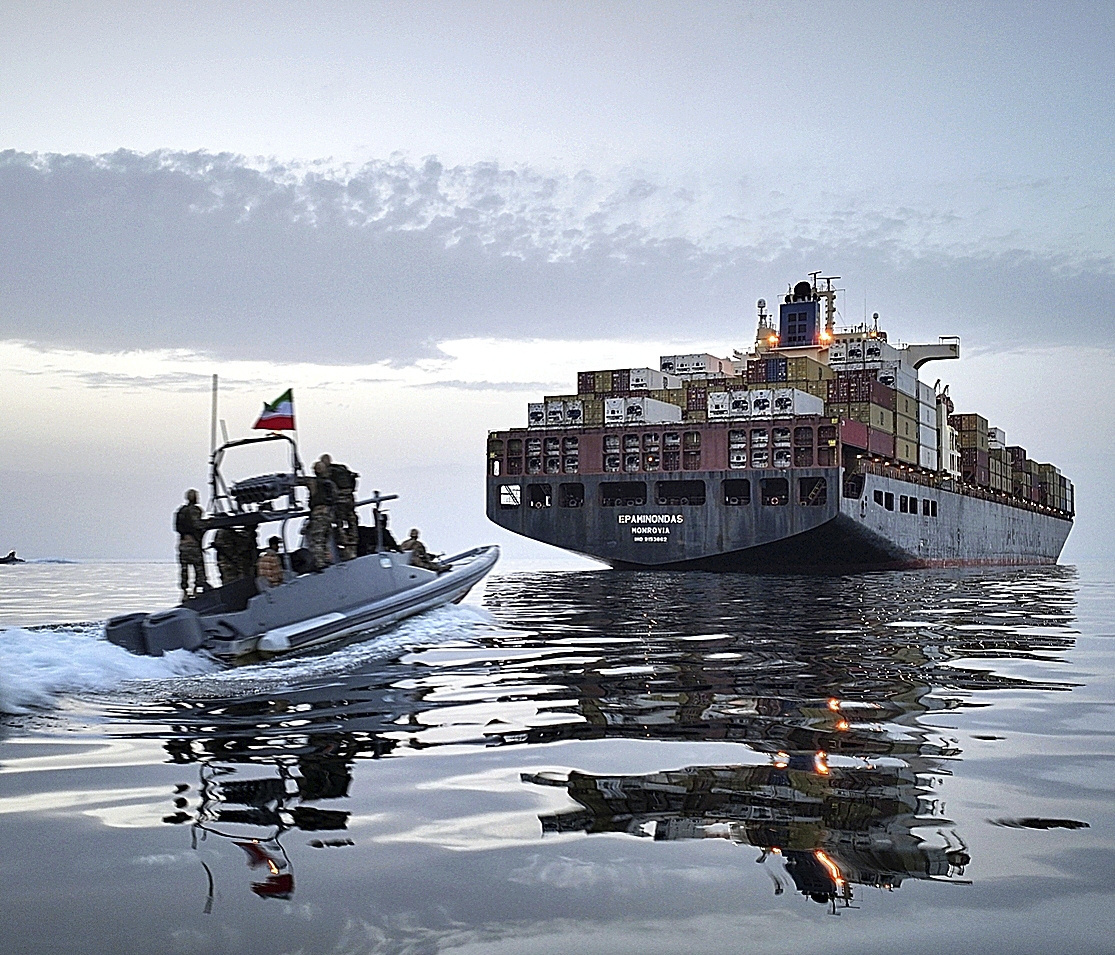
The oil tanker appeared on the horizon of the Philippine Sea. The Sara Sky, with a flag of Sierra Leone, was the first to dock in Manila loaded with over 700,000 barrels of Russian crude oil. This happened at the end of March. It was the first time in five years that Russian oil arrived in the Philippine capital, symbolizing the pragmatic shift of a region cornered by the energy crisis triggered by a distant war.
Just a few days before the arrival of the Sara Sky, Filipino President Ferdinand Marcos had declared a national energy emergency. It was the first country in the world to do so. The Philippine reserves, almost entirely dependent on imports from the Middle East, barely lasted for 45 days. In this context, the origin of the oil ceased to be a geopolitical issue to become a matter of survival.
From Manila to Hanoi, Southeast Asia has embraced Russian oil amid the energy shock. The blockade of the Strait of Hormuz - the artery through which over 80% of the oil destined for Asia passes - has left the region exposed at its most vulnerable point. The response has been to turn to Russia, the supplier that the West tried to isolate after the invasion of Ukraine.
Indonesia has negotiated with Moscow the import of up to 150 million barrels of Russian crude oil. Vietnam and Myanmar have signed contracts to receive Russian nuclear energy, and Thailand is exploring agreements on fertilizers. Even Malaysia, historically an oil exporter, is securing supply from the Vladimir Putin regime, which has found a boost for its ailing economy as an essential provider.
Exemptions Driven by the US
Thanks to the temporary exemptions driven by the United States on sanctioned Russian oil, allies of Western powers like the Philippines can now resume these transactions within a legal framework without resorting to the so-called ghost fleet, ships that operate outside the traditional maritime trade circuits.
This approach to Russian oil has raised alarms in the European Union, which has intensified its warnings to Southeast Asian countries. Last week, the EU's foreign policy chief, Kaja Kallas, urged the region to "look beyond immediate urgency" and warned that buying Russian oil contributes to financing the war in Ukraine.
A message that barely resonates on the streets of Cebu, the oldest province in the Philippines, which this Thursday and Friday hosts the annual summit of the Association of Southeast Asian Nations (ASEAN), where the leaders of the 11 member states will discuss precisely about energy security.
"From the wealthy nations of the West, they talk about principles, but we talk about survival. Without fuel, there is no work," says Ernesto Villanueva, a port transporter. At a gas station in downtown Cebu, a line of cars and motorcycles waits to fill up the tank as diesel has just dropped below 100 pesos. "From the comforts in Europe, they cannot dare to demand that we think about Ukraine. If Russian oil is the only thing that arrives and is cheaper, we have no choice. Let them come and explain it to my children," defends taxi driver Marites López.
While the EU speaks from the logic of sanctions and diplomatic pressure, Asia responds from the urgency of keeping their economies running. "We, with an economy always in crisis and much poverty, have no margin. If there is Russian oil and it is cheaper, we have to use it," says Liza, a student at the University of Cebu.
The numbers support all their frustration. Public transport drivers in the Philippines report up to an 80% drop in their income due to the increase in fuel prices. Some have slept on the streets to save costs. The government has had to implement four-day workweeks to reduce energy consumption, a measure that highlights the seriousness of the situation.
The clash between principles and necessity defines the new energy geopolitics in Asia. The region not only faces scarcity but also a perfect storm: declining domestic production and extreme dependence on liquefied natural gas.
In Pakistan, daily power cuts are becoming increasingly prolonged, even in high-demand periods. In northern India, with temperatures exceeding 40 degrees, the lack of electricity turns daily life into a test of endurance. In this country, the most populous in the world, farmers doubt if they can afford fertilizers, whose prices have skyrocketed following the interruption of exports from the Persian Gulf. In many other Asian nations, the rising energy costs threaten to erode years of economic growth.
In the air, the impact of the crisis is also becoming more visible. Aviation fuel in Singapore has reached historic highs, forcing airlines to cut between 10% and 15% of their flights. Some routes between South Asia have temporarily disappeared. Others have become more expensive, making them inaccessible to a portion of the population. One of the most popular airlines, Hong Kong's Cathay Pacific, now applies a $200 surcharge to long-haul flights. Traveling is once again a luxury for many budgets.
The crisis is also accelerating a transition that has been brewing for years. Sales of electric vehicles are soaring, solar panels are multiplying on urban and rural rooftops, and alternative technologies are gaining ground at an unexpected pace. In the Philippines, Chinese solar panel imports have exceeded all expectations. Local installers speak of a demand up to ten times higher than usual.
But that transition, experts point out, does not solve the immediate problem. Southeast Asian nations need urgent energy. And in that scenario, Russia has the upper hand. The Kremlin has managed to turn isolation into an opportunity. High energy prices and the reconfiguration of trade routes have allowed it to strengthen its influence in a region where, furthermore, its public image remains relatively positive. Recent surveys show that in countries like Indonesia or Vietnam, Russia maintains approval ratings higher than those of the United States.