The Kremlin approaches Victory Day with fears overshadowing its show of force. Five days before the May 9 parade, Russia has increased security in Moscow, reduced the military content of the event, and is even preparing to cut mobile communications. All this under the pressure of Ukrainian drones, which have managed to bring the war to the heart of Russian power.
This Monday, a drone crashed into a building about 10 kilometers from the Kremlin, as confirmed by Moscow Mayor Sergei Sobyanin, who usually focuses on downed drones. Ukraine has intensified its long-range attacks on Russian territory, including symbolic targets in the capital.
From Yerevan, Ukrainian President Volodymyr Zelensky was more explicit. "Ukrainian drones can also attack this parade," he said during his intervention at the European Political Community. "Russia has announced a parade on May 9, but there will be no military equipment," he added. And he concluded: "They are not as strong as before".
Moscow is on alert. According to sources cited by the BBC, Moscow plans to limit access to mobile internet on May 5, 7, and 9, with possible restrictions on SMS as well. The measures would affect not only the city center but the entire perimeter of the Moscow Ring Road. The goal is precisely to hinder the navigation and coordination of drones.
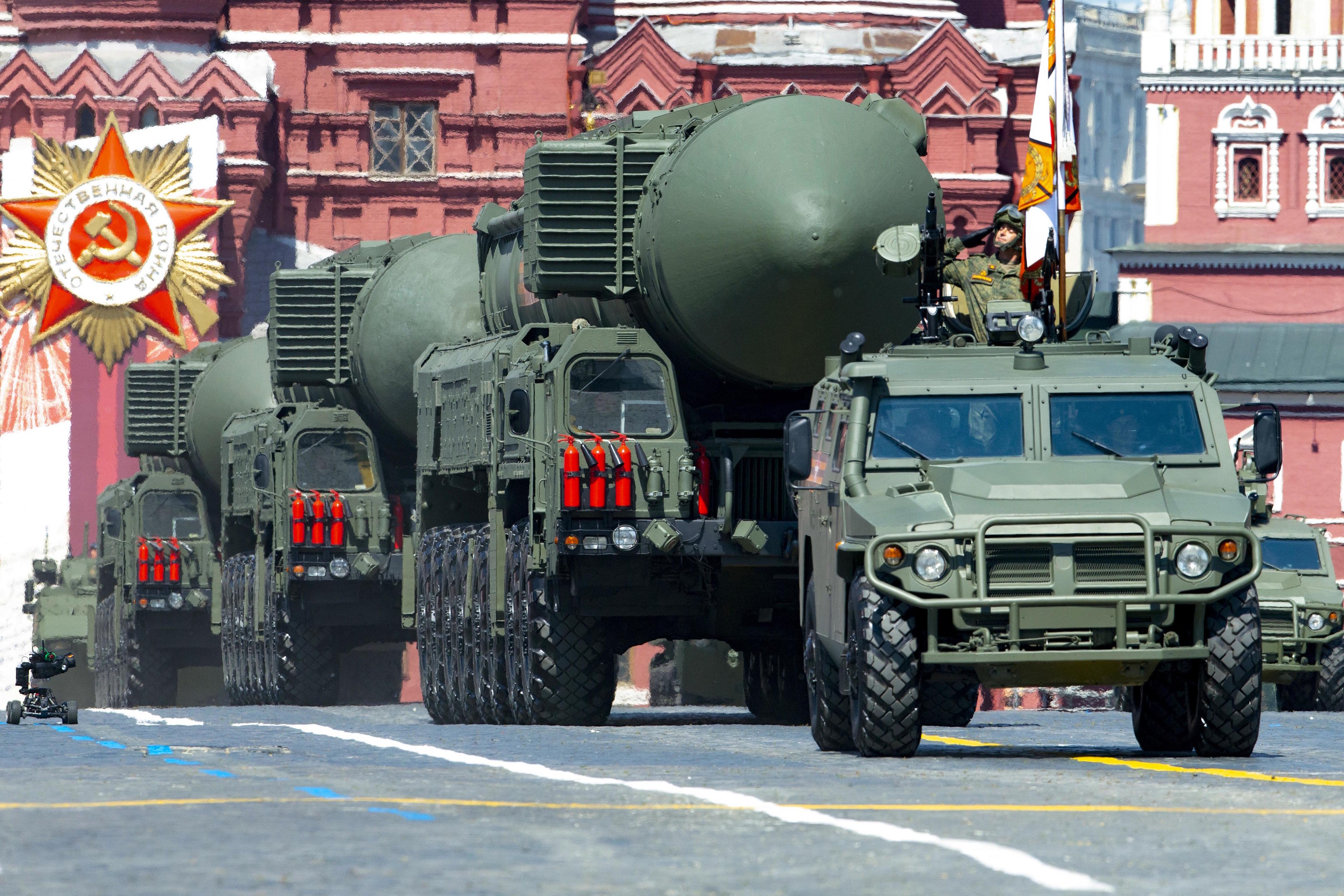
In addition, an unusual decision has been made, which, however, has surprised no one: the parade will be held without heavy military equipment, something that has not happened in almost two decades. The Russian army explained that the commemorations would not include military vehicles or cadets due to the "current operational situation."
Turned by Vladimir Putin into one of the central rituals of the State, May 9 was for two decades a choreography of power: columns of tanks, strategic missile launchers, and squadrons over Red Square to stage a resurgent Russia. Without tanks or missiles, the event loses part of its strength as a show of power.
What began as a memory of victory has become a tool of legitimization. The Kremlin constantly tries to link that 1945 victory to current conflicts, especially Ukraine, reinforcing the idea of historical continuity against external enemies. Every detail of the parade is meticulously planned. Even the weather is controlled: Russia has gone as far as using planes to disperse clouds and avoid rain during the event. But since the start of the war in Ukraine, the parade has been slimming down: in 2022, the aerial segment was canceled at the last minute; in 2023 and 2024, the presence of modern systems was reduced and replaced by older models. In several cities, events were directly suspended for security reasons. This year, the void is even more visible.
Recent reports also point to a more isolated and security-conscious Putin, following a series of drone attacks. The Russian leader, who has made control his main political asset, now faces a scenario where the enemy can strike near his residence, as Russians claimed in December when they said a drone had approached the president's palace in Valdai.
Putin's protection circle has hardened over time: stricter controls, fewer movements, and an increasing dependence on highly protected residences and bunkers. In his immediate environment, the use of connected devices is limited and personnel are under constant surveillance.
The image of strength that the Kremlin seeks to project contrasts with the internal tensions of an increasingly rigid system. According to Tatiana Stanovaya's analysis for the Carnegie Endowment for International Peace, after more than four years of war, there is no longer anyone in Russia capable of standing up to the security apparatus, which has consolidated its dominance over the State.
In this old scheme of paranoia, President Putin appears progressively more passive, as a distant referee of internal balances that he no longer fully controls. Key decisions are shifting towards the siloviki - the men of the security services - while economic and technocratic elites lose room for maneuver. "The current situation seems conducive to the Russian security services adopting an even more uncompromising stance, and the resistance of the elites will almost certainly provoke a strong response."
Ukraine has turned long-range drones into a strategic tool. They are cheap, difficult to intercept, and allow strikes hundreds of kilometers from the front. Kiev has improved their autonomy, guidance systems, and wave-launching capabilities, complicating Russian defense.
The contrast with the official narrative is uncomfortable. Russia commemorates the Soviet victory of 1945 while the war in Ukraine stagnates and erodes its image of power. This year, May 9 will not only be a historical celebration but also a real-time vulnerability test.