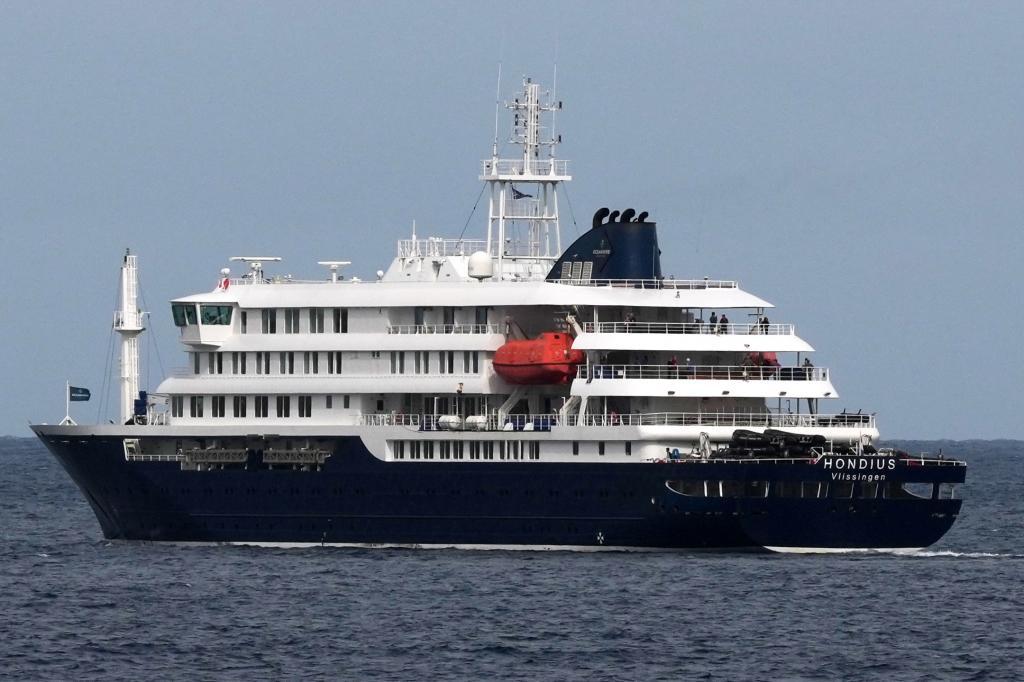
The media contagion of the outbreak that has put the World Health Organization on alert began in an unlikely place: page 2 of the monthly municipal magazine of Haulerwijk, a small town of about 3,000 inhabitants in the north of the Netherlands. "When birds take flight...". That's how the obituary starts, next to the silhouette of a bird, informing about the death "during their return trip after a tour of South America" of L. S., a 70-year-old Dutch man, and his wife M.S-H., 69. When the obituary is published, no one on the planet yet knows that these wildlife enthusiasts, highly recognized in their small community, have died from a contagious strain of hantavirus linked to the MV Hondius.
The man felt unwell on April 6, already on the cruise, which had departed from Ushuaia (Argentina) a few days earlier bound for Cape Verde, passing through the most remote places in the world along the way. He had to go to deck 3 of the ship, the humblest of a journey costing tens of thousands of euros. There, the simplest cabins are mixed with the infirmary and the doctor's cabin. It is ground zero. The patient reports fever, diarrhea, and headache while his companions undergo strict biosafety checks. Not for hantavirus, but because it is the usual protocol for disembarking at the South Georgia and South Sandwich Islands, where they are anchored at that moment. They visit glaciers and the abandoned whaling station of Grytviken, with its museum, church, cemetery, and post office. They mingle with huge colonies of penguins and even witness a spectacular fight between two elephant seals.
All of this is recorded by Jake, an enthusiast of the Antarctic region and remote places who is also on board the MV Hondius. Like his adventure companions, he returns ecstatic to the ship to embark on a four-day journey to the British territory of Tristan da Cunha. Onboard, there are talks and exhibitions by the crew, including one by the Spanish oceanographer Aitana. As a highlighted activity, every day they review all the new bird species sighted that day. They closely follow the Artemis mission and its adventure on the Moon. And even the passengers gather in one of the ship's lounges to watch the astronauts' splashdown in the Pacific Ocean.
Elsewhere on the ship, around that time, the Dutchman L.S. passes away. That afternoon there is an ice cream tasting in the main lounge on deck 5. The cocktail of the day is the gin & vodka fizz.
Five days have passed since the deceased reported his first symptoms. And his body will remain on board almost three times as long, 13 days, until it can be disembarked in Saint Helena, the island where Napoleon Bonaparte died in exile. There is no airport on Tristan da Cunha. In the meantime, the ship continues unabated, except for the woman who has just lost her husband and has no way to escape. The rest of the passengers visit the island and bring back rock lobsters as souvenirs, a luxury product that the Indian chef aboard the ship will prepare that same night. They are served with a side of risotto, vegetables, and half a grilled lemon.
During those days, group classes are given to recognize beaked whales. There is a Trivia night, played in teams of four to six people. Some participants dress up as penguins, and the atmosphere, despite the loss of the passenger who passed away a few hours ago, is lively. There is a happy hour at the bar, which is full. One day, one of the youngest in the expedition picks up the guitar, and another, older, takes the lead singing Johnny B. Goode by Chuck Berry.
At that moment, there is nothing to suggest that a major health crisis is brewing there. No microbiological test is performed on the deceased man. Nor would there have been a place to send it for analysis, had it been done. It is the death of a 70-year-old man in an environment where many other men and women of approximately the same age are present. He is not the first person to die on a ship, and no one else is showing symptoms.
Until his wife does. She feels unwell in the stomach. Taking advantage of her husband's body being disembarked in Saint Helena, she also leaves the journey. In total, 23 people end their trip on the Napoleonic island and return home. The infected woman heads to Johannesburg on April 24 on the only weekly flight leaving the island. During the journey, her condition deteriorates significantly. Shortly after arriving at the hospital, in South Africa, she dies. At the same time, a third patient deteriorates aboard the MV Hondius, which is already sailing towards Ascension Island, from where he is evacuated to Johannesburg. He remains hospitalized. There, on May 2, the first PCR is performed, identifying the hantavirus as the cause. That same day, on the cruise ship heading towards Cape Verde, a German woman dies, the third fatal victim of the outbreak, after four days of symptoms.
On the ship, the remaining passengers admire the equatorial sky and pass the time crocheting, one of the most popular activities. They play, in a musical bingo, to identify the melodies of Harry Potter, Ghostbusters, Titanic...
Meals and drinks continue to be served. On one of the decks they sing: "To dance the bamba...". The ship accelerates towards its destination until the confirmation of the PCR tests of the evacuees sets off all the alarms and the situation derails. The festive atmosphere is replaced by confinement in the cabins and restricted movements for the passengers and crew, among whom there are 14 Spaniards. As evacuations take place, including that of the 56-year-old British doctor from deck 3, who did not withstand repeated exposure to the sick, they wait for events inside. They are reluctant to speak. Jake acts as a spokesperson: "We are fine and maintain a good spirit. We are just people who want to be safe and, eventually, return home to our families."