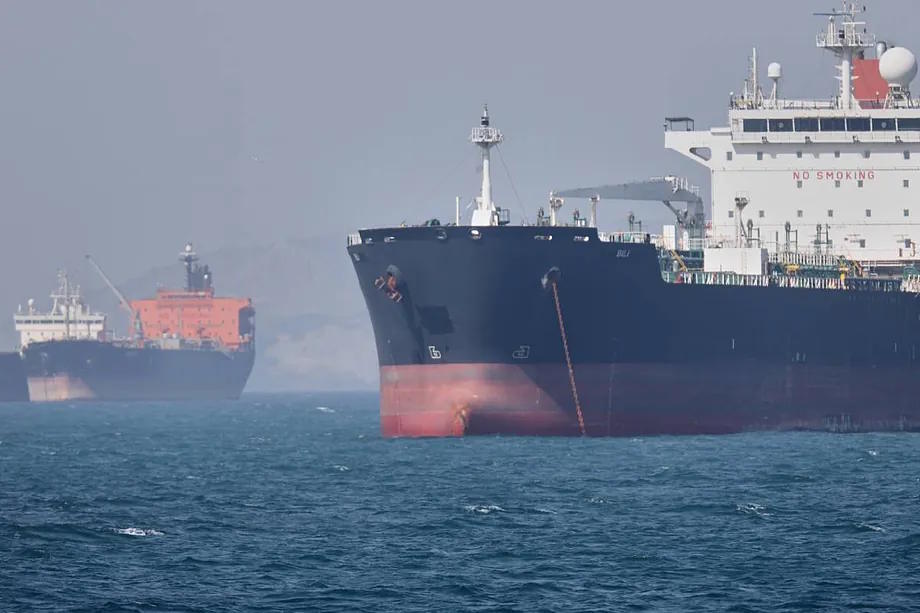
For the first time since the ceasefire came into effect, the US Army has attacked Iranian command positions on Thursday night. As reported by Fox, the targets were the Port of Qeshm and Bandar Abbas, as well as the naval control post of Bandar Kargan in Minab and areas of the capital. US military officials have stated that the bombings were a retaliation for the fire suffered by three vessels, not a unilateral attack, while President Donald Trump, downplaying the situation, said they were only "loving taps."
In a statement, the US Central Command (CENTCOM), in charge of Operation Epic Fury and the Freedom Project to escort ships in the Hormuz, which Trump paused on Wednesday, indicated that "US forces intercepted unprovoked Iranian attacks and responded with self-defense attacks as US Navy guided-missile destroyers transited the Strait of Hormuz towards the Gulf of Oman. Iranian forces launched multiple missiles, drones, and small boats while the USS Truxtun (DDG 103), USS Rafael Peralta (DDG 115), and USS Mason (DDG 87) ships transited the international waterway. No US assets were hit."
The statement emphasizes that they neutralized "incoming threats and attacked Iranian military facilities responsible for attacking US forces, including missile and drone launch platforms; command and control centers; and intelligence, surveillance, and reconnaissance nodes. CENTCOM is not seeking escalation but remains positioned and ready to protect US forces."
What has happened in the last five days should be incompatible with continuing to talk about a ceasefire. Missiles, drones, bombings, and skirmishes have returned. The Pentagon confirmed on Monday that it had received at least 10 attacks since the ceasefire began, and in the last hours, the United Arab Emirates and Oman have been hit. Additionally, it has been revealed that Washington had to make a 180-degree turn after Saudi Arabia, greatly upset by Trump's improvisations, temporarily banned the use of its airspace, at least for the president's latest idea, the Freedom Project.
But despite all this, the US administration desperately clings to the possibility of reaching an agreement. On Wednesday, Trump said there were significant advances, and Tehran claims to have presented new proposals. Specifically, a minimum agreement summarized in just one page, in which the United States would lift the blockade on Iranian ships and ports in exchange for a full reopening of the strait to commercial traffic for 30 days, giving negotiators time for the "comprehensive peace agreement" that Trump has been saying is very close.
"Three first-class US destroyers have just successfully crossed the Strait of Hormuz, under enemy fire. The three destroyers were unharmed, but the Iranian attackers suffered serious damage. They were completely destroyed, along with numerous small boats that replaced their now dismantled navy. These boats quickly sank to the bottom of the sea. Missiles were launched at our destroyers, which were easily shot down. Likewise, drones were launched and incinerated in flight. They fell into the ocean with a unique beauty, like a butterfly alighting on its grave," wrote Trump, lyrically, on his social media. "A normal country would have allowed the passage of these destroyers, but Iran is not a normal country. They are led by lunatics, and if they had the chance to use a nuclear weapon, they would do so without hesitation. But they will never have that chance, and just as we defeated them today, we will defeat them with much more strength and violence in the future if they do not sign their agreement quickly! Our three destroyers, with their magnificent crews, will rejoin our naval blockade, which is truly a steel wall," Trump insisted, insulting and threatening the same people with whom he claims to be negotiating successfully.
Meanwhile, Iran accuses Washington of breaking the ceasefire on Wednesday by firing at an Iranian tanker heading towards the Strait of Hormuz, and has insisted that what happened today, against US military vessels, was a proportional retaliation.
According to Iranian media, explosions have been reported on the Iranian island of Qeshm and the city of Bandar Abbas, important maritime transportation centers in the Strait of Hormuz, as well as in Tehran.