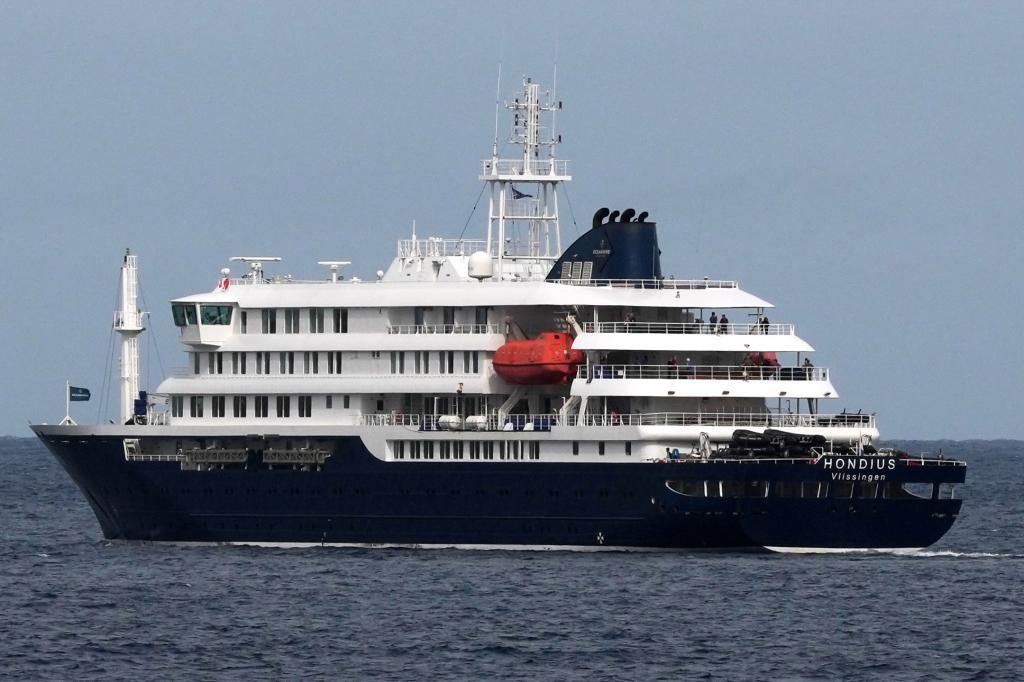
"It is a closed space with close contact between people." With this premise, Pello Latasa, vice president of the Spanish Society of Epidemiology (SEE), makes it clear that there are no guarantees for adequate isolation conditions: "There is no capacity for a medical response if someone deteriorates. Additionally, contaminated surfaces may remain if rigorous protocols were not applied from the beginning. Better in a sanitary and controlled environment."
This is how resolutely this epidemiologist expresses himself regarding the idea of why not wait for the incubation period to pass on board. This hantavirus infection outbreak does not indicate a generalized risk associated with cruise travel but rather reflects "a case of specific and localized exposure," as stated in an article by a group of experts from the Global Virus Network (GVN), which brings together prominent virologists specializing in humans and animals from over 90 centers of excellence and affiliates in more than 40 countries.
Cruises, like other enclosed or semi-enclosed environments with high numbers of people, require strict environmental hygiene controls. "This case highlights the importance of environmental exposure routes, especially in environments where contact with rodents could occur before or during the trip," notes the GVN report.
With the option of an animal origin on board ruled out, Latasa emphasizes that the physical characteristics of the environment would facilitate transmission more if measures are not taken. "Ships are very enclosed spaces with close contact between people, making real isolation extremely difficult. They are not designed to separate infected or quarantined individuals from the rest of the crew or passengers," insists the epidemiologist.
Latasa explains that "if an individual were to become ill or start showing symptoms, being in a hospital not only helps with a proper diagnosis but also provides access to an ICU if symptoms were to worsen rapidly."
The SEE spokesperson also considers the risk that, on board, despite disinfection, "if rigorous disinfection measures were not taken from the beginning, luggage, waste, and common areas could still pose a risk. This would mean that staying on the ship would be equivalent to continuing to live with the original source of the outbreak."
"The main concern in this situation is the possible involvement of the Andes virus, which is the only hantavirus known to be transmitted between humans, especially in close contact environments," emphasizes Professor Emma Thomson, director of the MRC Centre for Virus Research at the University of Glasgow, a GVN center of excellence in the UK.
Reports of infection among crew members and the duration of the outbreak raise the possibility of ongoing transmission; "this is still to be confirmed", Thomson points out. Given the incubation period of hantavirus infection - up to six weeks - more cases could still arise, as also indicated by the WHO. At this stage, "the priority is to implement preventive public health measures, such as respiratory protection, strict hand hygiene, and isolation of suspected cases, along with rapid diagnostic work to identify the virus involved."
On land: How long should the quarantine last?
There are uncertainties about the incubation period, although what is described in scientific literature can extend up to six weeks. "At least about 45 days," stated the Minister of Health, Mónica García, in her statement on Tuesday. The question is when that period would start: how to determine the "day zero" from when the infectious contact actually occurred, which can vary among different crew members.
"Staying on the ship is not quarantining; it complicates the situation further," says Latasa. "Transferring to a designated location on land, with adequate resources, is the option that best combines health security, response capacity, and real isolation conditions," he concludes.