Inflation is once again at the center of political and economic debate in the United States. The Consumer Price Index soared to 3.8% year-on-year in April, according to data released on Tuesday by the Department of Labor, reinforcing a trend that threatens both the strategy of the Federal Reserve and Donald Trump's campaign for the November legislative elections.
The data, the worst in three years, comes in the same week that Trump begins his official visit to China and as the term of the Fed's president, Jerome Powell, ends. It is a direct consequence of the war in Iran, the closure of the Strait of Hormuz, and the tightening in the oil market. It represents half a percentage point more than the previous month and almost one and a half points more than before the start of the bombings. Even the core inflation, which excludes the most volatile cost of food and energy, rises to 2.8%, also higher than in March and above what was expected by consensus forecasts.
Energy prices accounted for more than 40% of the monthly increase. Year-on-year, energy in general has surged by 18%, gasoline by 28%, and airplane tickets by another 20%. Services, excluding energy, increased by 3.3% year-on-year; within these, housing rose by 3.3% and transportation by 4.3%. In just the last month, gasoline has risen on average by 5.4%, but when seasonally adjusted. Without that adjustment, which takes into account that there are always increases in the spring, the figure would be over 11% in 30 days. That is why the White House is seriously considering temporarily suspending gasoline taxes.
These levels further diminish the possibility of the Fed considering interest rate cuts in the short term. In the last meeting, where it was agreed to keep rates unchanged, there were four dissenting votes. One, from one of the president's economic advisors, because he wanted cuts. And the other three because they wanted a much tougher statement in which it was not only said, as it ended up happening, that future decisions were up in the air, but that it was specified that those future decisions could very well be rate hikes and not cuts.
The upturn also comes at a particularly delicate moment for the White House. The escalation of tension with Iran, instability in the Strait of Hormuz, and new trade disputes with China and the European Union (with threats of more tariffs and a pause until July announced shortly after) have increased uncertainty about energy prices and supply chains. Oil has once again gone wild in all directions in recent weeks, and many companies are already warning of increases in logistics and import costs. All while the White House changes its stance on Iran every few hours and leaves a solution up in the air. On Monday, Trump said the ceasefire was in a "critical situation."
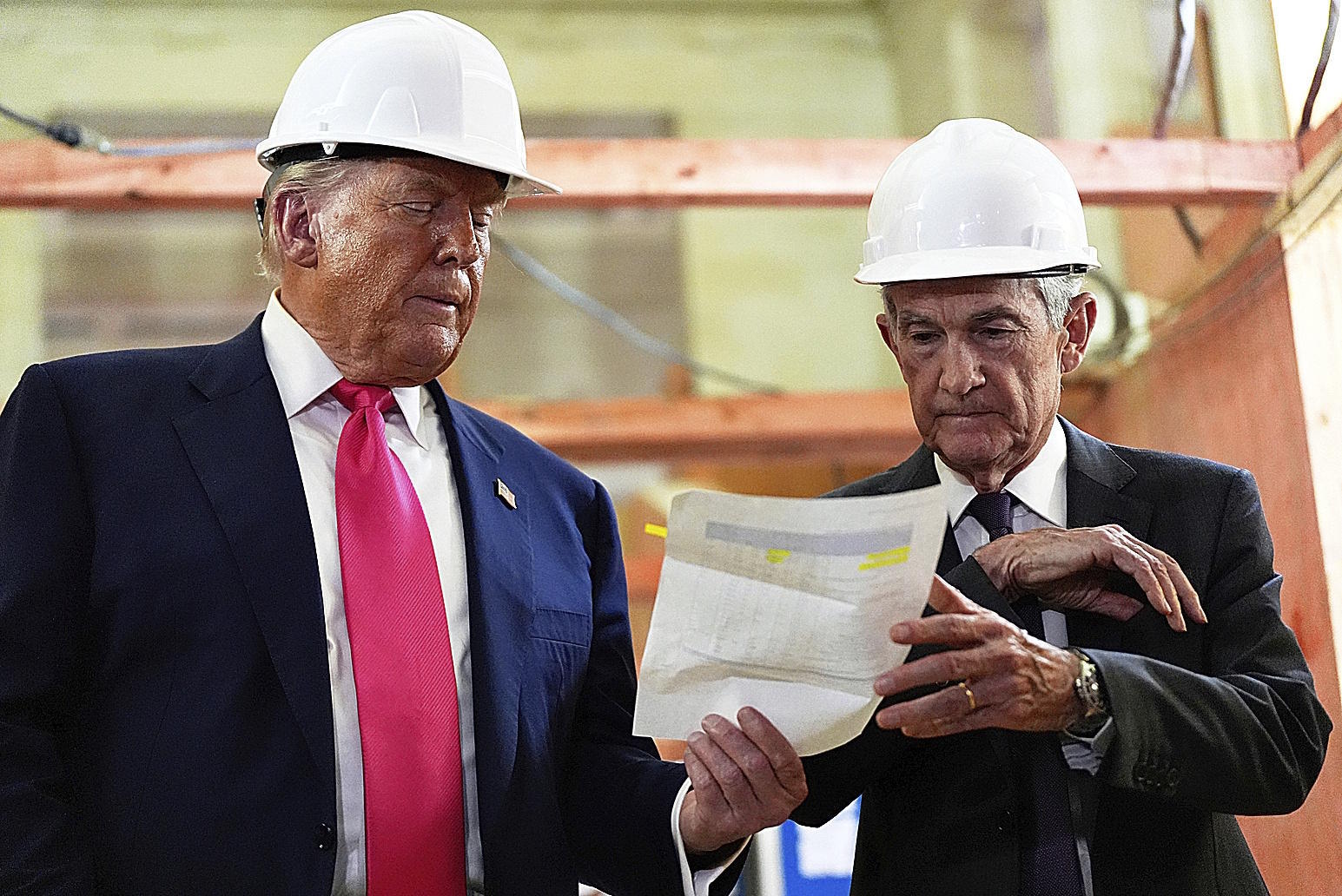
Despite this, the president repeats every day that the U.S. economy remains "the strongest in history" and blames the Federal Reserve for acting too slowly. The president has been publicly pressuring Jerome Powell for months to lower interest rates and facilitate greater economic growth before the elections. And once the person he has chosen to succeed him, Kevin Warsh, takes over, the pressure on him will intensify.
With this 3.8% figure, an immediate cut is impossible. The situation, despite positive employment numbers on Monday, greatly reduces the central bank's room for maneuver. Markets are pricing in a more restrictive monetary policy for a longer period, just as the economy was beginning to show signs of slowing down.
Analysts are now starting to assume a central scenario with inflation around 4% in the second half of the year, heading towards the November elections. A challenging scenario for the tens of millions of households living paycheck to paycheck and barely making it to the end of the month. A few days ago, Kevin Hassett, the top economic advisor now in the White House, celebrated that consumption levels and credit card usage were very high, a sign, however, that families are stretching their credit limits to pay not only for gasoline but also for the grocery bill.
According to the tables published today, food prices have risen by 2.9% since April of last year, mainly driven by the price of beef, which is also affected by the decrease in herds. Tomatoes, for example, have risen by almost 40%, due to tariffs on Mexico or fuel prices. It's not just fresh products: steel tariffs, for example, also push up the cost of canned foods, very popular in the country.