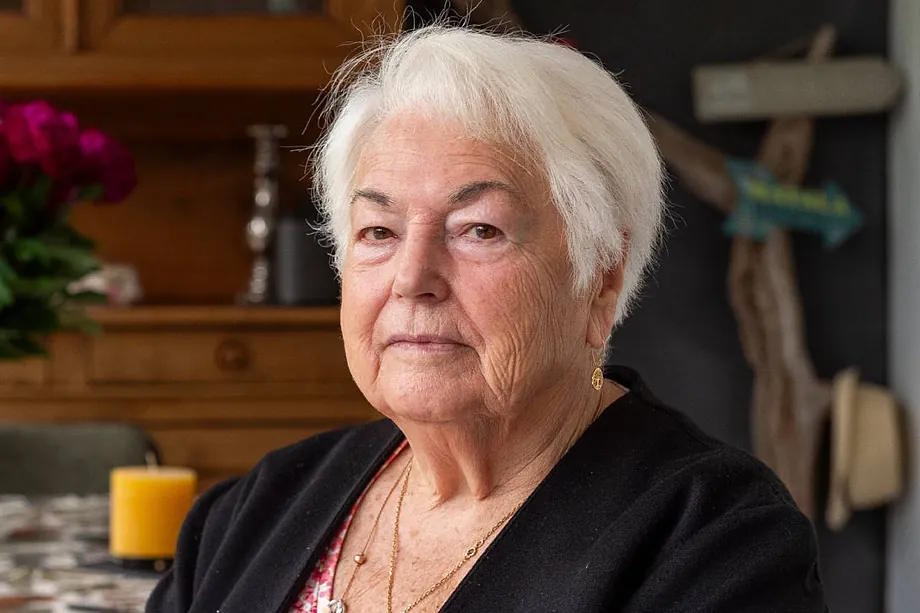
At night, silence prevailed in the immigration detention center in Louisiana where Marie-Thérèse Ross, 85, was held. Then the crying would start.
"Children crying, and even babies", recalls Ross, a French widow of a U.S. Army veteran, whose detention last month — amid the immigration crackdown led by the Trump administration — made international headlines.
Ross recounted to The Associated Press on Monday the 16 days she spent in federal immigration custody after being arrested on April 1 in Alabama for allegedly overstaying her visa, as well as the late love story that brought her to the United States. She has since been released and returned to France. The detention experience, she says, transformed her and her political views.
She was housed in a dormitory-style room with 58 other women, most of them mothers. "Some of them didn't know where their children were," she explained. "I think it's terrible for a woman not to know where her children are."
Her arrest in Alabama happened so quickly that she barely understood what was going on. Five men who identified themselves as immigration agents knocked on her door and windows at eight in the morning before handcuffing her and putting her in a vehicle, according to her account. She was still wearing her bathrobe, slippers, and pajamas.
Two days later, she was transferred to a detention center in Basile, Louisiana. By the end of that month, she was released. She is currently recovering with her family in a suburb of Nantes, in western France. The French Foreign Minister, Jean-Noël Barrot, had publicly demanded her release, considering that the methods of the U.S. Immigration and Customs Enforcement were "not in line" with French standards.
Ross had come to the United States to start a new life with William B. Ross, a retired U.S. soldier she met when he was stationed in France in the 1950s and she was working as a secretary at NATO.
Between 1962 and 2022, they stayed in touch through William's wife, a friend of Marie-Thérèse. "After we were both widowed, we decided to spend the holidays together," Ross said. "Then feelings resurfaced, and we decided to get married last year." She then crossed the Atlantic and settled with him in Anniston, Alabama. After William's death from natural causes in January, a dispute over the inheritance arose.
William's children redirected mail from the family home in Alabama, causing his stepmother to miss an immigration-related appointment, as stated by a state judge in a court ruling. The judge accused one of the sons — a former Alabama State Police officer now a federal employee — of using his position to facilitate his stepmother's detention and called for a federal investigation into the matter.
The stepson denied any involvement in the arrest. Marie-Thérèse stated that before her husband's death, she had a cordial relationship with his children. Afterward, she claimed that "they changed."
According to the U.S. Department of Homeland Security, Ross had exceeded the 90-day limit of her visa at the time of her arrest. AP requested comments from the agency on Tuesday after it had not previously responded to questions about the case.
In the Louisiana detention center, Ross described strict rules, constant shouting from the guards, and condescending treatment. "The prison was clean, the food was acceptable, but it was the way they spoke to us," she said. "The guards couldn't talk without shouting."
She also described the place as extremely noisy. "Everyone spoke loudly so others could hear them, but when silence fell, you could hear children crying and even babies crying," she recounted. "There are babies in this jail."
Despite the conditions, Ross also recalled acts of solidarity among the detainees. "At night, if my blanket fell, I felt a small hand putting it back on me," she said. "I didn't know who it was, but they took care of me because I was older than them."
She explained that the women called her "grandma." She still wears a friendship bracelet handmade by another detainee with colorful plastic strips, a gift she still wears today.
Ross's family members claim she still suffers from memory gaps and emotional scars from the detention. She states that she wants to receive medical attention in France to address symptoms consistent with post-traumatic stress and that she is currently receiving support.