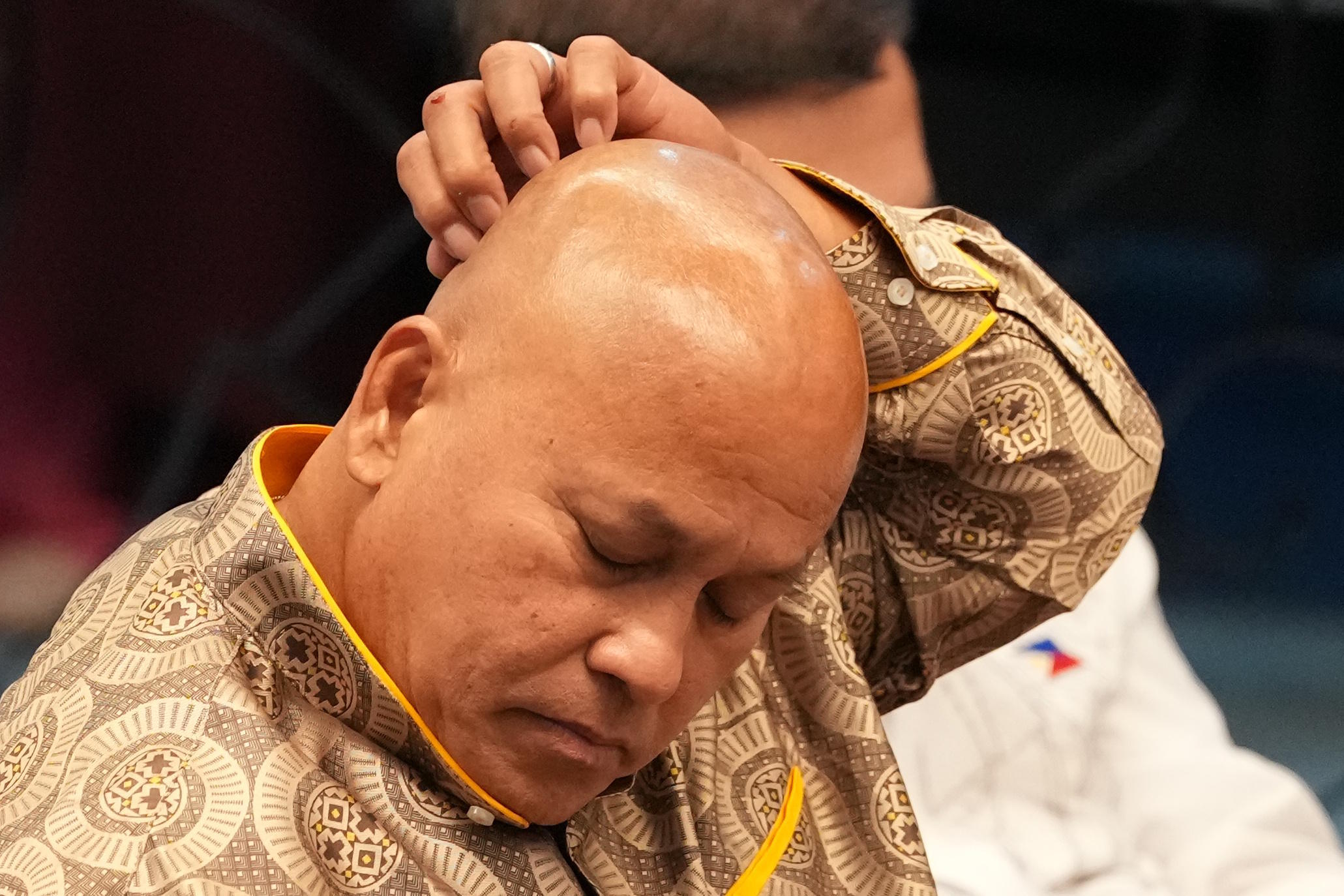
The sound of gunfire inside the Senate of the Philippines brought Manila back to the darkest years of the war on drugs launched by Rodrigo Duterte. In one of the most explosive political episodes since the fall of the former president, Senator Ronald "Bato" dela Rosa, former chief of the National Police and operational architect of that bloody campaign, has been barricaded in the legislative building since Monday to avoid his arrest by order of the International Criminal Court (ICC), which accuses him of crimes against humanity.
The scene seemed like something out of a thriller: agents trying to access the Senate, military personnel deployed with assault rifles, parliamentarians locked in their offices, and gunshots echoing in the hallways of the complex. As chaos spread outside, the 64-year-old dela Rosa turned the Senate chamber into his last political refuge.
Earlier this week, the senator managed to evade the agents trying to arrest him, as shown by the building's security cameras, running up stairs and corridors until reaching the upper chamber, where he found protection from the Senate President, Alan Peter Cayetano, one of the most loyal allies of the Duterte family. From there, he openly challenged the government of Ferdinand Marcos Jr and called for support from the armed forces and former police commanders linked to the Duterte era.
"Let us not allow another Filipino to be taken to The Hague," he declared to journalists and supporters gathered outside the Senate. He then sang the anthem of the Philippine military academy and called for a "peaceful" mobilization against his possible extradition. The message was primarily directed at security sectors that still see Duterte and his men as heroes who "cleaned up" the streets of the country.
But for human rights organizations, dela Rosa symbolizes the opposite. Officially, the war on drugs resulted in over 6,000 deaths. Human rights organizations raise the number to 30,000.
Most of the victims were young, poor residents of marginalized neighborhoods, alleged drug traffickers, killed in police operations or by paramilitary squads. Images of bodies lying in alleys of Manila and other cities in the archipelago, with signs saying "narco" placed on their chests, became a daily sight in the country for years.
Nicknamed "Bato" - which means rock in Tagalog - for his tough character and his image as an unyielding man, the protagonist of this story was the Director General of the Philippine National Police from 2016 to 2018, precisely during the most brutal period of the hunt launched by Duterte after coming to power.
The ICC maintains that those deaths were not isolated excesses, but part of a systematic policy of extrajudicial killings designed from the top. In the arrest warrant issued this week, prosecutors accuse dela Rosa of "authorizing, tolerating, and promoting" the crimes, providing weapons, ensuring impunity, and rewarding the perpetrators.
Duterte himself never hid the lethal nature of his campaign. For years, he publicly urged the police to "kill" drug traffickers and users, promising judicial protection to the agents. "My job is to kill," he once said in one of his most famous speeches. That rhetoric made the Philippines one of the most extreme examples of punitive populism in Asia.
"Duterte created, funded, and armed death squads to kill alleged drug traffickers and users between 2016 and 2022," prosecutors of the court argue. Last week, the ICC confirmed that the former president will stand trial on three charges of crimes against humanity.
Duterte's arrest last year and his transfer to The Hague opened a deep rift in Philippine politics. The current president Marcos, son of the late dictator Ferdinand Marcos, had come to power allied with Sara Duterte, daughter of the former president and current vice president. But the relationship between the two clans quickly deteriorated amid struggles for institutional control and the Duterte family's increasing international isolation.
The dela Rosa case now threatens to further escalate tensions. The senator had been virtually absent from public life for months amid rumors of a possible arrest warrant. He reappeared this week to support Cayetano's election as Senate President, a move interpreted in Manila as an attempt to politically shield himself before the judicial offensive.