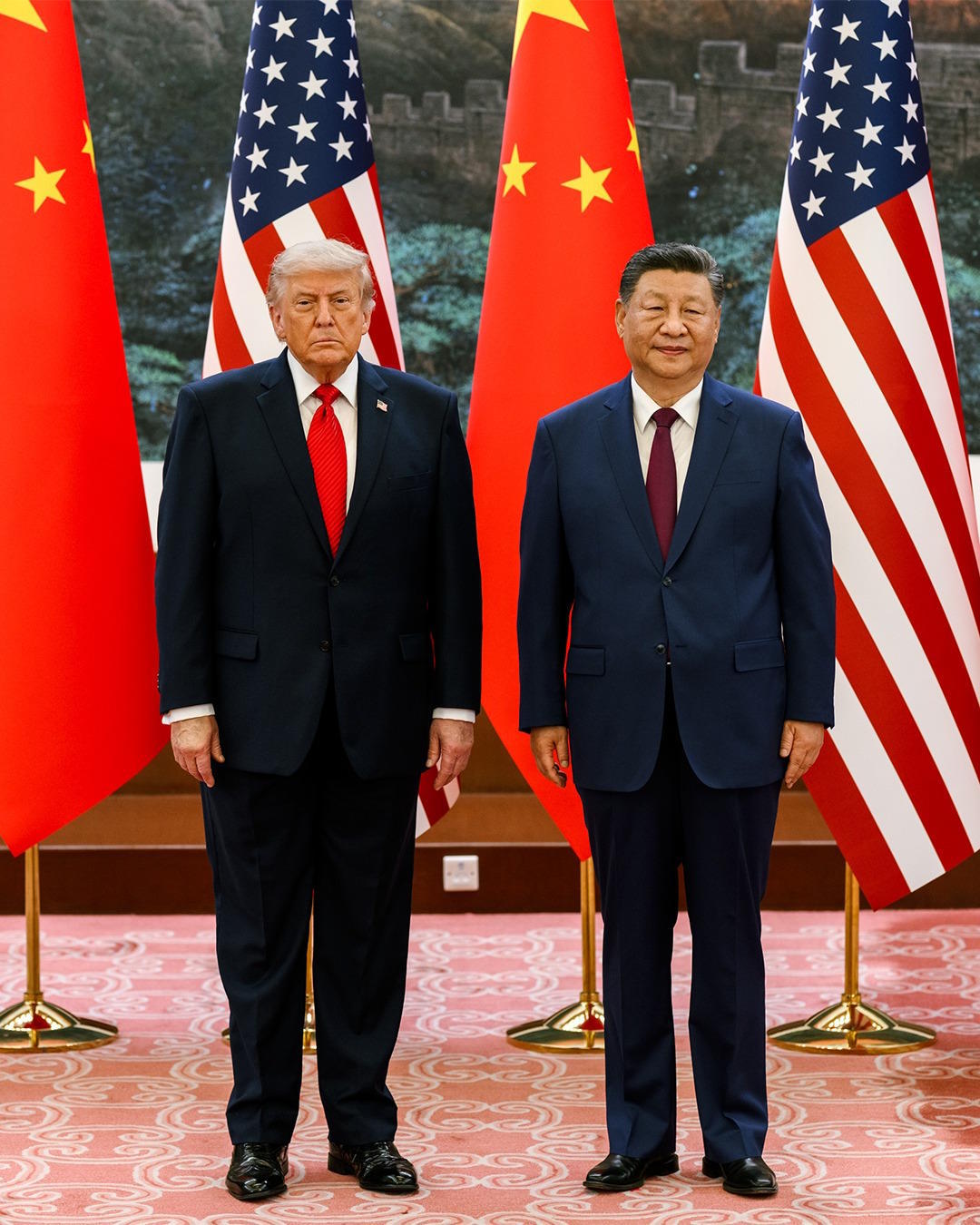
The commercial truce between Washington and Beijing is already beginning to have political architecture after last week's summit in Beijing between the US President, Donald Trump, and the Chinese leader, Xi Jinping. Both powers have announced the creation of two bilateral bodies - a trade board and an investment board - with which they seek to manage an increasingly strategic economic relationship, more distrustful and, at the same time, equally dependent.
The announcement, first released over the weekend by the Chinese Ministry of Commerce and later expanded by the White House, represents the most serious attempt to institutionalize the truce after last year's tariff escalation, retaliatory measures, and technological restrictions that shook the world's two largest economies.
In Beijing, they speak of "preliminary results," a common formula in Chinese diplomacy when there are still details to negotiate. But the message, as many analysts point out, is clear: the two superpowers need to stabilize their coexistence before the confrontation irreversibly damages their own supply chains.
The new trade board will aim to discuss which products will be subject to tariffs and which may be exempt. In parallel, the investment forum will open a permanent channel to address Chinese projects on US soil, an extremely sensitive issue in Washington, where fears of China's industrial and technological advancement have been contaminating the political debate in recent years.
The US Trade Representative, Jamieson Greer, summarized the spirit of the agreement with a phrase: "The important thing is that we have strategic stability with China." Behind that expression lies an uncomfortable reality for both governments. The US needs to contain inflation and ensure critical industrial supplies; China needs to avoid further economic deterioration amid internal slowdown and with its worst real estate crisis still present.
Greer confirmed earlier that both parties would establish a trade board that would oversee the reduction of tariffs on goods worth $30 billion in each country.
The agreement also includes some specific commitments. Beijing has reportedly committed to buying at least $17 billion annually in US agricultural products until 2028, a figure that includes soybeans, beef, and poultry. China will also renew licenses for hundreds of US meat processing plants and partially reopen its market to certain agri-food products that have been blocked in recent years due to trade disputes.
Analysts in the US have pointed out that the combined volume of these purchases is still far from the levels before the trade war unleashed by Trump. Prior to the tariff offensive, US agricultural exports to China reached $40.9 billion annually. Today, even with the new commitments, the figure remains over 30% below that record.
After the summit, one of the commitments - in this case by Trump - is that Washington will facilitate the sale of aircraft, engines, and aeronautical components to China, a concession at a time when technological rivalry between the two countries has become the central axis of global geopolitical competition. The White House also confirmed China's purchase of 200 Boeing aircraft, although Trump hinted on Friday during his return to Washington on Air Force One that the order could be expanded to 750 aircraft "if they do a good job."
Although China has been trying for years to build a national champion capable of challenging Boeing and Airbus, the state-owned manufacturer Comac still relies on Western technology to advance its flagship aircraft, the C919. The aircraft, presented as a pride of Chinese engineering, uses engines, electronic systems, and critical components manufactured in the US and Europe. Ensuring access to these supplies is essential for Xi's government, which considers technological self-sufficiency an absolute strategic priority for the next five years.
The negotiation has also touched on another major industrial nerve of the global economy: rare earths. According to the White House statement, Beijing has committed to "addressing US concerns related to the supply of critical minerals such as neodymium, scandium, yttrium, or indium, essential for the manufacture of electric vehicles, semiconductors, advanced weaponry, and green technology."
China dominates around 70% of the world's rare earth production and has turned that monopoly into a tool of geopolitical pressure (and its main winning card during the trade war). In recent years, Beijing used export restrictions on gallium, germanium, and other strategic minerals in response to US technological sanctions. The new agreement apparently aims to reduce this exchange of restrictions.