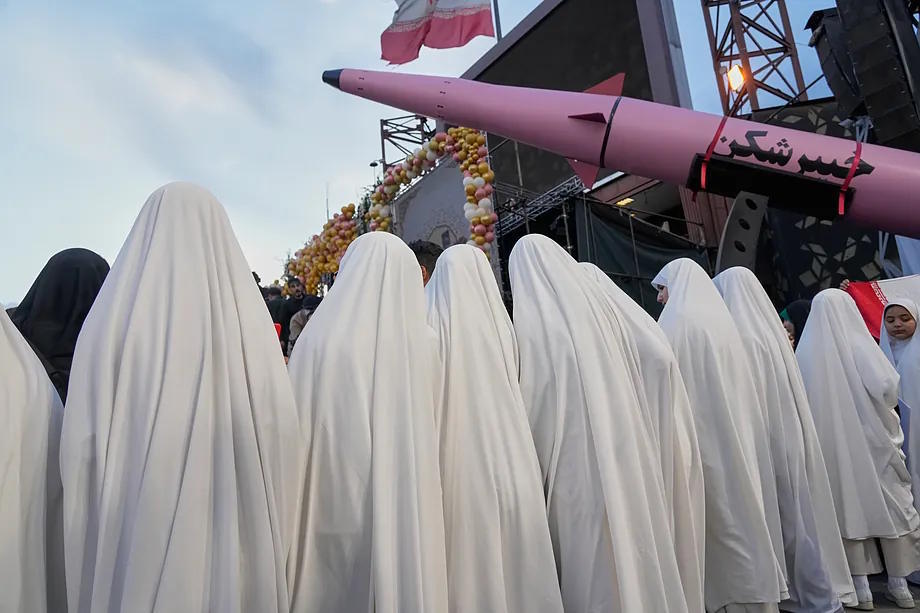
The President of the United States, Donald Trump, has considered himself above all an effective negotiator, but seems to have hit a wall with Iran, where his tough rhetoric, threats, and even military action have not moved Tehran from its positions.
Trump and his top advisors have insisted that the United States has already won the war and that Iran is ready to reach an agreement after the escalation of American threats during the fragile ceasefire. But Trump backtracked again and stated on Monday that he had paused plans for an imminent resumption of attacks at the request of Gulf Arab states because "serious negotiations are now taking place, and in his opinion, an agreement will be reached, which will be very acceptable for the United States, as well as for all countries in the Middle East and beyond."
Although he said he had canceled the planned attacks for Tuesday, Trump has instructed his generals "to be prepared to move forward with a total, large-scale assault against Iran at any time if an acceptable agreement is not reached." Trump has repeatedly set deadlines for Tehran and then backed down.
Italy will extend tax cuts on fuels due to the crisis in the Middle East
Italy will extend the reduction of special taxes on fuels, whose expiration was scheduled for May 22, as part of efforts to contain the sharp rise in energy prices caused by the conflict in the Middle East, a senior government minister said on Tuesday, as reported by Reuters.
"We will undoubtedly have to extend the reduction of special taxes," said Deputy Prime Minister and Minister of Transport and Infrastructure, Matteo Salvini, in an interview with radio RTL 102.5.
Italy has so far spent around 1 billion euros (1.16 billion dollars) to reduce special taxes applied to gasoline and diesel prices. The measure was introduced in March and extended for the first time at the end of April.
G7 Finance Ministers analyze the economic impact of the war with Iran
The French Finance Minister urged the International Monetary Fund and the World Bank to do more to help the most vulnerable countries cope with the consequences of the conflict in the Middle East, as he hosted G7 and other countries' ministers in Paris on Tuesday, as reported by Reuters.
G7 Finance Ministers and central bank governors met in the French capital for a second day of discussions focused on the economic repercussions of the conflict and volatility in global bond markets.
Representatives from other countries, including some Gulf states, Brazil, and Kenya, joined on Tuesday as the seven most advanced economies seek to build new alliances amid tensions related to the war with Iran and pressure on Russia over Ukraine.
Tehran Stock Exchange reopens after 80 days closed due to the war
The Tehran Stock Exchange resumed operations on Tuesday after 80 days of closure due to the war with the United States and Israel, with only 28% of stocks trading in positive territory and the chemical and steel sectors still closed due to damages suffered during the conflict, as reported by Efe.
"After an inevitable suspension, we started today the first day of stock trading," announced the President of the Tehran Stock Exchange, Hoyatolá Seydi, during the reopening ceremony, as reported on the stock market's website.
Trading began at 9:00 local time (5:30 GMT) on the stock exchange floor in the Iranian capital, with over 500 companies trading, while another 40 shares of companies affected during the war, which began on February 28, remain closed.
European stock markets rise following signs of a possible agreement between the US and Iran
European stock markets rose slightly on Tuesday after investors welcomed the news that the United States had paused a planned attack against Iran following Tehran's latest peace proposal, increasing the chances of reaching an agreement, as reported by Reuters.
President of the United States, Donald Trump, stated that there is now a "very good chance" of reaching an agreement to limit Iran's nuclear program. Oil prices fell by up to 2%, although they remained above $100 per barrel, while bonds stabilized after a strong sell-off in recent sessions.
The pan-European STOXX 600 index rose by 0.2% to 611.22 points at 07:02 GMT, although it remained below pre-war levels.
Iran warns the US of a "swift and powerful" response to any new aggression
Iran warned the United States on Tuesday not to make a "strategic or calculative mistake" again, stating that its Armed Forces have "their finger on the trigger" to respond quickly, firmly, and powerfully to any new aggression, after Donald Trump postponed an attack against the Persian country planned for today, as reported by Efe.
"We announce to the United States and its allies not to make a strategic or calculative mistake again," warned the Commander of the General Staff Headquarters Jatam al Anbiya, Major General Ali Abdolahi, in a statement quoted by the Tasnim news agency, linked to the Revolutionary Guard.
The senior military official stated that the Islamic Republic and its Armed Forces are in a position of greater military readiness than in the past and promised a "swift, decisive, powerful, and extensive" response to any new aggression against the country.
Iran's peace proposal to the US calls for lifting sanctions and withdrawing troops nearby
Iran's recent proposal to the United States calls for lifting sanctions against Tehran, releasing frozen Iranian funds, and ending the maritime blockade on the country, stated Iran's Deputy Foreign Minister, Kazem Gharibabadi, according to the official Iranian news agency IRNA.
The proposal also includes ending the war on all fronts, including Lebanon, withdrawing US forces from areas near Iran, and providing compensation to cover the destruction caused by the war, Gharibabadi added.
China promises 600,000 barrels of kerosene to Australia
Australia agreed with China on the supply of 600,000 barrels of kerosene, the fuel used in aviation, announced Prime Minister Anthony Albanese on Tuesday, at a time when oil prices are soaring due to the crisis in the Middle East, as reported by Afp.
The oceanic country relies heavily on air transport, especially for tourism and goods exports.
It is expected that the three shipments of kerosene will arrive in June, as a result of discussions on energy security held between Albanese and Chinese Prime Minister Li Qiang last month.
Brent falls more than 2%, to $109, awaiting a solution with Iran
The price of Brent crude oil for delivery in July falls just over 2% on Tuesday and trades above $109, awaiting a diplomatic resolution to the conflict in Iran, after US President Donald Trump decided to postpone an attack against Tehran, as reported by Efe.
At 7:00 on Tuesday (5:00 GMT), Brent, Europe's benchmark crude, falls by 2.12%, to $109.80 per barrel on the London futures market.
Brent retreats after rising 2.60% the previous day and closing at $112.10, amid fears of crude supply due to the Iran war, which has blocked the Strait of Hormuz.