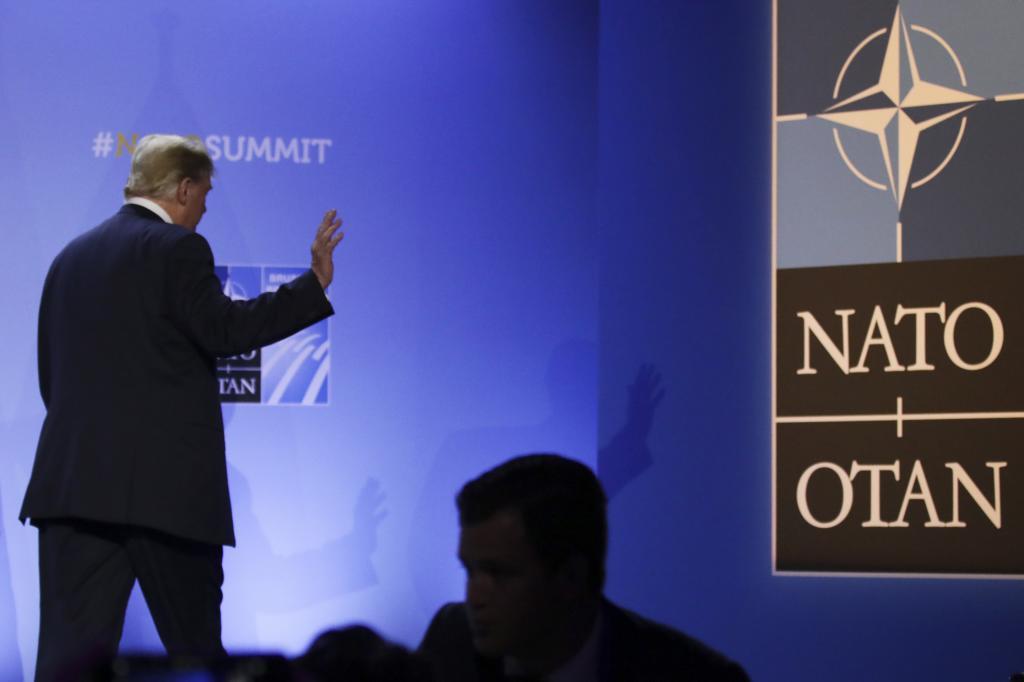
Donald Trump has fully committed to accelerating his plan to exit Europe. To "reorient" his military resources, as defined by the US Administration, which in practice means abandoning the continent at one of the most tense moments in recent decades. And it's not just about the 5,000 soldiers being withdrawn from Germany or the additional 4,000 that, for now, will not be deployed in Poland, but also about a possible imminent additional reduction in military capabilities.
According to Reuters, the Trump administration will formally communicate to its allies tomorrow about "this reduction in resources to assist European countries in case of a major crisis." Other diplomatic sources, however, suggest that this communication may have already taken place. But in any case, when asked about this issue yesterday, NATO Secretary-General Mark Rutte did not deny this possible additional withdrawal. In fact, he validated the information.
"It was something to be expected. I think it is right that it happens," said the head of the North Atlantic Treaty Organization during the press conference he held in Brussels, before the meeting of Foreign Ministers taking place today and tomorrow in Helsingborg, Sweden. Rutte, as usual, balanced justifying Trump's decisions without upsetting the rest of the allies. He tried to make it clear that the US withdrawal will not affect NATO's capacity. This is the same message that NATO military leaders had hinted at the day before, and it is reiterated incessantly at the Organization's headquarters in Brussels.
In Europe, it is emphasized that there are around 70,000 US soldiers, half of whom are in Germany, approximately 35,000. The confirmed withdrawal of 5,000 units will come from there. Different NATO sources consider these figures manageable. However, there is a factor not included in those figures, which is also highlighted within the Alliance albeit with a slightly lower tone: the long-range Tomahawk missiles that will not be deployed in Germany.
This type of weaponry is crucial for European defense, its sale by the US is restricted, and currently, Europe's industry lacks the necessary technology to develop its own long-range missiles. But NATO hopes that Friedrich Merz will be able to change this complex situation.
The country has increased its military budget to the point where it exceeds the combined budgets of France and the United Kingdom. Within this significant deployment, one of the lines of work could be to lead a European missile industry. There are still many uncertainties on this issue, and the question of technological transfer remains crucial. But right now, many are holding onto Germany's growing power.
Linked to this, it is also crucial for the European Defense industry to progress. Beyond missiles, there is an evident capacity problem. To meet the allies' needs, the only option left is to buy weapons from the US. However, the EU, and not so much the NATO Secretary-General, wants Europe's substantial spending on weapons to have a positive impact on the continent's economy.