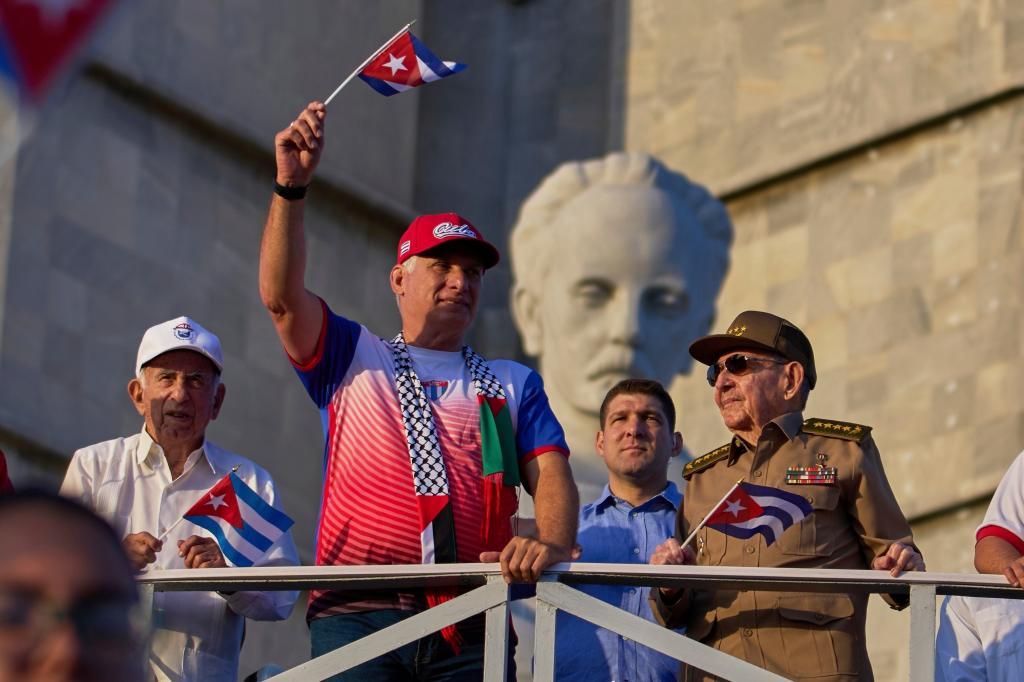
For the first time in history, Washington has filed criminal charges against a member of the Castro regime: former Cuban president Raúl Castro. The 94-year-old leader has been indicted for his direct involvement in the shooting down of two planes belonging to the opposition organization Brothers to the Rescue, which occurred three decades ago. The formal accusation places the younger Castro at the center of a major diplomatic escalation.
The seven charges brought against the Army General include "conspiracy to kill U.S. nationals, four counts of murder, and two for aircraft destruction." According to the prosecution, these acts constituted a flagrant violation of international law by attacking flights that, in the words of Acting Attorney General Todd Blanche, "were humanitarian flights for the rescue and protection of those fleeing oppression."
Blanche, in a press conference held in Miami, emphasized the administration's firmness by stating that the United States "does not forget its citizens" and that justice expects Castro to end up behind bars. The events date back to February 1996 when Cuban Air Force fighters used Soviet missiles to shoot down the aircraft during the Special Period. Although the organization's founder, José Basulto, managed to escape, four crew members lost their lives. At that time, Raúl Castro was serving as Minister of the Revolutionary Armed Forces.
The key piece of evidence in the accusation is an audio recording released years ago in which Raúl is allegedly heard giving precise orders for the attack: "I said try to shoot it down over the territory because they enter Havana and leave. Well, let's shoot it down in the sea when they show up and don't consult those who have the authority."
The response from Havana was swift. Current Cuban President Miguel Díaz-Canel described the measure as an unfounded attack: "This is a political action, without any legal basis, aimed solely at bolstering the fabricated case to justify the folly of a military aggression against Cuba." Similarly, Deputy Foreign Minister Carlos F. De Cossio lashed out at the exile groups in Florida, stating that "the fascist anti-Cuban minority entrenched in Florida has finally found a government to ride on, pressure, and try to bend by blackmailing with their votes. They want to reinstall the casino, drugs, and prostitution."
Meanwhile, Donald Trump has seized the opportunity to toughen his stance against the island, stating during Independence Day celebrations that "the U.S. will not tolerate a rogue state hosting military, intelligence, and terrorist operations hostile to the U.S. just 90 miles from American territory." This indictment marks the most critical point in bilateral relations so far this century, signaling a significant shift from the thaw experienced in 2014.