As if it were a temple with pale pink velvet curtains, the entrance to the Cult of Beauty exhibition is classically beautiful. A replica of the Venus Esquilina (the original is in the Capitoline Museums) and the bronze Idolino, a Roman copy of Polyclitus' Greek sculpture, greet the visitor. Behind them, a small-scale version of the beautiful Sleeping Hermaphrodite that rests in the Louvre. But just a few steps further, another face appears, canonically perfect according to 21st-century standards: Aitana López, the first influencer generated entirely by artificial intelligence. With her pink hair and sublime features, Aitana tells us, while seemingly staring directly into our eyes: "A cream, a diet, a filter, a surgery, or just creating a digital version of yourself in Photoshop and an avatar. But don't deceive yourself, beauty has always been a performance."
The Centre of Contemporary Culture of Barcelona (CCCB) analyzes this performance in one of its major exhibitions of the season, as entertaining (at times delirious) as it is profound and urgent, coming from the Wellcome Collection in London. "Beauty is a social construct. With a critical eye, we present a journey through the history of human body ideals from Antiquity to today," says CCCB director Judit Carrera. "Dedicating an exhibition to beauty may seem naive and at the same time be a profoundly revolutionary gesture," she adds.
The exhibition places society from TikTok and Instagram on the couch -from a philosophical perspective rather than psychoanalytical- all of us, even those who try to live outside of aesthetic and advertising pressures (is it really possible?). The famous Mirror, mirror on the wall, who is the fairest of them all? from Snow White has here an ironic answer written on the mirror: I've mistaken social pressure with self-expression. It is part of a multimedia installation, It makes no sense to be beautiful if no one is ugly (2023), by former makeup artist Eszter Magyar, who in her Makeupbrutalism project radically questions beauty standards and the beauty industry.
"Beauty ideals are neither universal nor permanent, but the desire to achieve them is a constant shared by humanity. What interests us is that pursuit. Throughout history, philosophers have tried to define beauty, artists to grasp it, and scientists to innovate to achieve it," explains curator Janice Li from the Wellcome Collection. If the exhibition caused a sensation in London ("a terrific show" according to The Guardian: a fantastic display), its size doubles at the CCCB with over 400 objects, ranging from a Barbie gallery, Vogue covers, a poster displaying different male haircuts from a barber shop in Raval to 19th-century corsets.
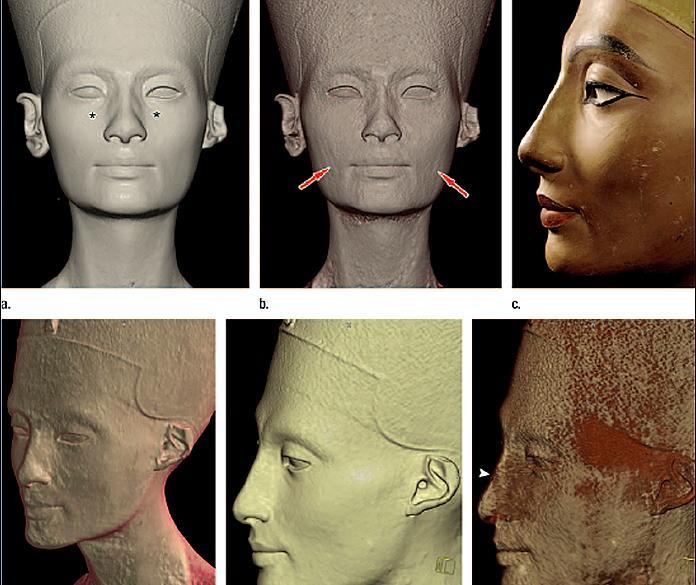
The Cult of Beauty both contrasts a bust of Nefertiti with a Romanesque virgin and puts us -once again- in front of the mirror of a nightclub's bathrooms with screens looping Instagram reels. From the worship of queens and divinities, we have transitioned to the worship of algorithms.