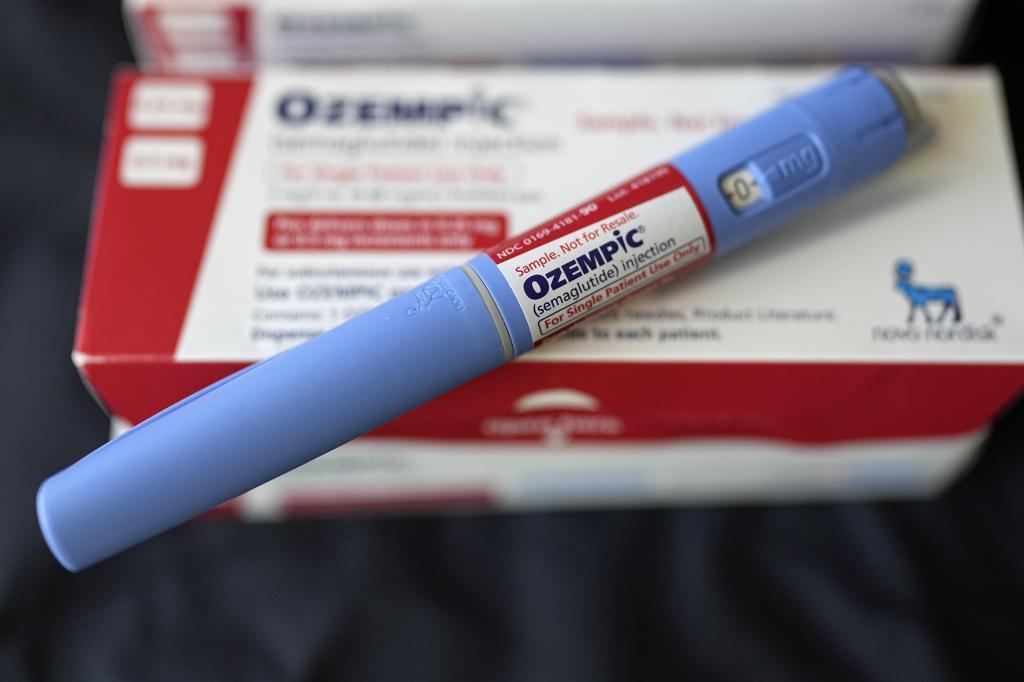
Ana was starting to have blood pressure problems. "If you lost weight...," advised the cardiologist. She also suffered from discomfort in her feet and knees. "If you lost weight...," insisted the orthopedic surgeon. Every time she went to the doctor, the same phrase came up: "If you lost weight, all the discomfort would also decrease." She tried "many diets" that, at 58 years old, no longer worked as they did when she was younger. Exercising was difficult for her. "I tried Ozempic, but it didn't agree with me." Mounjaro didn't work either. While trying out treatments, unsuccessfully, her health deteriorated.
Ana tells all this to Crónica minutes before going into the operating room to undergo not surgery, but a bariatric endoscopy, the alternative she hopes will help her lose weight. It involves reducing the size of the stomach using an endoscope—a flexible tube—that is inserted through the mouth, without the need to cut the abdomen as in traditional bariatric surgery. It is a medical procedure that allows weight loss in a less invasive way, as long as the person improves their eating habits afterward.
"It's like taking a purse and sewing the lining inside to reduce it: it can hold fewer things, but the outside remains intact, so that purse neither breaks nor suffers," explains Dr. Gontrand López-Nava, an obesity specialist. "We reduce the size of the stomach so that it can hold less food and so that the stomach takes longer to empty." After the intervention, which brings rapid recovery, the patient receives support from a nutritionist and a psychologist "to work on habits" for two years.
This method is not new, but it is gaining more prominence thanks to medications like Ozempic. "GLP-1 is bringing us many patients," says Dr. López-Nava. More and more people are coming to his clinic, like Ana, disappointed with these diabetes medications—called GLP-1—that reduce appetite, increase the feeling of fullness, and help with weight loss. "It has been a boom in the last year. It's very easy to sell the miracle, but you can't spend your whole life injecting yourself with a substance that goes directly into the blood and acts on the brain. So, how do you prefer to lose weight? From the stomach or by acting on the brain?"
Dr. Gontrand López-Nava (right) with Manuel, his operating room assistant.
"90% of the patients we operated on last year were users of GLP-1," asserts the specialist. For him, that is a point in favor of medications to treat obesity: "It's a way for the patient to take the first step and start losing weight, but then comes the rebound effect."
That was Ana's case. Before going into the operating room, she weighs 106.6 kilos, is 1.70 meters tall, and has a body mass index (BMI) of 36.9. She has about 30 kilos to lose. This has manifested in difficulties sleeping, for example. "I recently started having allergic asthma. They tell me I snore a lot while sleeping, and that didn't happen to me before." Once again, that "if you lost weight...". Her reasons for undergoing bariatric endoscopy are not related to aesthetics. "I'm almost 60 years old, and I don't want my children or my mother to have any problems because of my weight... I am very independent, and there are things I can no longer do that affect my self-esteem," she expresses.
We accompany Ana to the operating room to see how she will start gaining health and self-esteem. She is already anesthetized, lying on her left side. Dr. López-Nava, accompanied by his assistant Manuel, inserts a tube from the mouth to the esophagus of the patient, allowing him to enter and exit with the endoscope to the stomach. Then, he selects the appropriate size of the endoscope. This tube contains a camera that allows him to visualize Ana's stomach on a screen. "First, we check that the stomach is healthy and empty." Ready.
Sewing the stomach to reduce it
Change of endoscope. This one now has an arm that will allow sewing the stomach. "I need to grab the tissue I'm going to sew: I twist it like a corkscrew, attach it to the wall, and we're going to sew it." Click. The doctor activates the device, and on the screen, you can see him sewing Ana's stomach walls. And so he continues "threading" the needle again and grabbing another piece of tissue. Once all the necessary stitches are given, the specialist inserts "another little piece," pulls the thread, and you can see live how the stomach size is already reduced. "Most likely, in the first month, she will lose about seven or eight kilos," predicts Dr. López-Nava.
Almost 30 minutes have passed, and the procedure is over. "Everything went wonderfully," confirms its creator. There were no cuts, and there will be no scars. Now, Ana will go to a room without going through the ICU, and in a maximum of three days, she will be back home.
Before and after bariatric endoscopy of Fátima, with a difference of 28 kilos.
The same morning Ana was in the operating room, three women who underwent the same procedure months ago come for a check-up. Andrada Daniela, Fátima Duque, and Encarnación Cuesta arrive smiling, as if they came from the future to show Ana how she could be in a few months. Of course: as long as she follows the nutritionist and psychologist's recommendations to the letter.
Fátima says she noticed changes "from the beginning." For that, she did more than just pay and get anesthetized. "In the end, this is about changing habits in your daily life to lead a healthy life, incorporate exercise, and have better nutrition," she confirms. She had the procedure in June 2025 when she weighed 108 kilos. Now, 11 months later, she weighs 80 kilos. She had difficulty moving due to knee and heel pain.
Today, Fátima can move normally and without pain. Her recovery was immediate and without side effects beyond feeling a bit of gas. "I had the endoscopy on a Monday, and by Wednesday, I was already working," she says. She went from size 48 to 40 or 42. "I try on clothes and say, 'Wow! It fits me so well!' and, of course, that boosts my self-esteem... I feel more energetic, more agile to be with my two and nine-year-old daughters, I bend down without problems," she exemplifies happily.
The WHO describes obesity as a chronic disease with a risk of relapse influenced by different factors. It is a global problem that affects more than a billion people, according to estimates from the same organization. Although the WHO recognizes the usefulness of GLP-1, it also warns that "the fight against obesity is not won with medications alone".
Encarnación, 68, is another example of the success of bariatric endoscopy. From depending on oxygen therapy to move, she arrives at Dr. López-Nava's clinic boasting of having an easier time walking. Before going under the knife in October 2025, she weighed 152 kilos and has already lost almost 30. "I tried everything, Ozempic and Mounjaro. For three years, they kept me going back and forth in the Social Security system, 'inject this, now switch to the other,' and paying for it because I'm not diabetic, and the medications were not covered by Social Security," she recalls.
She also laments that the National Health System (NHS) didn't offer her a solution, as it's only available in private healthcare. "They didn't want to operate on me because I was over 60." But she managed to get on the waiting list for bariatric surgery. "After three years, the anesthesiologist told me I wasn't a suitable candidate for the surgery, that I could die. I told them I didn't care, that I'd rather die, but there was no way," she laments. "I arrived here crying, and the doctor told me he could treat me." And so he did. "I didn't feel a thing. I went home perfectly fine, without any problems."
The only thing Encarnación regrets is not having undergone the procedure sooner. "I went to my son's wedding in a wheelchair and with an oxygen machine." That was in September, a month before going into surgery. "Now I go for a walk every day." I go from bank to bank, that's for sure, because I still have another 30 kilos to lose, but now I actually enjoy going out. Before, I didn't feel like it at all." She achieved this without medication.
GLP-1 receptor agonists have been under scientific scrutiny to verify their effectiveness. Clinical trials published in The Lancet describe them as effective for weight loss and also mention a 20% reduction in cardiovascular risks in obese individuals. However, studies published in the British Medical Journal warn of frequent adverse effects, especially gastrointestinal ones. Problems such as pancreatitis and gastric emptying disorders have also been reported and are still being monitored. In short, the scientific evidence shows these drugs to be effective, but with side effects and uncertainties still under medical scrutiny. Furthermore, it is common to regain the lost weight after stopping treatment.
Therefore, the advanced endoscopy unit emphasizes that, even if the procedure is successful, the difficult part comes afterward, when the guidelines from the psychology and nutrition specialists must be followed. "The patient needs to understand that there's an educational aspect to it. If they think that just getting stitched up in 25 minutes will make them lose weight, we're not going to do it. Nobody loses that much weight if they're not doing other things," the specialist insists. "What the patient has to do is put in the work afterward."
Andrada is a woman who has really worked hard. She had her bariatric endoscopy in March 2025. She weighed 177 kilos and has lost 50 kilos. "The results were stunning and wonderful," she says, looking at a photo of herself from a year ago. "It was the best decision I've ever made," she remarks proudly. "My health has improved enormously. This winter I've only had one cold. Before, I used to take up to three painkillers a day for headaches." Before taking the plunge, she tried many diets, such as the Dukan diet. "In three months I managed to lose 15 kilos, but by the fourth month I was in the operating theatre with kidney problems." From drinking a Coke and a Red Bull a day and eating junk food at all hours, she now feels like a different person. "I learnt to eat well and healthily. It changed my life."
If these women ever have to see a doctor, they will no longer hear "if you lost weight..." as part of the diagnosis.