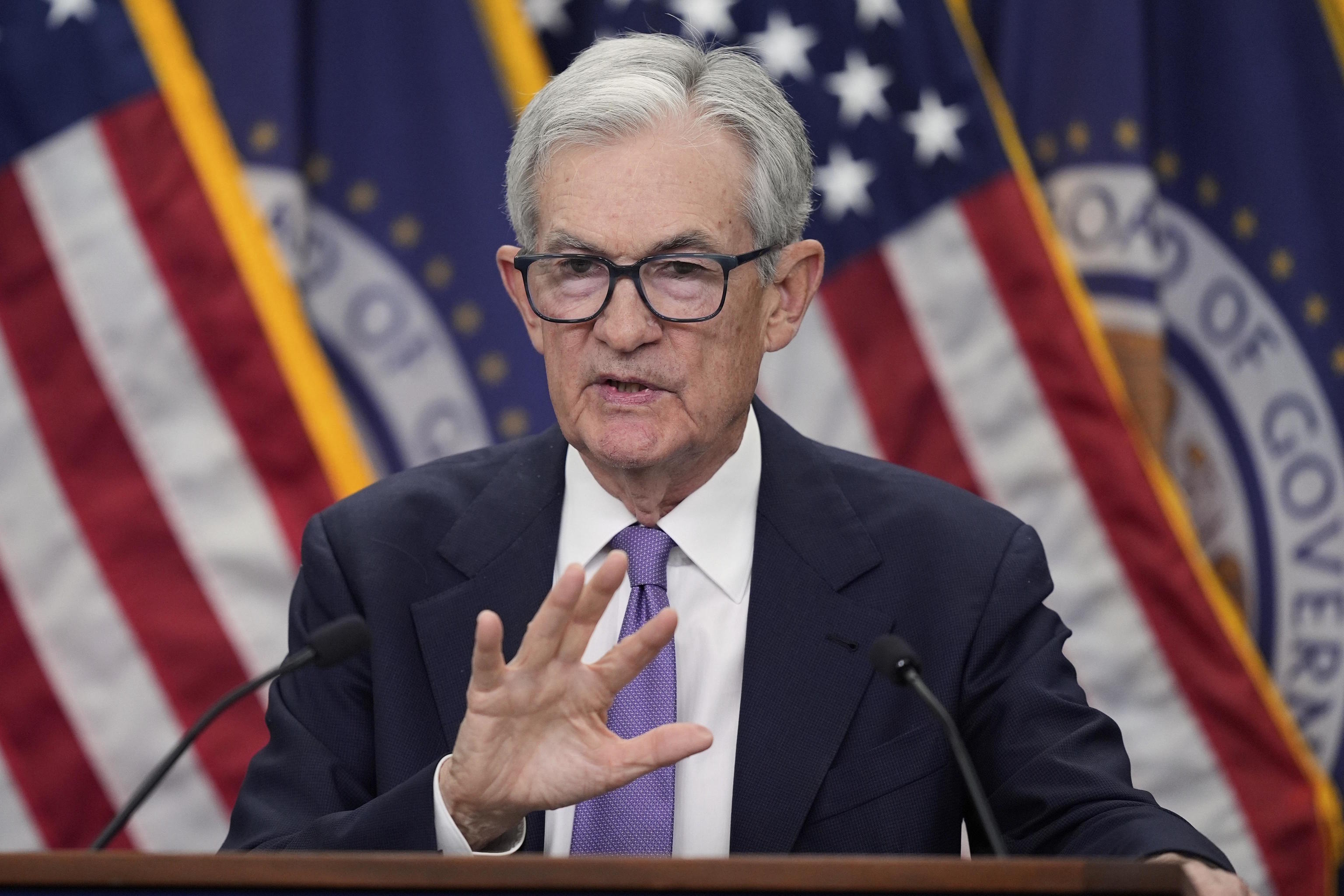
Jason Furman, former chief economic advisor to Barack Obama, recounts that when they interviewed Jerome Powell for a position as a governor at the Federal Reserve in late 2011, they didn't know much about him, and what they knew was not very hopeful. They needed to choose a Republican, but Powell, a lawyer with no background in macroeconomics, was not their first or second choice until someone convinced them he was the best bet. "Powell had something more valuable than his academic credentials: a proven track record of integrity and courage. None of us realized then how important these qualities would end up being," Furman recently wrote.
Most US central bankers leave their positions having made significant mistakes after facing economic, financial, or inflation crises. Incorrect interest rate hikes or cuts, excessive or insufficient emphasis, slip-ups in press appearances. But few have had to deal with the pressure of prices, a pandemic that sent 20 million people to unemployment within weeks, several regional banking crises (like the Silicon Valley Bank crisis), a trade war, the most aggressive protectionist wall in a century, geopolitical turbulence, and the biggest assault from the White House against monetary independence in the institution's history.
In normal times, Powell, who is stepping down as chairman this week but will temporarily remain as governor to cover his back, would be judged for his mistakes, like underestimating how post-pandemic inflation threats were not temporary, or his successes, like reducing it without triggering a recession. But these are not normal times, and the chairman will likely be remembered for his integrity, his principles, and for daring to say no, time and time again, to the most powerful and vindictive man in the world. If a Latin maxim were chosen to summarize his career, it would likely be Etiam si omnes, ego non.
Unlike his predecessors, Powell is not an academic, historian, or a great money theorist. A lawyer by training, moderate Republican, Wall Street veteran, and public service veteran, he was once seen as a pragmatic figure, a transition after Ben Bernanke, a Nobel laureate and one of the leading experts on the Great Depression, and Janet Yellen, a Berkeley professor. He seemed like a comfortable choice for the government, an almost technocratic, pragmatic profile with a reputation for moderation who learned everything necessary on the job, forging consensus and achieving agreements. A discreet, almost gray figure. If there were doubts, it was precisely among those who thought he could be too docile and accommodating to a president as aggressive as Trump. Time would prove them wrong.
Powell's first years at the helm of the Fed were relatively calm. The US continued to grow, unemployment was at a minimum, and the main economic obsession at the time was the opposite of today: abnormally low interest rates after the financial crisis. Powell acted cautiously, gradually raising rates and cultivating a close relationship with Congress while seeking to safeguard the central bank's independence.
That was exactly what ended up blowing up his relationship with Trump. The president wanted cheap money, rapid growth, and a Fed subordinateto his electoral needs. Powell, without fanfare or table-pounding, without seeking the limelight or dressing as a hero, simply fulfilling his mandate, refused. Trump, unaccustomed to hearing no, began to publicly humiliate him, insult him on social media, hint at the possibility of firing him, conducting polls on his social media to let his followers decide who was a greater threat to the country, Xi Jinping or Powell. In his second term, the offensive would come in the form of a criminal investigation accusing him of being responsible for cost overruns in the Fed's headquarters renovation.
The pandemic changed everything. Powell reacted to the global shutdown with total force: zero interest rates, an unlimited bond-buying program, and authorization to buy corporate debt and lend directly to cities for the first time in its history. The problem came later. The Fed misread inflation, probably the worst and most serious diagnosis in at least half a century, insisting for too long that it was "transitory". When it tried to react, prices were already completely out of control to their highest level in four decades. He managed to stabilize the situation without causing a recession and a spike in unemployment, but the damage to consumer confidence was done.
If a grade had to be given considering only the main objective of the institution, price stability, it would not be a high mark. He leaves a house divided, perhaps not due to his leadership or lack thereof, but due to Trump's offensive, but divided. But his two terms will be judged not by technical or monetary criteria, but by his management of crises and the institutional clash with Trump. He not only resisted but stood his ground and fought. Correcting the president time and time again, recording a video, defending his colleagues, holding the fort. His economic mistakes were real, serious, and he leaves with inflation above 2% for the sixth year, but he managed to survive an unprecedented pandemic and preserve the Fed's credibility, one of the few institutions that can boast of it, against an unparalleled political onslaught. Passing the baton more than high to his successor and securing a place in history.